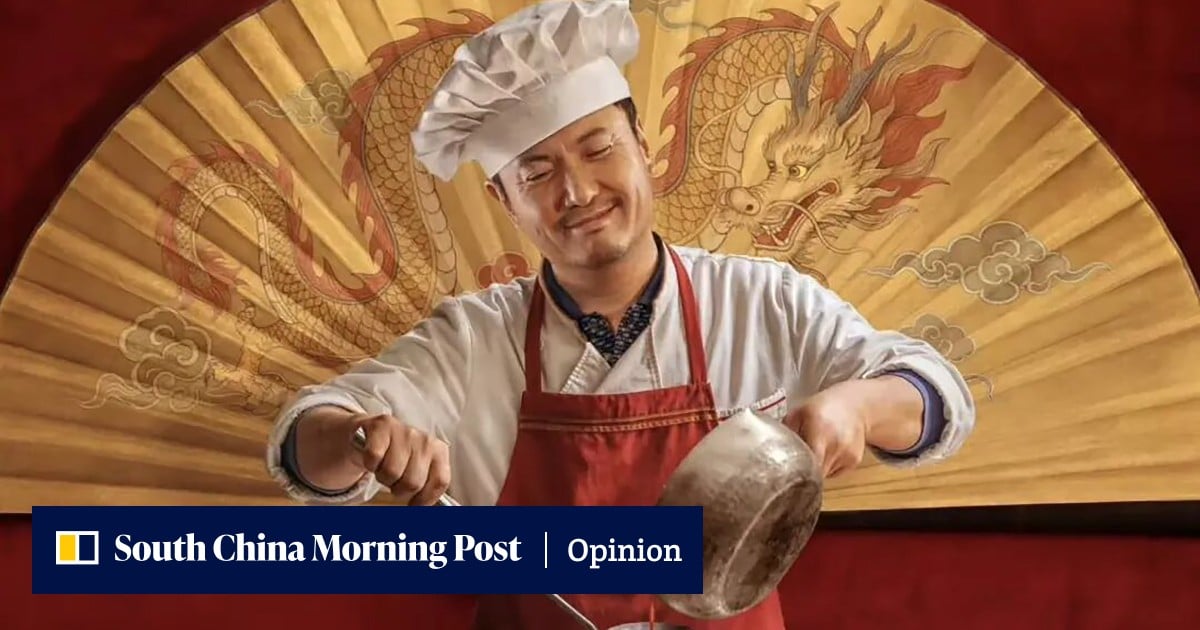
Upending Hollywood’s ‘saviour-hero’ convention in war films, a tale about a humble chef offers a quiet, distinctly Chinese perspective
3-MIN READ3-MIN ListenJianlu BiJianlu Bi is a senior fellow at the Foreign Policy in Focus think tank at the Institute for Policy Studies in Washington, DC, and a research fellow at the Charhar Institute in Beijing. Published: 9:30am, 28 Aug 2026This summer, Chinese anti-war film Once Upon a Time in the Middle East has dominated the mainland box office. The film implicitly answers the question: what happens when a story about international conflict is told, not through the sights of an assault rifle, but through a gentler lens?It offers a fundamental restructuring of cinematic narrative paradigms, one that challenges decades of Hollywood inertia. For nearly a century, mainstream international anti-war cinema has been heavily anchored in the Western hero’s crucible. From The Hurt Locker to American Sniper, classic Hollywood conventions have framed global conflict through a distinct lens: military intervention, the combatant’s moral angst or the intervention of a solitary “saviour” imposing order on local chaos.While these films often critique the horrors of war, they inadvertently reinforce a paternalistic dichotomy – reducing local populations to passive victims who form the backdrop to the agency of foreign soldiers.
By centring a civilian whose primary act of defiance is feeding people, the film shatters the Western “saviour” archetype. It reframes anti-war drama from a spectacle of military prowess to a quiet testament to human endurance. This shift has ignited a fresh debate about global storytelling: can international cinema move past the binary of conqueror vs victim to build narrative tension around the preservation of daily life?