play Live Sign upShow navigation menuplay Live Click here to searchsearchSign upANALYSISNews|US-Israel war on IranSanctions or missiles? Why Gulf may not relish Trump’s new Iran approachAs Washington pressures Tehran, Gulf states weigh sanctions against the risk of escalation.
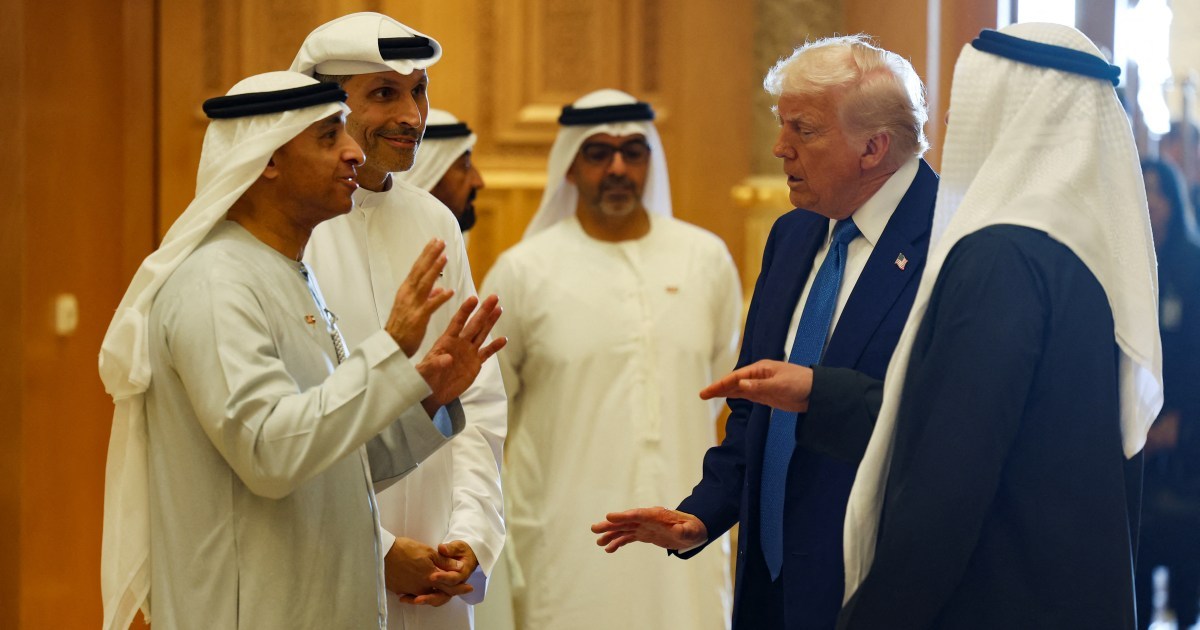
xwhatsapp-strokecopylinkgoogleAdd Al Jazeera on GoogleinfoUS President Donald Trump attends a business forum at the United Arab Emirates presidential palace, Qasr Al Watan, during the final stop of his Gulf visit in Abu Dhabi, May 16, 2025 [File: Reuters/Amr Alfiky]By Caolán MageePublished On 25 Aug 202625 Aug 2026Nearly six months since the United States and Israel launched the first missiles in their war on Iran, Washington is pivoting to a strategy of tougher sanctions and economic isolation in a bid to force Tehran to accept its terms for a peace deal.
On Monday, US Treasury Secretary Scott Bessent announced “Operation Economic Outcast”, targeting Tehran’s remaining sources of revenue while also threatening penalties against those who continue doing business with Iran.
Bessent described the latest wave of sanctions as “the single greatest financial offensive ever” against Iran, and warned that banks and businesses would share in Iran’s isolation if they refuse to cooperate.
“No one is above the reach of US sanctions,” he told reporters.
Gulf states have repeatedly found themselves caught in the crosshairs during the US-Iran war as Iran has targeted US military assets and infrastructure in neighbouring countries.
Economic pressure may appear preferable to another round of US and Israeli missile strikes. But analysts warn the strategy carries its own risks, with Iran potentially responding to mounting economic pressure by targeting more US assets and energy infrastructure across the region.
Iran’s Secretary of the Supreme National Security Council Mohsen Rezaei said last week that if “any countries surrounding Iran join the Americans in their economic war, not a drop of oil will leave the Persian Gulf and the strait of Hormuz”.
In peacetime, one-fifth of the world’s oil and natural gas is shipped by Gulf producers through the critical waterway, which has become the main bone of contention in the war since Iran effectively closed it to shipping at the start of the war.
Iran’s stance leaves Washington’s Gulf allies facing an uncomfortable paradox: the US military presence helps protect them from Iranian missiles and drones, but also makes their territories potential targets.
Now, because of their security relationship with the United States, they are under increasing pressure to cut economic ties with Iran, which could provoke further Iranian retaliation and risk drawing them deeper into the conflict, experts say.
While the United Arab Emirates (UAE) moved last week to decisively cut economic ties with Iran, other Gulf countries such as Saudi Arabia, Qatar and Oman may have different strategic calculations to make. Analysts say they have strong incentives to preserve diplomatic channels with Tehran and to push for a deal that could reopen the Strait of Hormuz.
Bessent described the US measures aimed at isolating Iran as “economic D-Day”.
While the US and other countries have sanctioned Iran’s oil and financial sectors for decades, the latest wave will target five of Iran’s most important remaining economic lifelines: digital assets, technology, gold, aviation and shipping.
Bessent also said Tehran’s trading partners are at risk of secondary sanctions if they continue helping turn Iranian oil into revenue. The Treasury imposed specific sanctions on 60 entities, vessels and individuals across the UAE, Hong Kong, China, Singapore and Switzerland, accusing them of facilitating Iranian trade.
But Iranian political analyst Mostafa Khoshcheschm dismissed the announcement as a “political show” intended to intimidate Iran’s neighbours.
He compared the campaign with Trump’s “maximum pressure” policy during his first term as US president, which was aimed at forcing Iran to renegotiate the US President Barack Obama-era Joint Comprehensive Plan of Action (JCPOA) on its nuclear programme. That, Khoshcheschm noted, failed – ending with Trump withdrawing the US from the agreement instead in 2018.
The latest measures, the analyst argued, are “even weaker than that”.
The ramped-up emphasis on economic pressure comes as months of war have failed to produce a decisive outcome for the US, contrary to Trump’s indications at the start of the war that it would last for a matter of weeks. Meanwhile, US media reports that supplies of missiles and air defence interceptors in the Middle East may be running low – vehemently denied by the Trump administration – have incentivised Washington to pursue other means of pressuring Tehran, observers say.
The disruption to energy exports in the Strait of Hormuz has sent gas prices soaring in the US, making the war even more unpopular at home, even though efforts to establish alternative shipping routes have helped mitigate some of the economic fallout, experts say.
Despite this, Washington appears to believe the economic balance is in its favour. Trita Parsi, executive vice president of the US-based Quincy Institute for Responsible Statecraft, said Washington calculates that rerouting maritime traffic through Oman – combined with a wider shift away from Gulf oil – has reduced the effectiveness of Iran’s closure of the Strait of Hormuz, while the US blockade has sharply constrained Tehran’s ability to sell its oil.
“The result, in Washington’s view, is a status quo that imposes greater costs on Iran than on the United States,” Parsi told Al Jazeera.
That calculation, he said, has led Trump to believe Washington can afford to wait Tehran out and that, for the first time since the war began, “time is working in America’s favour”.
But the effectiveness of this strategy may ultimately depend on whether major economies such as China, India and Russia believe Washington is prepared to impose meaningful penalties on them for continuing to trade with Iran.
Washington’s calculation may also be less comfortable for its Gulf allies. If the US believes it can withstand a prolonged economic war with Iran, it may be more willing to tolerate continued disruption in the Strait of Hormuz – a far more damaging prospect for Gulf economies heavily dependent on energy exports through the waterway.
That leaves Gulf states to calculate just how far they are willing to follow Washington’s economic campaign, particularly if doing so risks prolonging the confrontation with Tehran.
The UAE has already moved further than its Gulf neighbours, with Abu Dhabi saying last week it was ending trade with Iran.
Miad Maleki, an Iran analyst at the pro-Israel think tank the Foundation for Defense of Democracies, said a comprehensive UAE financial and trade cutoff, if enforced, “may be the most consequential economic action of this war for Iran”, potentially exceeding the impact of the US embargo.
That’s because Dubai has long played an important role in Iran’s access to foreign currency, while the UAE has been Iran’s greatest source of imports even during the war.
Ultimately, though, the UAE has been hardest hit by Iran during the war with the US. It is also one of the few signatories to the US-led Abraham Accords, which seek to normalise relations between Israel and Arab states.
Simon Mabon, professor of international relations at Lancaster University, told Al Jazeera the UAE’s position therefore reflects both its experience of Iranian attacks during the conflict and its increasingly close security relationship with Washington and Israel.
“The Emiratis are furious with Iran and they have taken a beating from Iran over the last few months,” Mabon told Al Jazeera. But he described the UAE as an “outlier” in the Gulf, adding he does not expect Saudi Arabia, Qatar or Oman to follow its lead.
Additional economic pressure may not produce the outcome Washington wants, analysts say.
“The pattern that we have seen so far is that when faced with either surrender or escalation, the Iranians escalate,” Parsi said.
With Bessent’s campaign aimed at forcing Tehran to capitulate or risk economic collapse, Parsi said escalation is “the most likely response” if the sanctions begin seriously hurting Iran, which retains “formidable escalatory options”.
That prospect is concerning for neighbours such as Qatar, where continued disruption to the Strait of Hormuz as well as strikes on its LNG operations have already inflicted economic pain. While alternative routes have allowed some oil exports to bypass the waterway, liquefied natural gas and many petrochemical products are harder to reroute.
Qatar has also supported mediation efforts and shares a vast gas field with Iran, giving Doha further incentive to preserve a functioning relationship with its neighbour.
Oman has its own reasons for resisting pressure to isolate Iran. Its longstanding role as an intermediary between Tehran and Washington depends on maintaining diplomatic channels with both sides. For one, it is locked in direct talks with Iran over the future management of the Strait of Hormuz.
Rashid al-Mohannad, vice president of the Doha-based Center for International Policy Research, said recent diplomatic activity, including a visit to Tehran by Oman’s foreign minister, “shows that there is a willingness from the mediating parties to try to pull both the US and Iran back to a diplomatic track”.
Meanwhile, Saudi Arabia has taken a different approach, staying out of the recent mediation efforts while also showing little appetite for ramping up economic pressure on Tehran.
Mabon said that a decade ago, Riyadh might have been expected to follow Washington and Abu Dhabi in imposing tougher measures against Iran. Indeed, at one point the US seemed hopeful it could be persuaded to sign the Abraham Accords.
These days, Saudi has made a credible path towards the formalisation of a Palestinian state a condition for signing, which Israel refuses to accept. Furthermore, the kingdom has indicated an appetite for diversifying its security away from reliance on the US. To this end, it signed the Mecca Pact on mutual defence with Pakistan and Turkiye earlier this month.
Saudi Crown Prince Mohammed bin Salman has also adopted a more pragmatic approach towards Tehran in recent years, culminating in the restoration of diplomatic relations under a China-brokered agreement in 2023.
Furthermore, while Riyadh may desire a weakened Iran, Mabon said, it is wary of the instability that could accompany the collapse of its government.
Joining Washington’s economic campaign could also further expose Saudi Arabia to attacks from Iran or the Iran-backed Houthis, which it has been fighting in Yemen and which are currently targeting Saudi-linked ships in the Red Sea.
Restoring diplomacy between Tehran and Washington – something neither side seems able to do – has become increasingly essential for regional security.
That leaves Gulf capitals with a dilemma they cannot easily escape.
Going along with the US plan for economic pressure may appear preferable to another barrage of missiles. But joining Washington’s campaign could well provoke an Iranian response, raising the prospect of renewed attacks across the Gulf.
Gulf countries will likely continue to push hard for “dialogue and diplomacy” over renewed hostilities or tougher sanctions, which may ultimately be little more than yet another “gateway to further instability from Iran”.