Add The New York Post on Google My grandfather cofounded Amnesty International. He wouldn’t recognize it today.
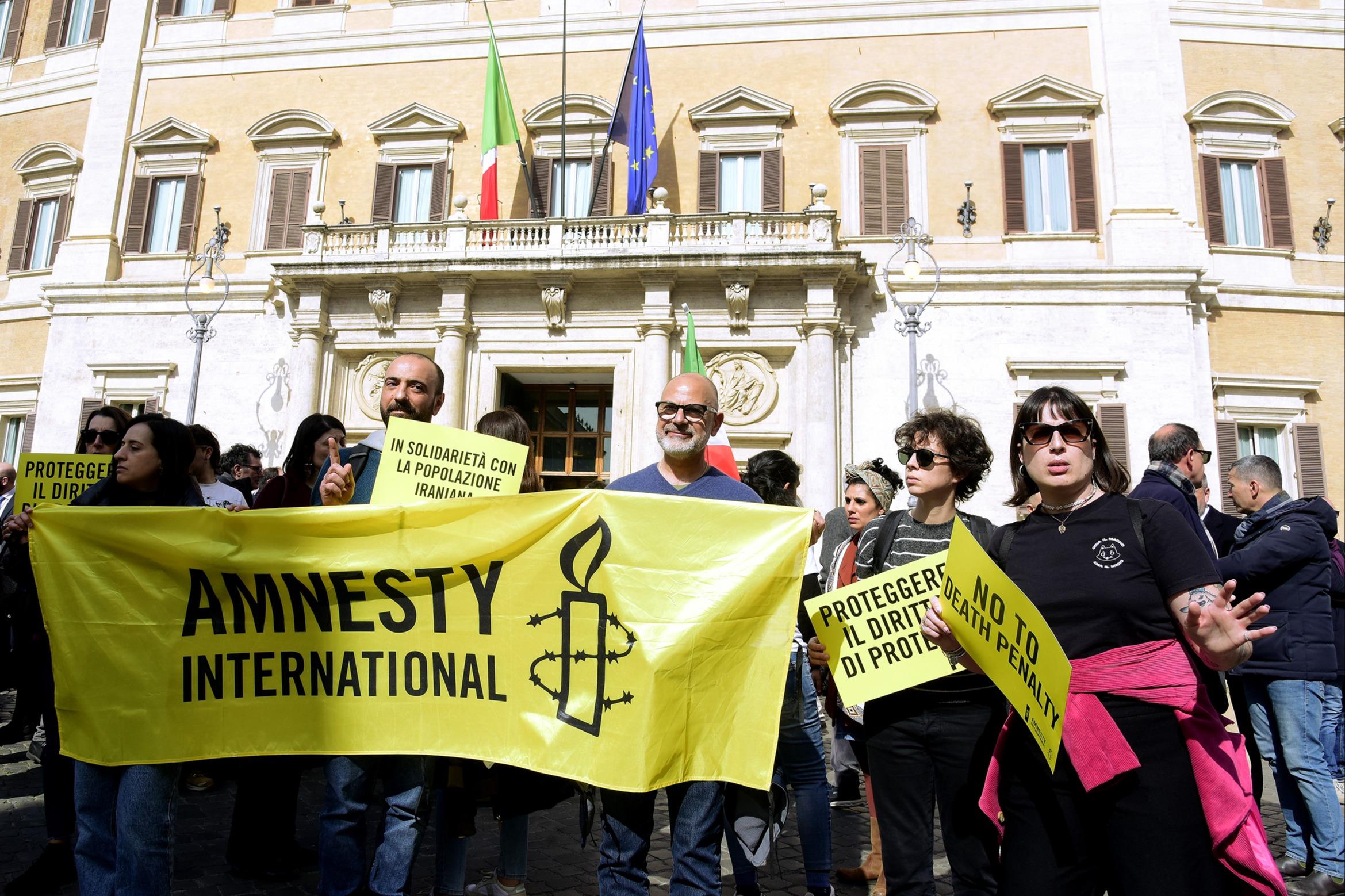
On July 8, 2026, Amnesty International UK published a report titled “A Growing Threat: The Anti-Rights Movement in the UK.” Included in the list of “anti-rights” villains: a rape crisis center in Scotland, various women’s rights groups and Christian societies. They were accused of “undermining human rights protections in law and practice.”
Many of the 117 organizations identified in the report immediately pushed back, publishing letters of objection online and sending them directly to the CEO and Chair of AIUK. Within 48 hours Amnesty removed the report from their website. On July 31, AIUK issued a public apology stating that the report did not meet their standards.
Amnesty was created to defend human rights. The global brand was built on evidence-led, case-by-case methods. One prisoner, one file, one fact-checked case. In my family, we sat around the kitchen table making Christmas cards for prisoners of conscience and writing letters to the authorities that imprisoned them. I was raised to believe that freedom of expression is a fundamental safeguard in democracy.
My family learned that through bitter experience. My grandfather Sean MacBride had been a political prisoner himself and cofounded the charity as a “permanent international movement in defence of freedom of opinion and religion.”
It saddens me to see how far Amnesty has deviated from these founding values. In 2020, Amnesty International Ireland signed an open letter written by Trans Equality Network Ireland that called on “media, and politicians to no longer provide legitimate representation” for people who believe that biological sex is real and material in law.
I publicly challenged Colm O’Gorman, CEO of Amnesty Ireland at the time. A journalist from a national paper interviewed me but ended up not publishing the article. When I asked why, I was told that O’Gorman refused to comment when asked, which made it challenging for the journalist to represent the full story. This tactic of pretending that those who disagree with them aren’t even worthy of debate has had a very real chilling effect on public discourse. I have watched other major rights organizations — such as the ACLU and Stonewall UK — use the same tactic in publicly contested issues.
These organizations have increasingly treated contested questions within feminism as matters on which dissent is not merely wrong but an offense against human rights. Their own position is considered a settled truth. The two obvious examples are the decriminalization of prostitution and the expansion of the definition of a woman to include men who identify as women.
Slogans like “sex work is work,” “trans women are women” and “I am who I say I am” become mantras chanted with a fervor bordering on the religious. For many years the halo effect accrued through their acknowledged good work has meant that they have not faced public scrutiny.
This fervor led to the bizarre situation Amnesty found itself in last month, denouncing Beira’s Place — a sexual-assault support center — as anti-rights. The group was founded and funded by J.K. Rowling to create a women-only space for survivors of sexual abuse and rape. It had to be created as The Edinburgh Rape Crisis Center failed to provide women-only services. The ERRC’s CEO at the time, a transgender woman named Mridul Wadwha, had made headlines for saying rape survivors hoping for such spaces needed to “reframe their trauma” and be re-educated out of their bigotry.
By my count, about half of the 117 organizations identified by Amnesty, like Beira’s Place, believe that sex is material in law and policy. In general, they advocate for the right of LGB people to associate in single-sex spaces, the exclusion of males from women’s spaces, and the protection of the women’s category in sports. Some also challenge the lack of evidence and safeguarding in youth gender medicine. These are principled positions in a hotly contested public debate.
Even when Amnesty’s interventions have been legally refuted, they refuse to stand down or re-evaluate. In 2025, the UK Supreme Court considered a case brought by For Women Scotland. The group argued that the terms “man” and “woman” referred to biological sex, and that those terms mattered when considering issues of legal equality. Amnesty intervened against this argument. The Supreme Court judged that Amnesty’s definitions would make legal protections against sex and sexual-orientation discrimination unworkable. Never deterred, Amnesty included For Women Scotland as one of the anti-rights group in their report.
My grandfather’s approach was a disciplined universality, built on investigated fact rather than ideological assumption. In 2026 Amnesty positions lawful dissent from its ideological orthodoxy as a human-rights violation, adjudicating who deserves legitimate representation and who is cast out as a dissident.
Amnesty’s apology reads as procedural rather than reflective. My question for Amnesty is why an organization founded to protect freedom of expression and belief now takes on the power to decide which lawful beliefs are acceptable. Rebuilding a genuinely pluralist human-rights culture will take time and introspection. It must begin with the simple principle that human rights exist to protect lawful dissent, not to punish it.
Iseult White is an author, psychotherapist, and independent director. @iseult