The title This Is I (now on Netflix) is a play on words referencing its subject, Ai Haruna, whose life story is the primary basis of this biopic. Haruna is a singer and TV star who struggled with gender dysphoria until she met Dr. Koji Wada, a pioneer in gender reassignment surgery who aided in her transition from male to female. Directed by Yusaku Matsumoto and written by Masahiro Yamaura, the film splits time between Haruna and Dr. Wada’s stories, dramatizing how they flaunted the law and cultural taboos in a quest to improve their lives. The question is, were the real-life events truly this melodramatic?
The Gist: Kenji (Haruki Mochizuki) is visibly upset when he stops a teacher in the school hallway. Years of bullying have pushed him to a place of despair. He pleads for help. And the advice he’s given is, “Stop being so effeminate.” If only. Since he was a little kid, Kenji loved to sing karaoke, sometimes while wearing a dress and a big bow in his hair. His dream is to become “an idol,” or a TV personality, if you’re not in tune with the phrase’s Japanese connotation. The kids call him “weirdo” and “homo” and all the slurs, and he’s terrified to share his feelings with his mother and gruff father. He frequently stands on a bridge looking into the water below, or looks forlorn into the mirror. “What’s wrong with me?”, he weeps. “What am I?”
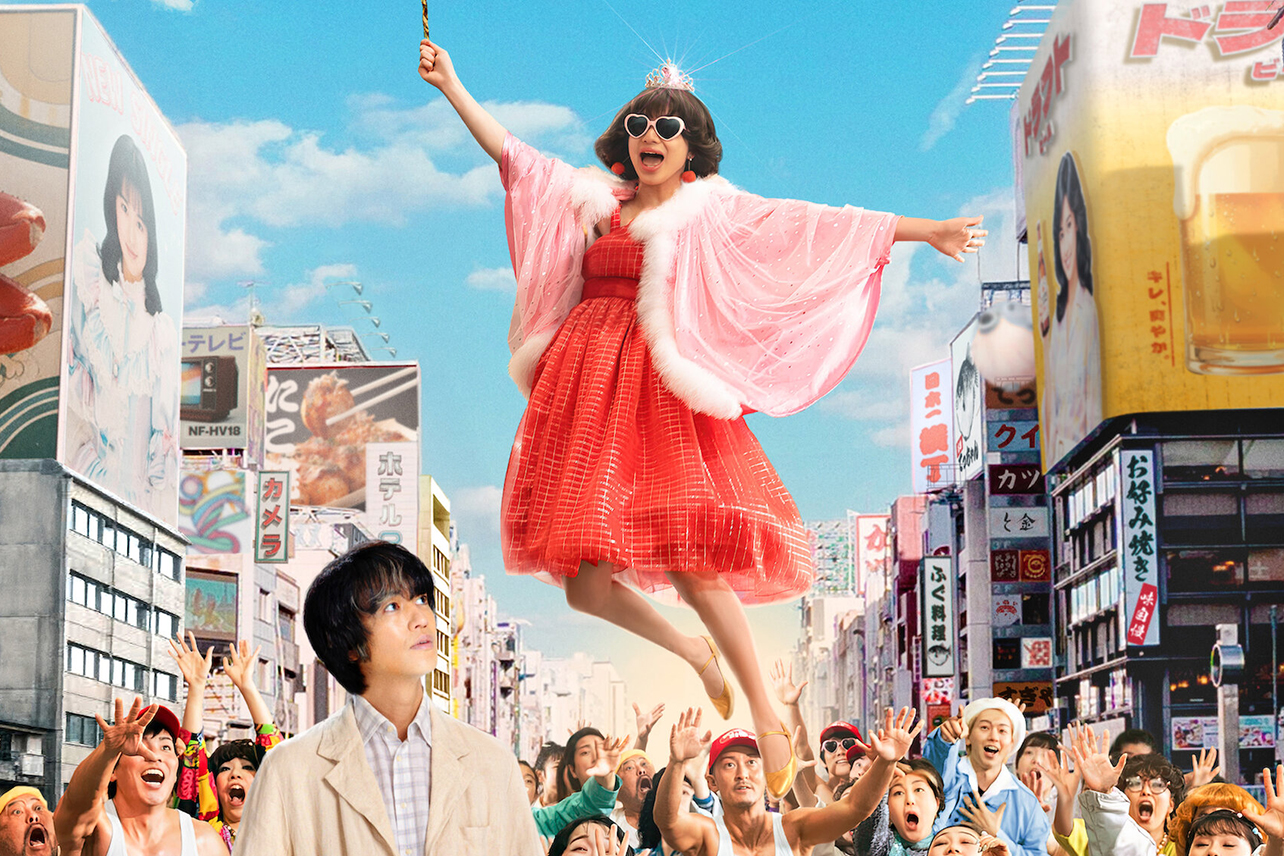
Elsewhere in Osaka, Dr. Koji Wada (Takumi Saito) sits in a bar, drunk. Other doctors tease him like schoolyard bullies, for being a cosmetic surgeon. It’s not “real” work, they bluster. They save lives. What does he do? Besides mope around in a persistent depression, that is? Meanwhile, Kenji spots a beautiful woman on the street and follows her to Jordan Pub, an upstairs cabaret and drag club. “Most can’t tell I’ve got a wiener,” the woman quips, then gives Kenji a job cleaning up around the club and running errands – like fetching hormone supplements from the only clinic in town that’ll support such no-nos. Kenji puts on a cheery red dress and a wig and the world bursts out into song and dance as he strolls to – yes – Dr. Wada’s clinic. He gets back and is so fabulous, he’s put on stage to dance and lip-sync his way to stardom.
This is the birth of Ai. Kenji is no more. Mostly, anyway. Dr. Wada sees him perform – he calls Ai “dazzling,” which is the perfect word to deploy in that moment – and before you know it, Ai is quitting school, taking hormones and asking the doc in the bluntest of terms, “I want you to remove my balls.” Now, this is the ’90s in Japan, and Dr. Wada has newspapers lying around his office bearing headlines about doctors getting arrested for doing sex-change operations and defying “eugenics protection laws.” But Dr. Wada fulfills Ai’s request, and she’s one step closer to being comfortable in her own skin. She falls in love with fellow cabaret performer Takuya (Kaito Yoshimura) and moves into his apartment but they don’t seem… compatible. Physically, I mean. Ai wants Dr. Wada to complete the transition. He balks. There are risks involved. But Ai insists: “I want to be a woman. I’m willing to die for it.” Dr. Wada mulls it over. He finally agrees: “I want to save your life and soul,” he says.
What Movies Will It Remind You Of? The Danish Girl was dramatically klutzy, but boasted more depth of storytelling than This Is I.
Performance Worth Watching: There’s little debating the earnestness of Mochizuki’s lead performance.
Sex And Skin: A few instances of brief nudity; a sex scene with naughty bits behind a somewhat sheer curtain.
Our Take: This Is I is a well-meaning tribute to these real-life people, whose struggles and achievements absolutely deserve recognition. But as a drama, the movie is a non-starter, a slow-moving, weirdly morose, overextended (at 130 minutes) melodrama that tends to hammer on the same melancholic dramatic beats. The melodrama is thinly written and elongated to the point that the characters are sapped of their depth and vivacity. Wada and Ai are broadly rendered and vague in their motivations and emotions, and supporting characters are mostly one-note – the film squanders opportunities to render Ai’s parents with nuance and shade – reflecting the film’s general disinterest in telling a story with much detail or complexity.
Matsumoto washes out the subject matter and themes, turning the film into a YA soap opera for teenyboppers seeking out a good, long wallow. The narrative shifts from Osaka to Tokyo and briefly to Thailand, and plays out over roughly 30 years – 1981 to 2007 – but the film isn’t big on contextual details outside a closeup of a CD boombox or the progression of cell phone tech from little bleepy-bloopy wedges to bedazzled flip phones. The screenplay indulges a pair of out-of-nowhere musical sequences that seem like they should reflect Ai’s vibrant, colorful inner dreams of joy and stardom, but those are two soggy cookies floating in some thin dramatic gruel.
The movie even renders the dramatic stakes confusing, as the same jerk cop lugs Dr. Wada in for interrogations multiple times, without communicating the implications of his actions (is he being arrested? Is he just being questioned? What are the laws, exactly, besides cruel and unscientific?). Meanwhile, the third act almost exclusively consists of long, drawn-out overwrought scenes in which Wada or Ai shares a plaintive heartfelt sentiment, pauses for several beats, shares another one, pauses several more beats, sighs, wipes away a tear, then doles out another sentiment that reiterates the first one with different words. This Is I has plenty of heart, but really needs a judicious editor.
Our Call: Good intentions don’t automatically make a good movie. SKIP IT.
John Serba is a freelance film critic from Grand Rapids, Michigan. Werner Herzog hugged him once.