 · Israel

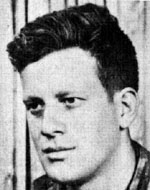
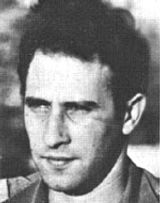
Samal Avraham Rimon served in the Israel Defense Forces. Avraham served with the Golani Brigade. Avraham served in the Six-Day War. Avraham was 21 years old.
Son of Ze'ev and Zhenia, members of Kibbutz Yagur. He was born on 27 Shevat 5706 (29.1.1946) on the kibbutz. He completed all twelve years of his schooling, elementary and secondary, at the kibbutz school. He was quiet and withdrawn in his corner of the classroom, yet when his name was proposed to the committees for a social activity, the proposal was accepted at once, even though, out of his great modesty, he did not like to stand at the center of such an activity. Avraham postponed going to the counselors' course to which he had been chosen, arguing that he was not suited to it, but he gladly accepted his selection for a course in knowledge of the Land, for he loved very much to hike in the landscapes and along the paths of the country. He made several "partisan" hikes with two or three of his classmates, to the Judean Desert, to Jerusalem, and to the Carmel or the Galilee, which he knew like the back of his hand. At the end of his twelve years of schooling at Yagur he went with his friends for a year of service at Kibbutz Yad Hanna (Senesh), and there too Avraham was placed at the center of things. His role in the work was many-sided; his hand turned to everything, from repairing a faucet or a pipe to advising on the choice of a trade in a particular branch. Even as a pupil at school, Avraham was an outstanding student in all subjects, such as mathematics, and he was ready to help friends who found it hard to understand problems; his explanations followed straightforward logic, with which he knew how to simplify the problem differently from the way the teacher taught it. There was almost nothing Avraham could not answer when asked, from music, through science and philosophy, to sports. He was at home in every sphere of life and took an interest in everything. And more than this: he loved peace, and in any quarrel or mere argument among the boys in the class, Avraham always knew how to bring about peace to the satisfaction of both sides. Avraham was regarded as a "spiritual father" by each of his friends. He listened patiently to everyone, and his good heart shone from his eyes.
In November 1965 he was drafted into the IDF, but Avraham did not like the military atmosphere, the uniform, the hardness, for he saw a lack of warmth in them. Avraham failed the officer-candidate evaluations, and it was said of him that he had wanted to go to the officers' course. To succeed, one must stand out in outward behavior during the conversation between the examiners and the candidates, but this was the opposite of Avraham. He explained to the guys that after the course there was no certainty that he would return to his unit, and that one who thinks of a military career will choose to become an officer, but not one who is fond of his unit. But while he was still in his compulsory service the Six-Day War broke out, and in the battle at Tel al-Faher on the fifth day of the fighting, 1 Sivan 5727 (9.6.1967), he fought with courage and composure and fell to a burst of bullets as he leapt from trench to trench at the head of his unit. To his soldiers who came to rescue him he said that they should not tend to him but should continue advancing toward the enemy. He was brought for burial in the military cemetery in Afula and some time later was moved to his final resting place in the cemetery of Kibbutz Yagur.
For tenacity of purpose and self-sacrifice, Avraham was commended by the General Officer Commanding Northern Command. Kibbutz Yagur dedicated its newsletter, issued at the "shloshim" (thirtieth day), to the fall of Avraham and the fall of three more of its members. The kibbutz also published a volume, "In Their Memory," for four of its sons, Avraham among them. The kibbutz also published a book bearing his name. In "The Book of Heroism," published by the Journalists' Association in Tel Aviv and the Bergen-Belsen Survivors, Avraham's heroism in his last battle was described. His name was also commemorated in the books "From Hermon to Suez" by David Dayan, "The History of the Six-Day War" by Arye Hashavia, and "Not by the Sword Alone," edited by Ruth Bondy, Ehud Zmora and Raphael Bashan, published by Levin-Epstein; and his memory was recalled in the memorial booklet "The Rest Fell in the War" of the Kibbutz Meuhad. Material from his legacy was also included in "Gvilei Esh" (Scrolls of Fire), Volume 4, an anthology of the legacy of the sons who fell in Israel's battles.
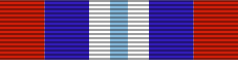
An investigation conducted in 2017 emphasized that the Commanding General's Citation of Merit awarded to Sergeant Avraham Rimon, of blessed memory, was converted to the Distinguished Service Medal.
-
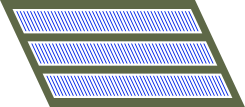
SamalRank as published: סמל | Hebrew date: 1st of Sivan 5727 | Resting place: Cemetery (Military Section) Yagur (Military Plot)
Branch
Highest rank
War
Honors · 2 decorations
 Awards & Decorations
2
For valor
Medal of Distinguished Service posthumous
For service and achievement
Six Day War Ribbon posthumous
 Burial Information
- 4 monuments carrying the name
Laid nearby · Section 1
27 others are held in this section; the nearest 12 by row and grave.
 Asa YaguriRow 4 · Grave 6
 Zalman ItzhakiRow 4 · Grave 4
 Betzalel Ram MarkmanRow 4 · Grave 3
 Moshe GuthalfRow 4 · Grave 2
 Meir RanRow 4 · Grave 1
 Haim VakserRow 5 · Grave 5
 Aharon BialistokRow 5 · Grave 4
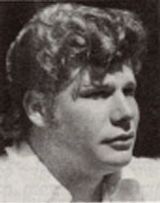 Avraham KlugRow 5 · Grave 6
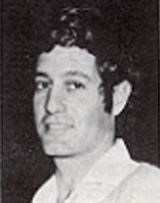 Refael LevRow 5 · Grave 7
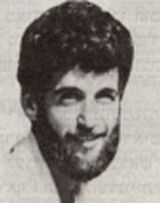 Reuven GalRow 5 · Grave 3
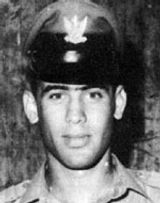 Ben-Zion GaifmanRow 3 · Grave 2
 Eran VardiRow 5 · Grave 2
This page is permanent and free. No fee to view it, no advertising, no tracking, and no account required. It will not be taken down.
Are you family? This record can be claimed and maintained by those who knew Avraham. Claim this record.

Be the first to honor Avraham.
Leave a Tribute