 · Israel

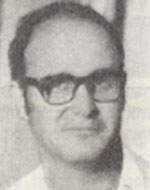
Seren Ahiram Barali served in the Israel Defense Forces. Ahiram served with the Infantry. Ahiram served in the Yom Kippur War. Ahiram was 25 years old.
Ahiram (Rami), son of Hanna and Yitzhak, was born on 28 Shevat 5708 (7.2.1948) in Jerusalem.
After he went through psychotechnical tests, according to which it was determined that he was a developed child and capable of learning, Rami was accepted to elementary school when he was only five years old. Rami completed his high school studies at the high school attached to the Hebrew University in Jerusalem, and when he was 17 the matriculation examinations were already behind him. “The Smiler,” his friends called him. And indeed Rami was a cheerful, good-hearted boy, always active, both within the framework of his studies and in the company of his schoolmates, in the Gadna youth corps and in the Scouts movement.
Ahiram was drafted into the IDF in mid-November 1965 and volunteered for the Paratroops. After he completed a squad commanders course in his unit and after a short period of command, Rami was sent to the infantry officers course and completed it with high marks. When the course ended he was posted to the officers' school as an instructor, although he had asked to return to his paratroop unit. In the Six-Day War Rami did return to his unit and fought with it in the Gaza Strip sector and on the Golan Heights.
When he finished his regular service Rami went on a four-month trip in Europe, crossed the continent from end to end, and to finance the expenses of his journey he worked at an Israeli fair that was then held in London. These four months were for Rami a calming “time-out,” between leaving one framework and entering a new one.
As soon as he returned from his trip Rami began to study at the Hebrew University in Jerusalem, in the Faculty of Social Sciences, and successfully completed his bachelor's degree in economics. Alongside his studies Rami did various jobs in order to finance his studies. For two years he worked as the university's computer operator, and afterwards he was accepted to work at the Ministry of Commerce and Industry, where he rose quickly up the ladder of positions, until he was granted the post of senior economist in the ministry.
Besides openness and a sharp mind, Rami was blessed with natural technical talent. He renovated his apartment in Jerusalem himself: he laid the floors, plastered, built walls, repaired the plumbing and turned his small home into a splendid apartment. He also assembled his stereo system himself, and did all this although he was so busy with studies and work.
Rami was a loyal family man, as testified by his wonderful relations with his parents and above all, being the youngest of the three children of the family, by the strong bonds of friendship with his two older brothers, bonds that were much more than mere family closeness. As a commander in the army too he built a fine relationship with his subordinates, a relationship of friendship that also had a trace of fatherliness in it, or more correctly, an authority that took upon its shoulders the whole burden of responsibility.
Four days before Rosh Hashanah 5734 Rami went out on regular reserve service in the Suez Canal sector, for a period of 32 days. He was the commander of the “Hizayon” compound, opposite the Firdan Bridge in the central sector of Sinai.
When the Yom Kippur War broke out, the Jerusalem unit was sitting in the strongpoints of the sector, on alert, because the enemy concentrations were already known, but calmly and without panic. At 1:30 in the afternoon the last vehicle entered the strongpoint and left it. It had brought with it Doctor Avi. Until that hour there had been no doctor in the strongpoint. Doctor Avi managed to tour the strongpoint and distribute instructions for an emergency, and five minutes had not passed when the first shells began to land on the strongpoint. The war had begun.
While the soldiers hurried to put on steel helmets and put on flak jackets, Rami stood at the observation post. The shelling was heavy and some of the men of the strongpoint were already dead when Rami announced over the field telephone that the Egyptians were crossing the canal in barges. He reported that with bursts of machine-gun fire he had sunk four barges and hit others that were in the process of crossing the canal.
Yehuda Raviv, his comrade in the battle, relates: “After a few moments the cry was heard: ‘Medic, medic!’ Rami ran to the bunker, his arm missing, severed from his body near the shoulder. Avi and I bandaged the wound and injected Rami with morphine to quiet his pain. When his strength returned to him Rami began to speak. He said: ‘Yehuda, telephone Itzik (the second officer) and hold the receiver close to my mouth.’ When Itzik answered, Rami said to him: ‘Itzik... this is Rami... take over the command... good luck.’ Although his arm was severed, and even after the painkillers ran out, Rami continued to command from within the bunker. When the Egyptians arrived, Rami asked the doctor to kill him, so that his screams would not be heard. The doctor refused, and Rami rose above himself and subdued his pain in silence.”
During the capture of the strongpoint by the Egyptians, on 13 Tishrei 5734 (9.10.1973), Rami fell. He was laid to rest in the military cemetery on Mount Herzl in Jerusalem. He left behind parents and two brothers.
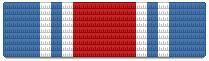
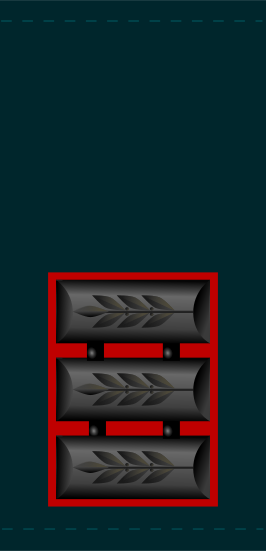
After his fall he was promoted to the rank of Captain. For his brave conduct during the battle Rami was awarded the Medal of Distinguished Service (Itur HaMofet).
In a letter of condolence to the family his commander wrote: “Rami fought with great heroism. Rami was an exemplary man and fighter.” Yehuda Raviv said of him: “Rami was an excellent commander and fell like King Saul, in the bleakest hour of battle.”
And his friends, who gathered at his parents' home, said: “It is strange; we, who were a close-knit group in the past, hardly see one another anymore. Suddenly we discovered that Rami was the one who had united us, and around him we had come together. With his departure, our group broke apart.”
In a booklet called “Shana BeShana” (“Year by Year”), published by Heichal Shlomo, the story of the battle in which Rami took part is included; articles were also written about him in the newspapers “The Jerusalem Post” and “Bamahane.”
-
SerenRank as published: סרן | Hebrew date: 13th of Tishrei 5734 | Resting place: Cemetery Mt. Herzl (Military)
Branch
Highest rank
War
Honors · 2 decorations
 Awards & Decorations
2
For valor
Medal of Distinguished Service posthumous
For service and achievement
Yom Kippur War Campaign Ribbon posthumous
 Burial Information
- The cemetery · the exact grave is not yet placed
- 5 monuments carrying the name
Laid nearby · Section Dalet-4 (ד-4)
100 others are held in this section; the nearest 12 by row and grave.
 Mordehai MamanRow 1 · Grave 8
 Avner Shai ShuatRow 1 · Grave 7David NahmiasRow 1 · Grave 11
 David SisamRow 1 · Grave 12
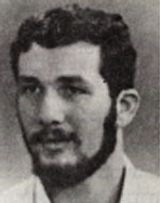 Israel ReinholtzRow 1 · Grave 6
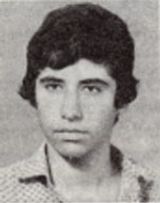 David HadadRow 1 · Grave 5
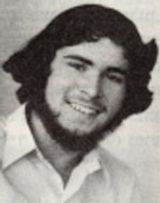 Yaakov RokteliRow 1 · Grave 13Itzhak VaakninRow 1 · Grave 4
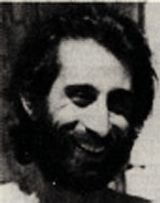 Yosef Toren TurgemanRow 1 · Grave 3
 Shmuel MalkovRow 1 · Grave 2
 Rahamim AnafRow 1 · Grave 1
This page is permanent and free. No fee to view it, no advertising, no tracking, and no account required. It will not be taken down.
Are you family? This record can be claimed and maintained by those who knew Ahiram. Claim this record.
Be the first to honor Ahiram.
Leave a Tribute