Every site on NeuraWeb has a .nw name, and that name is a permanent identity. This site, requiem.nw, is registered to and run by NeuraWeb Global, Inc. Visit it through Navigator and your visit is private by design: no one watches, tracks or collects from you.
Secure unesites use HTTPS and UNES
Look for a lock, https:// or unes:// at the start of the address. Each one means your connection is encrypted and you're on the official site. UNES is NeuraWeb's own secure connection, the one Navigator uses. HTTPS is the same protection on the open web. Only share personal information on a site that shows one of these.
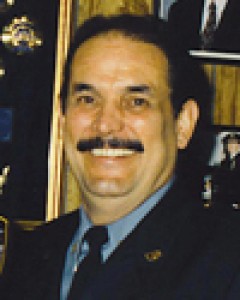
Detective Roberto Rivera died of illnesses he contracted after inhaling toxic chemicals and materials while working hundreds of hours at Ground Zero, the site of the terrorist attacks of September 11, 2001.
Detective Rivera had served with the New York City Police Department for 30 years and was assigned to the Joint Terrorism Task Force.
Detective Rivera had served with the New York City Police Department for 30 years and was assigned to the Joint Terrorism Task Force.
His story
Roberto L. Rivera was appointed to the New York City Police Department on 29 October 1973 and served for nearly 30 years. He was promoted to detective on 29 January 1982, to second grade on 23 November 1994 and to first grade on 24 December 2001. Over his career he served in the 44 Precinct, Brooklyn North, the Narcotics Division, the First Precinct Detective Unit, the Detective Bureau's Special Investigations Division and the Arson and Explosion Squad, and finally the NYPD/FBI Joint Terrorist Task Force, from which he retired on 31 December 2002. He was recognized eight times for excellent and meritorious police duty.
Right after the attacks on the World Trade Center, Detective Rivera volunteered for the bucket brigade at Ground Zero, working on top of the burning piles of debris. He died on 27 January 2007 of illnesses caused by his hours of rescue and recovery work. His name was unveiled on the NYPD Memorial Wall in May 2009.
Colleagues remembered him as sharp, friendly and dedicated. He was survived by his wife and their three children. His son Robert also became a detective and retired from the Joint Terrorist Task Force.
Survived by
He is survived by his wife, two sons and a daughter.
The Years After
September 11, 2001
For eight months after the towers came down, men and women worked the site. Firefighters, police, paramedics, iron workers, truck drivers, cleaners, volunteers. They breathed what was in that air, and many of them have died of it since - cancers, lung disease, illnesses that took ten years or twenty to arrive.
More people have now died of September 11th than were killed on September 11th. They are not a footnote to the day. They are the day, arriving late.
A man who walked down eighty flights and out into the street, and who died of a cancer in 2031, was killed by the same attack as the man who never got out. This gate holds them together, because the same morning took them both.
On a clear Tuesday morning, four airliners were taken. Two were flown into the towers of the World Trade Center in New York, one into the western face of the Pentagon, and one came down in a field near Shanksville, Pennsylvania, after the passengers and crew went forward at the cockpit door.
Two thousand nine hundred and seventy-seven people were killed. Three hundred and forty-three were firefighters of the New York City Fire Department. Seventy-one were law enforcement officers. Eight were paramedics and emergency medical technicians. One hundred and twenty-five died at the Pentagon, military and civilian together. The rest - some two thousand four hundred of them - had gone to work, or boarded a plane, and belonged to no service at all.
None of them began that morning as heroes. A great many of them ended it as heroes: men and women who carried strangers down stairwells, who stayed with people who could not walk, who held a door, who went back up. Four men on a flight over Pennsylvania, who had thirty minutes of telephone calls and knew what had already happened, decided where their aircraft would come down.
At Arlington, the nation set aside its own rules of eligibility and buried the Pentagon's civilian dead in national ground. It had decided that on this day the distinction did not apply.