
The story
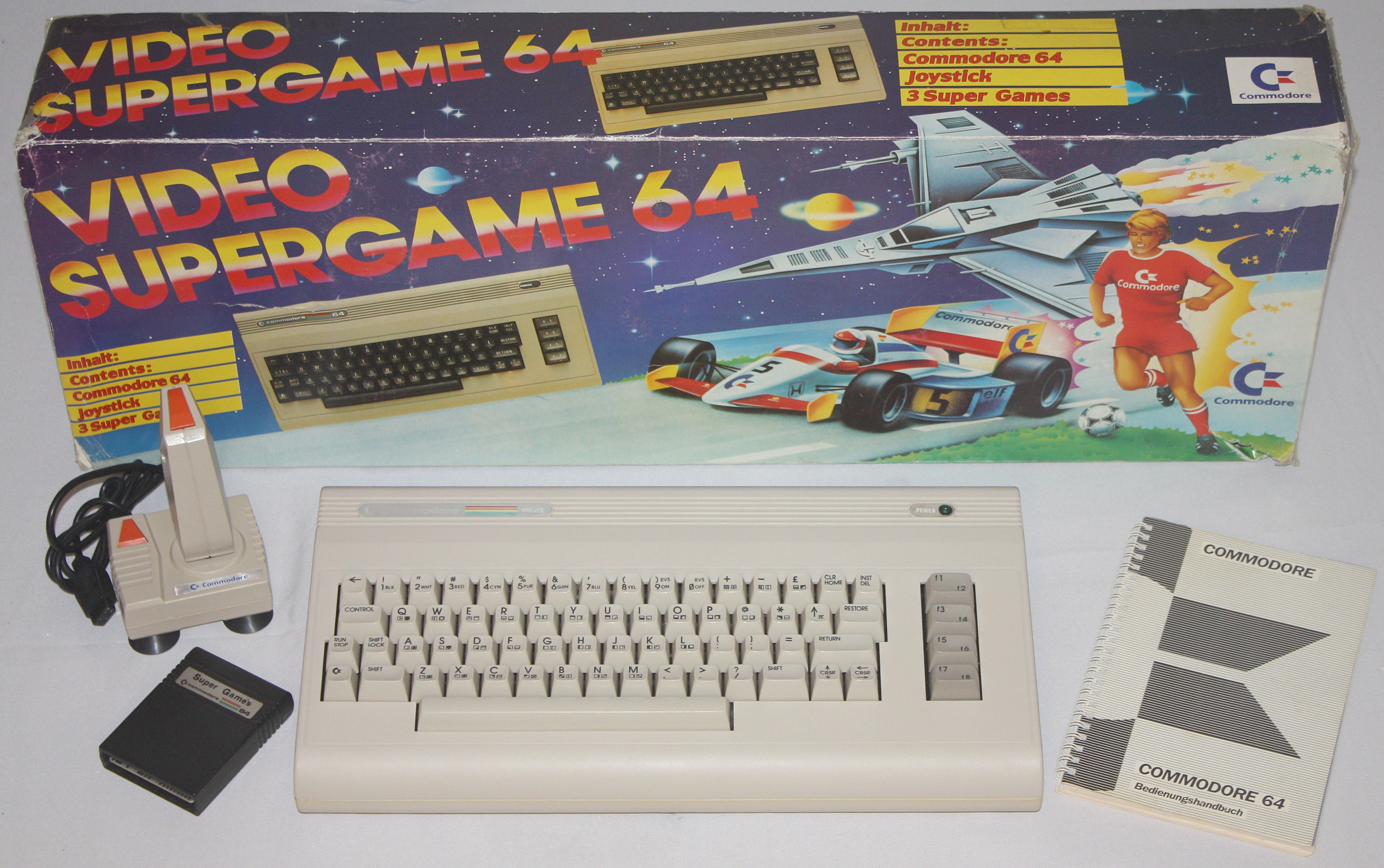
By 1986 the Commodore 64 had been on sale for four years and was still selling strongly, so Commodore gave it a new look rather than a replacement. The result was the 64C, often written C64C and known in Germany as the C64 II. It traded the deep brown breadbin for a lower, wedge-shaped case in light beige, styled to match the newly launched Commodore 128. The name badge moved to the lower right of the case. Inside, it was the same computer, and it ran the existing C64 software library without trouble.
The first 64C machines used motherboards much like the old ones, with modest savings in parts. From around mid-1987 Commodore switched to a much smaller board that combined many functions into fewer chips. Memory came from two higher-density RAM chips instead of eight, BASIC and the KERNAL shared a single ROM, and a custom chip absorbed the PLA and several logic parts. The SID sound chip was replaced by the newer 8580, which ran at a lower voltage and had a different filter, so music sounds slightly different on these machines and some sampled speech plays back quietly. Owners can spot the later boards from the outside, because the keycaps put the graphics symbols on the top of each key rather than the front. The slimmer case also meant some internal add-ons built for the original no longer fitted.
In the United States the 64C was sold with GEOS, Berkeley Softworks' graphical desktop with windows, icons and a mouse-driven interface. Commodore also released matching disk drives, first the 1541C and later the redesigned 1541-II.
The newer board also turned up in old-style cases. In Germany, machines built around 1987 in the original breadbin shell with the newer keyboard and electronics were sold through Aldi discount stores, earning the nickname Aldi C64, while white or light-coloured breadbin machines labelled C64G combined the old case with the 64C board. The 64C stayed in production into the 1990s, carrying the C64 line through to the end of Commodore's 8-bit era.