
Commodore Modems
Commodore's modems span the whole arc of early home telecommunication, from acoustic couplers to fast PC cards. For the PET business line there was the 8010, a 300 bps acoustic coupler on the IEEE-488 bus. The real breakthrough came in 1982 with the VICMODEM (model 1600), a 300 baud unit for the VIC-20 that sold for under US$100 and came with introductory offers for CompuServe and other services. It could not dial on its own, but it opened the online world to a huge number of home users and helped force modem prices down.
The 1650 AUTOMODEM added dialling under software control. The 1660 of 1985 let the Commodore 64's sound chip generate touch tones and came with the software for Quantum Link, the Commodore online service that later became America Online. In 1987 the 1670 brought 1200 baud and the Hayes command set, with a 1670CR revision adding switches to disable auto-answer. The 1680, also sold as the RS1200, was the version with a true RS-232 port for the Amiga, and a later VM 2400 reached 2400 baud with error correction and compression. Commodore's PCs could take a 14,400 bps internal Communicator Card.
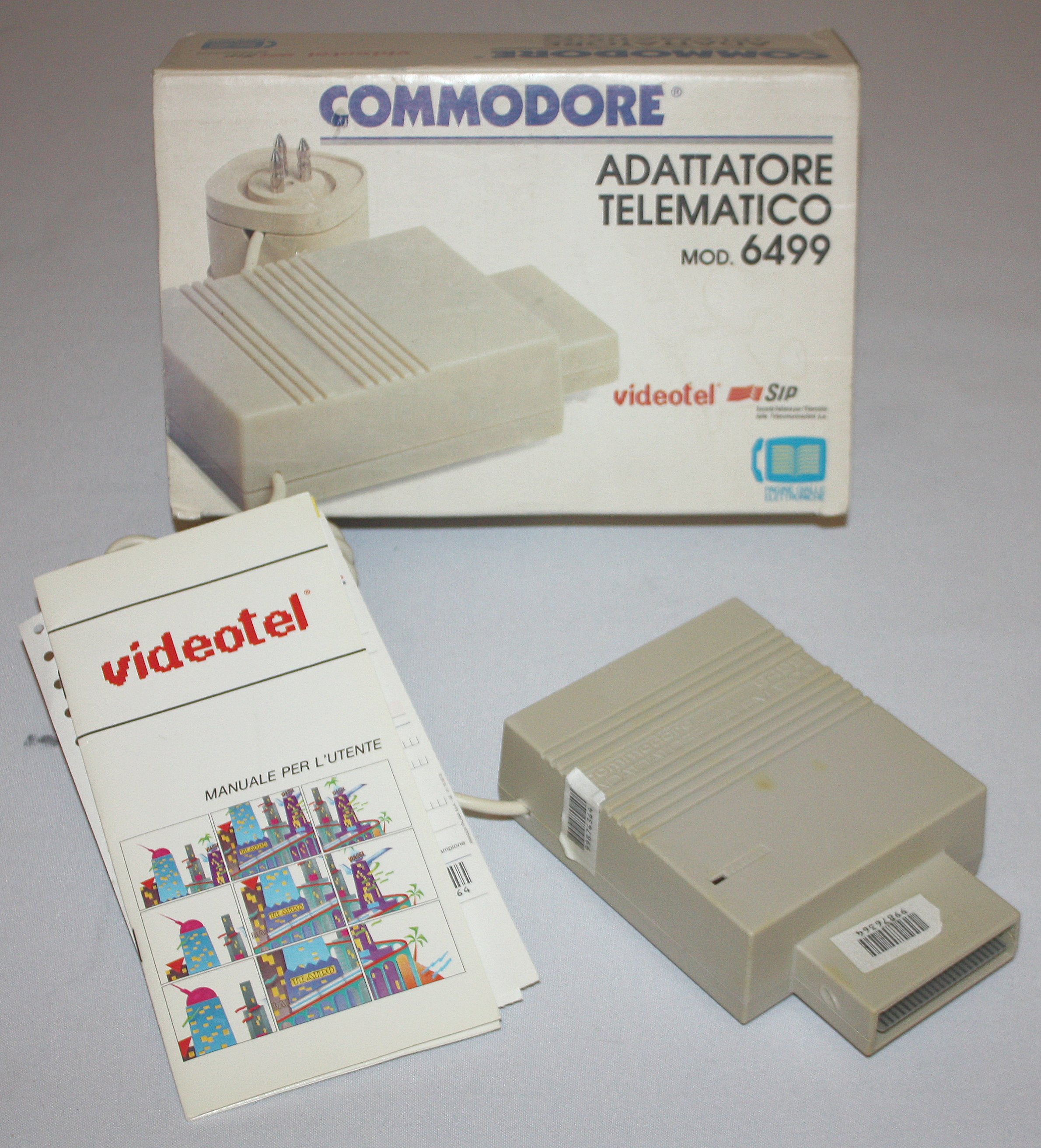
Regional services had their own hardware. Units existed for the Compunet service and for Commodore Australia's Viatel service, and in West Germany Commodore sold Btx decoder modules for the national Bildschirmtext videotex service, which ran from 1983 to 2001. The second module, made by Siemens with Commodore branding, was effectively a computer in a cartridge with its own processor, memory and video circuitry, connected to the post office's DBT-03 modem. An Amiga Btx package also existed.
Collectors prize complete boxed sets with cables, manuals and the original service sign-up material.