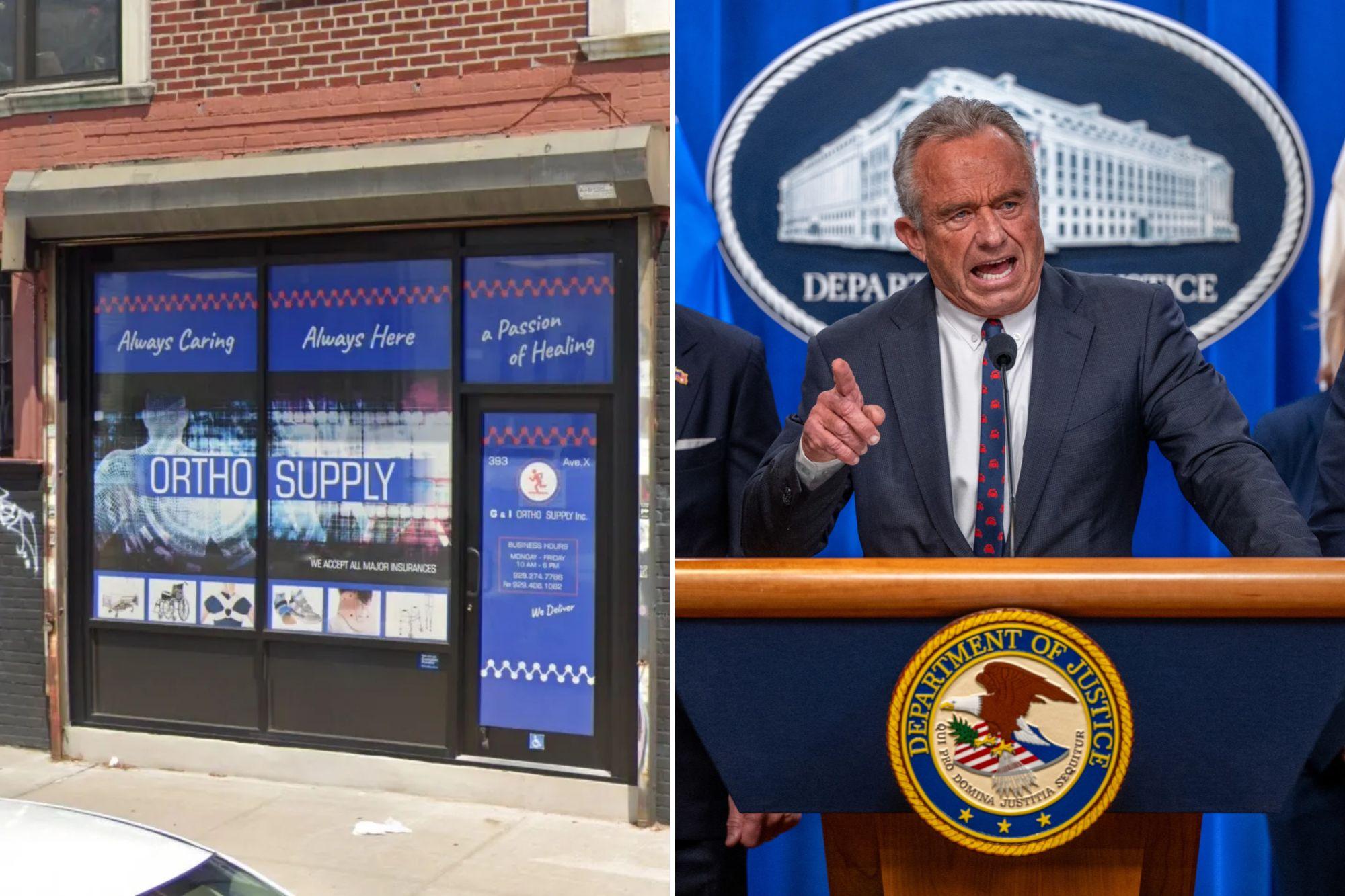
Add The New York Post on Google A quiet Brooklyn storefront served as a key part of a $1 billion Medicare fraud scheme led by the Russian mob, a federal indictment charges — and could even have been backed by the Kremlin.
The scheme was so brazen, one medical supply company linked to the outfit submitted bills totaling over $250 million for urinary catheters in 2023 alone, according to the feds.
The number was so large it amounted to $50 million more than the combined spend of every other medical provider in the country on catheters that year.
The scam started in 2022 when a Russia-based transnational criminal organization bought up over 30 medical supply companies across the US — from California to Texas to Chicago — which were already enrolled in Medicare, according to the indictment.
The organization then recruited young men, primarily from Russia and Estonia, and sent them to the US to act as straw owners of the companies.
The fraudsters then indiscriminately began blanket billing Medicare for supply reimbursements, mostly urinary catheters, using the stolen credentials of 7,000 physicians and over a million Medicare recipients, feds allege.
Thousands of bills originated from G&I Ortho Supply in Gravesend, Brooklyn, and were sent on behalf of Medicare customers across the country. It is one of two addresses in the borough the gang operated from, the other hasn’t been revealed.
The crime syndicate made $10.6 billion in fraudulent claims in total, according to prosecutors. They were paid $941 million, which the gang are charged with promptly laundering through China, Israel, Pakistan, Singapore and Turkey.
While some of the hired patsies have been caught and prosecuted, a recently unsealed superseding indictment is short on details of who was running the scheme, beyond they are believed to have operated from outside the US.
Experts are convinced the scheme goes to the top of Russian society.
“These are big numbers. I don’t see how you become a John Gotti in Russia without the government either giving you permission or controlling what you do,” Jay Albanese, a criminology professor specializing in international crime rings at Virginia Commonwealth University, told The Post.
An earlier prosecution of two men who fronted businesses involved in the scheme shed more light on how it worked.
The straw owners’ main job was collecting the Medicare reimbursements from the medical facilities, as they sent as physical checks through the mail, and then banking it.
Aleksandr Lis, a 26-year-old soccer-loving Estonian, was recruited by the gang and flew to New York where he was put up in a Times Square hotel.
He lived there for nine months as nominee owner of Texas’s Konaniah Medical Supplies and another Kentucky medical supply business. Instructions on how to do his job were sent to him via text message, his lawyer Daniel Wachtell said.
The lonely, low-paid young money-runner received $17,000 for the nine months he was on the job, which seemed unextraordinary to the uneducated, former package delivery man who arrived speaking no English. He had to file documents, collect money, open an account asking for a Russian-speaking bank clerk by name, Wachtell said.
Text messages show he and another nominee-owner complained of loneliness and boredom while shacked up in New York and at one point suspected their jobs might not be what they thought.
Prosecutors said over $6 million in fraudulent funds passed through Lis’s hands and he pleaded guilty in 2025 in the Eastern District of Kentucky to conspiracy to commit money laundering.
He has already been released from prison after getting sentenced to 28 months, mostly due to time served and was deported back to Estonia upon release, his lawyers confirmed to The Post.
In court, Lis’s attorneys argued he was a low-level operative swept up in the scam. “Aleks regrets ever having come to this country for this job, and I’m very grateful that he’s at home with his family now,” Wachtell told The Post.
John Jay College criminology professor Serguei Cheloukhine, who specializes in post-Soviet organized crime, isn’t as convinced by the defense.
“You cannot pick up a guy off the street in Chechnya or Estonia and do this. That’s not how it works. They have this dark network that they communicate with. There’s passing on of references,” Cheloukhine, a former Interpol cop, told The Post.
In January, Kazakh national Anuar Abdrakhmanov was charged with conspiracy to commit money laundering in a similar massive Medicare fraud scheme in Chicago federal court.
Prosecutors allege Abdrakhmanov — who arrived on a visitor’s visa but was able to procure a New York State driver’s license — took control of Priority One Medical Equipment, a Kentucky company, in April 2024 and used it to submit roughly $666 million in fraudulent claims for glucose monitors and catheters.
The company’s Kentucky office was largely vacant; employees were paid $6,000 a month to forward mail and checks via the Telegram encrypted messaging app to an unidentified supervisor and ship payments to Chicago-area addresses, according to the indictment.
Abdrakhmanov allegedly wired proceeds overseas, including to Hong Kong accounts. The case remains in pretrial proceedings and he has not yet entered a plea.
The indictment unsealed last week contained the names of 12 people charged with conspiracy to commit wire fraud, healthcare fraud and money laundering, all nationals of Russia, Czechia, Estonia and one US citizen, Jason Onoufrienko.
All are wanted by the feds, who noted the Russian gang had directed members in the US to flee across the Mexico border when law enforcement began making arrests.
On the other side of the scheme, affected citizens and businesses blame Medicare for not catching on sooner.
In April, the Centers for Medicare and Medicaid alerted providers that 1.3 million recipients had been issued new Medicare ID numbers — presumably because their original ones were compromised in the Russian mob breach.
The scheme triggered over 400,000 complaints from beneficiaries and providers who noticed fraudulent billing on their Medicare statements.
Just seven of the fraudulent medical supply companies accounted for a $1.9 billion spike in catheter reimbursements in 2023.
Around that time, local news outlets proliferated with stories Medicare recipients getting eye-popping catheter bills — which can now be traced to the Russian outfit.
New Hampshire woman Laura Colquhoun told CBS New York she was billed $1,800 for catheters from the Brooklyn site, G&I Ortho Supply in Gravesend, one of the two New York addresses the gang operated out of, according to the indictment.
“So, all these charges were all fraudulent,” Colquhoun told the outlet.
“Medicare is just saying, ‘OK, here, here’s taxpayers’ money,’ and I think they have to be more concerned because it is from taxpayer money.”
Nashville shop owner Pamela Ludwig was shocked to learn her Pretty In Pink Boutique — which sells mastectomy, compression and burn garments — shared the same name as a fraudulent site in Texas after hundreds of angry seniors began ringing up in 2023 to berate her for fraudulent $1,500 catheter bills on their Medicare claims statements.
“From every state across the country, very, very angry people; understandably so,” Ludwig told The Post. “Then it turned into creditors, lawyers, agencies calling on behalf of the Treasury Department. It went on for a year and half, which was amazing. Medicare was aware of it, so why the heck were they still paying these claims?”
That fraud site, which had no connection to Ludwig’s boutique, originally specialized in prostheses for breast cancer survivors but was sold to the scammers in 2022 for $50,000.
“When you report change of ownership to Medicare that triggers a site survey and an audit,” Ludwig, who is also a Medicare provider, said.
“Did these Medicare site surveyors show up and the place was dark and the door was locked? Did they show up at all?” she questioned.
The federal indictment doesn’t contain information about which alleged Russian transnational criminal organization (TCO) was behind the fraud, but both Albanese and Cheloukhine say it would have to be one of the country’s more established outfits to pull off such a well-organized scheme.
“At the very top of the network are the [Russian] politicians and law enforcement. They are protecting the network. That is how they get their new houses and yachts. And it goes beyond medical supplies — prostitution, money laundering, jewelry,” Cheloukhine said.