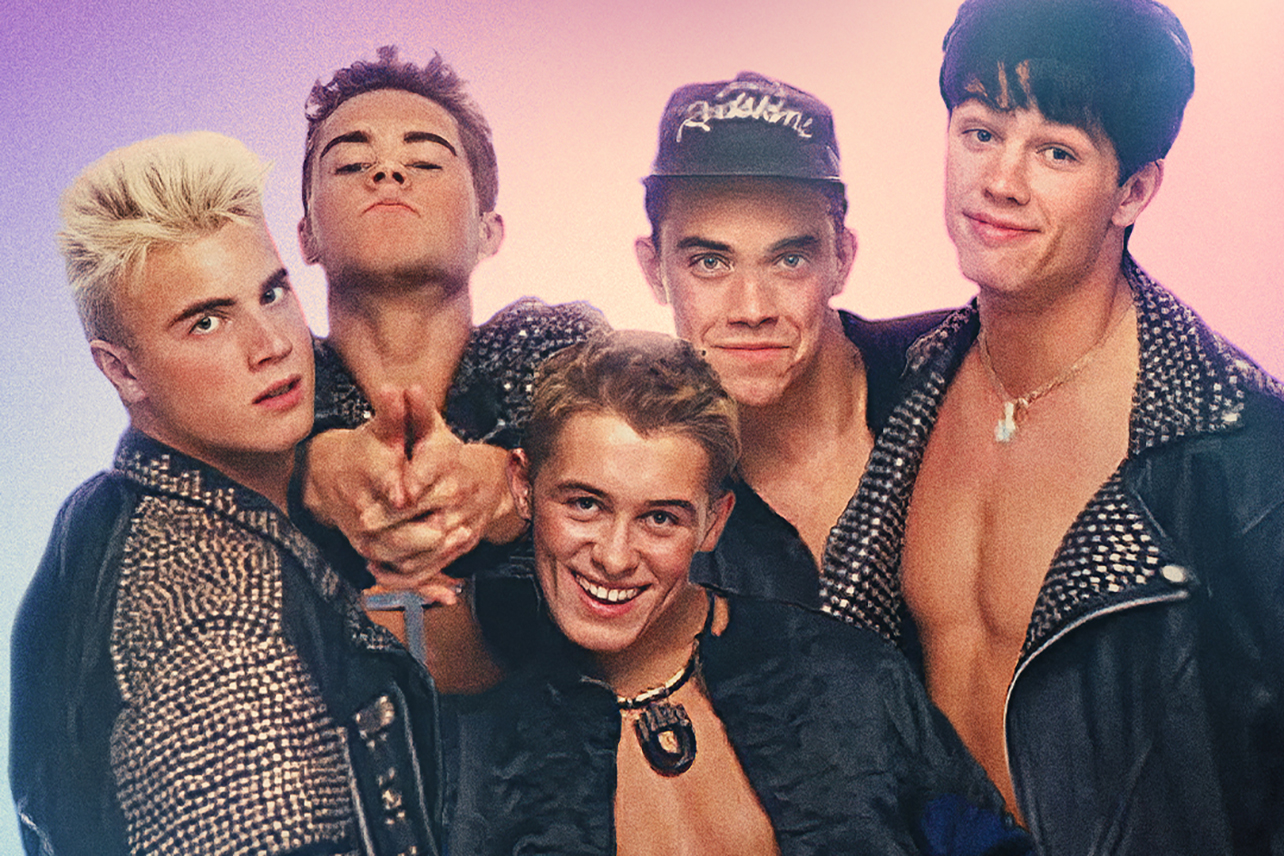
@glennganges Published March 1, 2026, 7:00 p.m. ET Photo: Netflix Where to Stream: Take That Powered by Reelgood More On: boy bands Stream It Or Skip It: ‘Simon Cowell: The Next Act’ On Netflix, A Docuseries Where The Longtime Host and Music Exec Tries To Make Boy Band Magic Happen Again Stream It Or Skip It: ‘Building the Band’ on Netflix, A Reality Singing Competition That’s All Sound And No Vision Stream It Or Skip It: ‘KPop Demon Hunters’ on Netflix, In Which A Kickbutt Girl Group Sings To Save The World From A Demonic Boy Band Stream It Or Skip It: ‘The Carters: Hurts to Love You’ on Paramount+, A Two-Part Doc About The Scars And Tragedies In Nick And Aaron Carter’s Family Once upon a time, everybody wanted to be NKOTB. As the new Netflix docuseries Take That describes, in the late 1980s, the massive success of New Kids on the Block was the model for a new five-headed combo of singers and dancers determined to become the biggest pop thing to ever come out of…Manchester, England? For a while, it worked. Then, it crashed. And then, like a boy band phoenix or another acknowledgement that everybody loves a comeback, Take That rose again. Over three episodes, Take That the docuseries tracks the pop group’s classic rise-fall-rise arc.
Opening Shot: “I don’t think anything can prepare you for what we were about to take on, come the ‘90s.” In an old piece of tape, the members of Take That are seen goofing on a backstage version of their hit single “Back for Good.”
The Gist: Take That includes interviews with Gary Barlow, the band’s principal singer and songwriter, singer Robbie Williams, and the rest of Take That, Howard Donald, Jason Orange, and Mark Owen, who say they were mostly there to dance. But no one’s interviewed on camera, and there are no cutaways to observers, commentators, or people in the band’s orbit. And since it’s not clarified when the voiceovers were recorded, even as Barlow says “It’s so easy to rewrite history,” Take That uses a style of personal recollection that sometimes seems to do exactly that.
They were having a good time, though. Take That goes all the way back to the beginning, and the 1990 auditions, held in Manchester, to flesh out a New Kids-influenced group. There is always an impresario when it comes to stuff like this, and for the boys in Take That it was Nigel-Martin Smith, who was determined to build a group of singers and dancers around Barlow, who’d impressed him with a homemade demo full of original ballads.
Take That gets some mileage out of contrasting the Top of the Pops hitmakers of the time – OMD performing “Enola Gay” on TV – with some of Barlow’s first gigs, where he sang and played piano for dancing old folks at social clubs. But with the other guys around “Gaz” and his songs, and a whole lot of dancing shirtless in spandex, cheezy accessories and chunky high-tops, Take That eventually transformed their hustle of playing four gigs in 24 hours – a school assembly, an all ages show, an 18+ show, and then a gay dance club later at night – into a major record deal and their own appearances on music shows like TOTP.
Take That didn’t ever really break America, usually one of the biggest goals for such groups, until they were close to splitting up. And that period, around 1995-96, is already surfacing as Take That closes out its first installment. Once Williams departed for a solo career, there were difficulties with doing the same for the other members, and later Take That episodes chronicle the protracted survival of the group alongside moments of personal reconciliation and the inevitable Take That rejuvenation. “You suddenly realize, ‘This isn’t me and my four mates singing on a stage,’ Barlow says of the pressures that surfaced once Take That got famous. “We’re a business now.”
What Shows Will It Remind You Of? Evidently there are no new interviews with Robbie Williams in this Netflix docuseries, perhaps because he already has his own Netflix docuseries. Robbie Williams is a good watch, though. There is a lot of honesty in the singer’s reflections on the early days of Take That, and a lot of personal eccentricities are on display. Perhaps the same parts of Williams’ personality that inspired him to become a CGI chimpanzee in his own biopic.
And if you’re talking impresarios building their own pop groups, Dirty Pop: The Boy Band Scam has thoughts. The 2024 docuseries delved into the early years of New Kids on the Block and their destructive relationship with manager Lou Pearlman.
Our Take: The first episode of Take That begins and ends with renditions of “Back for Good,” the band’s 1995 single, one of their biggest songs anywhere, and the only Take That track to ever even sniff the top of the US pop charts. Which also illustrates the issue this docuseries has, at least for its domestic Netflix audiences: as a band, Take That just never really made an impression over here. The later exposure of Robbie Williams and his solo career, sure. But in America, Take That as a boy band entity was never gonna replace New Kids on the Block, who were their model, or the later fascinations with Backstreet Boys and NSYNC. And viewed this way, Take That is really interesting, because it can feel like pressing play on a totally unknown version of a pretty familiar story.
“Press play” is also key here: Take That revels in the look and feel of 40-year-old technology, emulating the vertical hold issues of VHS playback, stitching together ancient footage from live performances – everywhere from school gymnasiums to gay dance clubs – and benefitting from a born clown like Robbie Williams, who often seems to commandeer whatever camera is available. For audiences outside the UK, what emerges with Take That is like the full story of a pop group, hermetically-sealed. Add talent to charisma and camaraderie and good looks, and the thing takes off. Until you add in money and ego and band vibes turned sour, and the thing goes off the rails.
Performance Worth Watching: The main interviews are all in voiceover here, so the visuals are non-stop, and Take That hits on an enjoyable method by incorporating old performance footage, still images, TV hits and backstage hijinks into a kind of on-screen scrapbook.
Sex and Skin: Sex appeal and cheesecake sold the early years of Take That, as lots of archival footage highlights. Take this cue from the shooting script for the “Do What U Like” video: “C/U bum, gyrating at cam.”
Parting Shot: “How long can this last?” As Take That looks to its second episode, the docuseries is already setting up the band’s 1996 breakup.
Sleeper Star: Describing how he joined Take That, Howard Donald also summarizes the burgeoning breakdance scene in Manchester he was part of during the late 1980s. Take That includes some pretty entertaining footage from back then, with grainy home videos and news reports of kids throwing down cardboard next to boom boxes and doing the windmill on ancient swaths of linoleum.
Most Pilot-y Line: “We’d reached the top of the mountain,” Gary Barlow says in Take That. “But it was also the beginning of the end for us as a band.” Ominous!
Our Call: Stream It. Over three episodes, Take That shows that while you might not know the principal players, in the game of pop stardom, the broad strokes of getting famous, falling on tough times, and finding your way back are often quite familiar.
Johnny Loftus (@johnnyloftus.bsky.social) is a Chicago-based writer. A veteran of the alternative weekly trenches, his work has also appeared in Entertainment Weekly, Pitchfork, The All Music Guide, and The Village Voice.