Add The New York Post on Google NEW YORK — The largest digital camera ever built is starting to capture images of unseen corners of the universe.
The Vera C. Rubin Observatory has officially begun its cosmic survey, meant to capture swathes of the sky in more depth and detail. Perched on a Chilean mountaintop, the telescope will point its eye at the southern sky for the next 10 years, taking hundreds of images per night.
Researchers hope Rubin’s observations will help them take a better census of the universe, mapping billions of stars in the Milky Way and billions more galaxies beyond it.
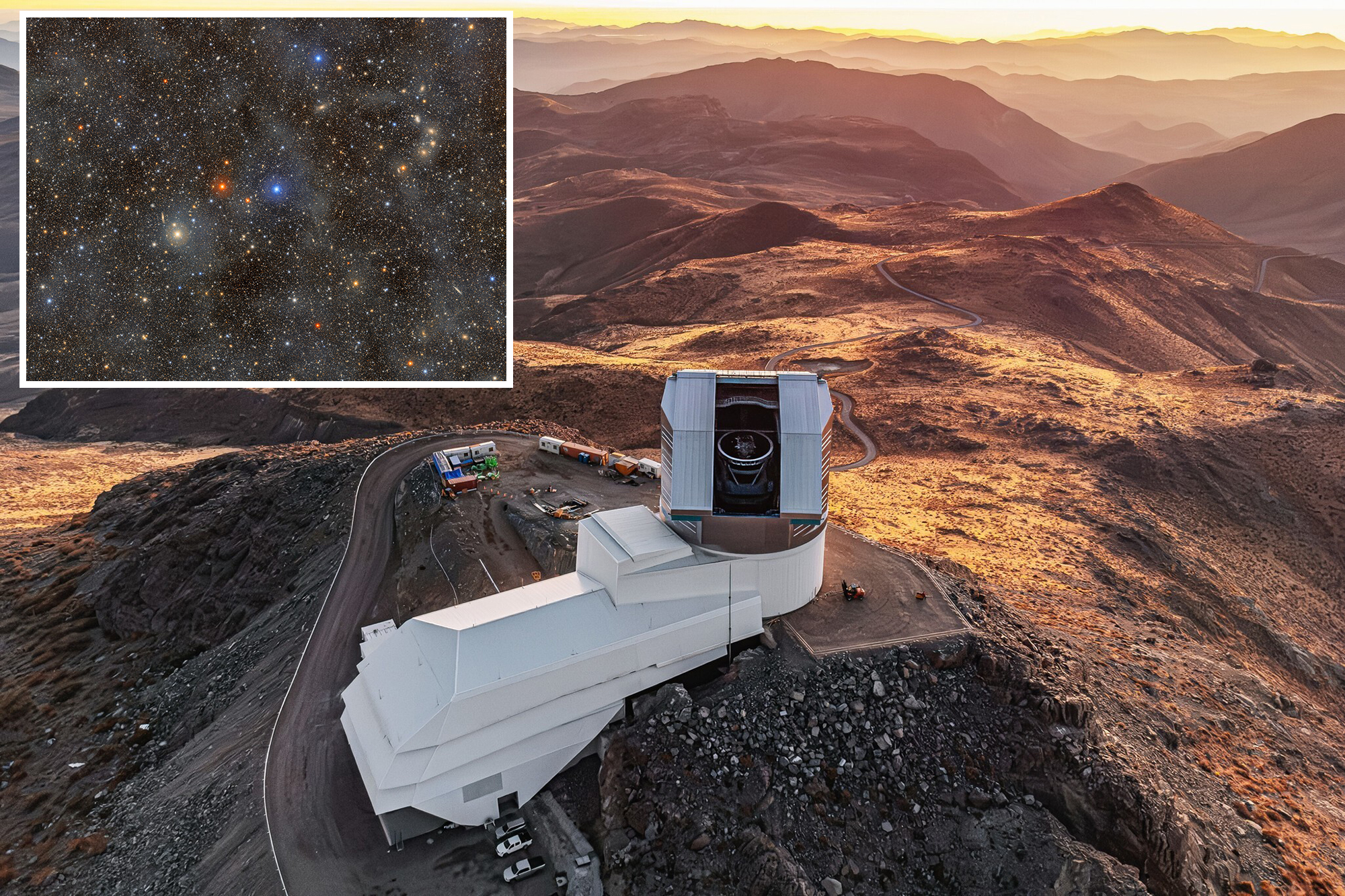
Stars in the constellation Lupus captured by the Vera C. Rubin Observatory. NSFDOE Vera C. Rubin Observatory/NOIRLab/SLAC/AURA via AP It takes pictures quickly and will grab images of the same areas of sky multiple times, allowing scientists to glimpse fainter objects that previously eluded detection.
“We’re going to see large numbers of scientists across the world working with this data set, studying the universe in a way that they haven’t been able to before,” said Phil Marshall, the observatory’s deputy director of operations.
Rubin released its first images last year, including colorful shots of the Trifid and Lagoon nebulas located thousands of light-years from Earth.
A light-year is nearly 6 trillion miles (9.7 trillion kilometers).
Since then, researchers have tuned up the equipment so it’s ready to take pictures at the depth and accuracy required for the decade-long survey.
The images may help scientists discern how galaxies form and cluster over billions of years, and how the universe came to be.
Aerial view of the Vera C. Rubin Observatory perched on a mountain, with a vast mountain range bathed in golden light in the background. Anadolu via Getty Images Funded by the U.S. National Science Foundation and U.S. Department of Energy, the observatory is named after astronomer Vera Rubin, who offered the first tantalizing evidence that a mysterious material called dark matter might be lurking in the universe.
Researchers hope the effort may yield clues about dark matter as well as an equally puzzling force known as dark energy.