Keir Starmer gives a speech during a visit to Malloy Aeronautics in Berkshire after the publication of the long-delayed defence investment plan on Tuesday. Photograph: Stefan Rousseau/PAView image in fullscreenKeir Starmer gives a speech during a visit to Malloy Aeronautics in Berkshire after the publication of the long-delayed defence investment plan on Tuesday. Photograph: Stefan Rousseau/PAStarmer warns Burnham not to borrow to fund defence as he reveals £15bn planThe prime minister unveiled his long-awaited defence investment plan on Tuesday after months of delays
Keir Starmer warned his successor not to borrow more to pay for defence as he raided energy, transport and housing projects to pay for a £15bn military spending plan.
The prime minister revealed his long-awaited defence investment plan (Dip) on Tuesday after an 11-month government row that cost him his defence secretary and arguably contributed to his downfall.
Starmer said the government had found an extra £15bn for the plan by taking money from road and energy schemes. He failed to deny reports that some of the funding had come from pushing back planned upgrades to armed forces housing.
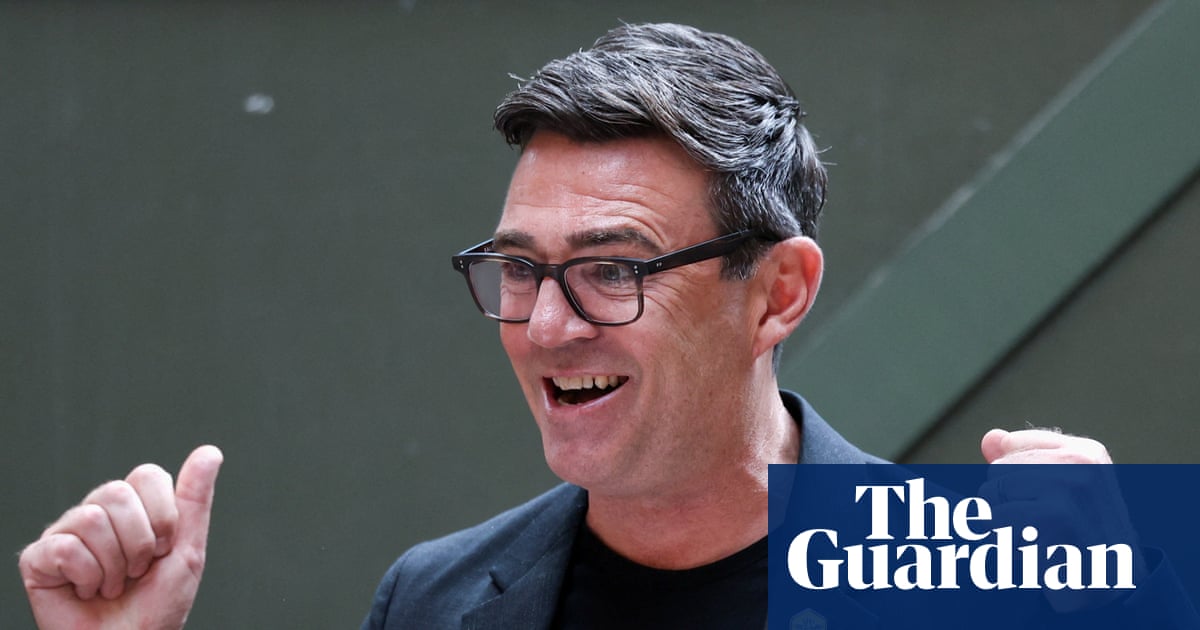
He urged his successor, likely to be the Labour MP Andy Burnham, to find more money for defence at the next spending review, though he warned not to borrow more to pay for it.
The Guardian revealed last week that some of the prime minister’s allies would use the transition period to recommend Burnham revive the idea of “defence bonds”, which was previously rejected by the Treasury.
“Defence bonds are just borrowing by another name,” he told an audience at a drone-making company in Berkshire.
“We’ve looked at this very carefully, but the fact is doing this through borrowing will push interest rates higher at a time when £1 in every £10 already goes on paying their interest.
“This government has fought hard to bring the public finances under control, and it has paid off helping to bring inflation and mortgage rates down. We should not sacrifice that.”
The prime minister’s plan means the government will now spend an extra £15bn on defence investment over the next four years, beyond the £283bn it had previously allocated.
Of that, more than £8bn will be spent on a new stealth fighter jet for the Royal Air Force, more than £63bn will go on nuclear weapons systems, including 12 new jets to carry nuclear bombs, and omore than £5bn will be spent on drones.
More money was found for drone spending in particular after Dan Jarvis, the new defence secretary, agreed to sacrifice other parts of his budget to do so.
The prime minister did not deny reports on Tuesday that this money had come from a plan to upgrade military housing, something Jarvis’s predecessor, John Healey, had prioritised. Healey announced £9bn last year to help fix more than 40,000 military homes.
Starmer did admit, however, that much of the additional £15bn was coming from other departments’ capital budgets, meaning infrastructure projects may have to be delayed, scaled back or scrapped.
“Some capital projects , for example, on roads and energy, which are important but not immediately vital, will no longer go ahead as planned,” he said. “But this is about taking the necessary choices, the right choices to protect our nation.”
Asked about reported cuts to the military housing programme, the prime minister added: “We have put a lot of money into military housing, and I’m proud that we have … Of course, I have to balance that against investment in the military capability that we need.”
Despite the sacrifices imposed on the Ministry of Defence (MoD) and other departments, military chiefs have complained that the additional funding falls short of what is needed.
The MoD asked last year for £28bn beyond what had been allocated as part of the spending and defence reviews, with Healey arguing to lift defence spending to 3% of GDP by 2030. This plan grants just over half what was demanded, with a promise to hit the 3% target at some point in the next parliament.
Starmer wanted to announce the Dip before travelling to the Nato summit in Ankara in July and before departing as prime minister.
Burnham, whose most likely rivals have announced they will not stand against him, is likely to take over as party leader on 17 July and become prime minister on 20 July.
Starmer said he was sure his successor would not seek to unpick the settlement he agreed, and would prioritise defence investment at the next spending review.
“[The Dip] is something which any Labour prime minister would want to stand on, because the first duty of any prime minister is the defence and security of the country,” he said.