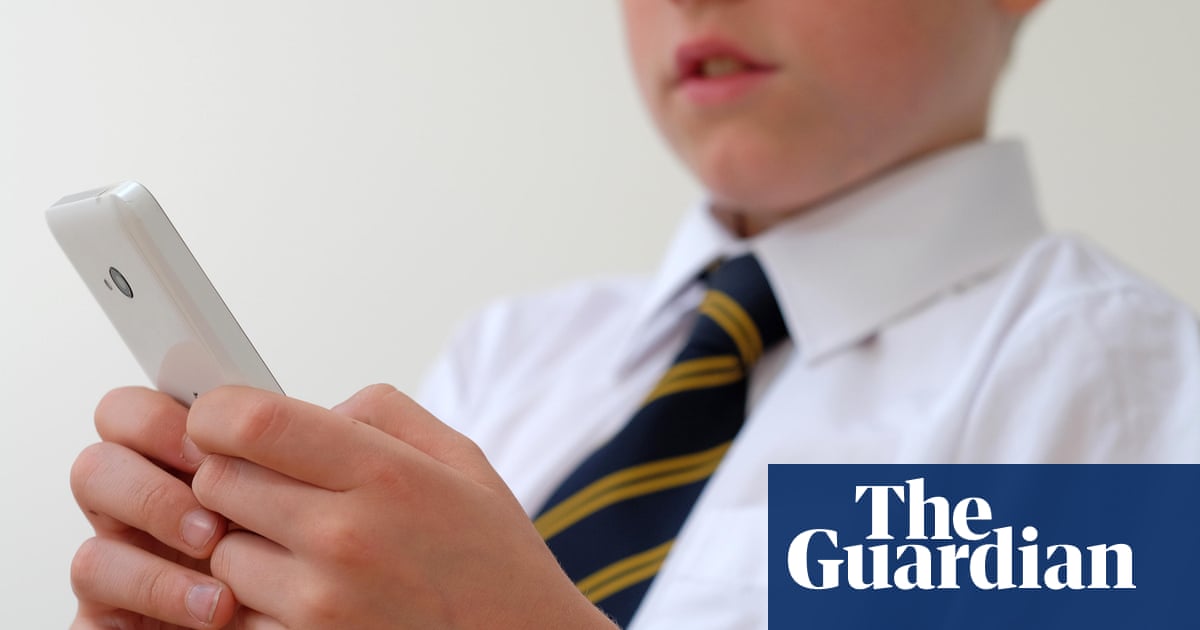
The UCL report was published a day after a statutory ban on smartphones in schools in England came into force. Photograph: True Images/AlamyView image in fullscreenThe UCL report was published a day after a statutory ban on smartphones in schools in England came into force. Photograph: True Images/AlamySchool smartphone bans seen as ‘punitive’ by young people, study saysOutright bans may have unintended negative consequences for young people, University College London report warns
School smartphone bans are “overly simplistic” and are not supported by young people who regard them as “punitive” rather than helpful, according to research by University College London.
The UCL report was published on Tuesday, the day after a statutory ban on smartphones in schools in England came into force, making individual schools and trusts legally responsible for being phone-free throughout the day.
The study warned that outright bans werelikely to be ineffective and may even have unintended negative consequences for young people.
Read moreThe UCL study questioned 732 secondary school students aged 11 to 18, as well as 27 teachers and 41 parents about their views on phone bans, using questionnaires, interviews and focus groups.
There was widespread agreement about the potentially disruptive influence of smartphones in the classroom, but the research uncovered a sharp generational divide. While 87% of teachers and 88% of parents were in favour of a blanket ban, 75% of pupils disagreed with the policy.
“Adults feel the bans will alleviate disruptions and simplify classroom management,” the report said, “whereas pupils experience smartphones as supporting communication, safety, emotional regulation and everyday organisation.”
Students who participated in the research said banning smartphones restricted access to “essential” tools they relied on to navigate daily life and support their learning, such as bus timetables, weather forecasts and homework apps.
They also valued the fact that smartphones offered direct access to helpful support networks, and girls in particular said their smartphones helped them feel safer when travelling alone.
Students further warned that while banning smartphones may reduce the visibility of digital issues such as cyberbullying and sexual harassment at school, a ban could lead to these issues going underground and pupils would feel less able to report concerns to adults.
Schools in England have different phone ban policies – some allow pupils to bring their phones to school but they have to put them away in special lockers or sealed pouches. Others allow only “brick” or “dumb” phones with very limited internet access, while pupils in some schools are not allowed to bring their phones on to school premises at all.
The lead author, Jessica Ringrose, a professor of the sociology of gender and education at UCL Institute of Education, said: “The students we spoke to perceived blanket bans as punitive, rather than supportive. They felt bans undermined trust between them and the adults in their lives, who they felt misunderstood the integral role phones play in their day-to-day routine.”
A co-author of the report, Dawn Aytoun from the education consultancy Life Lessons Education, said: “Schools should encourage students to learn, understand and discuss the ethical, relational and political dimensions of the digital world, as well as the economic models that guide tech companies.”
Edith Rodda, a co-author and PhD candidate at UCL, added: “Rushed school smartphone policies that don’t consider students’ perspectives, however well intentioned, risk creating a cycle of punishment that ultimately undermines the policy’s aims. Students inevitably find workarounds, like breaking open lockable phone pouches.”
A Department for Education spokesperson said: “We’re using the power of government to drive a culture change that is widely backed by parents and school leaders alike – enabling children to benefit from the best of technology, while protecting them from the worst of it.
“Banning mobile phones in schools doesn’t sit alone. We’re giving children the skills to navigate the online world safely, introducing the first-ever screen use guidance for parents of five- to 16-year-olds, banning social media proven to harm under-16s, supporting the building of safe AI tutoring tools, and updating the curriculum so every child can identify misinformation and build real media literacy skills.”