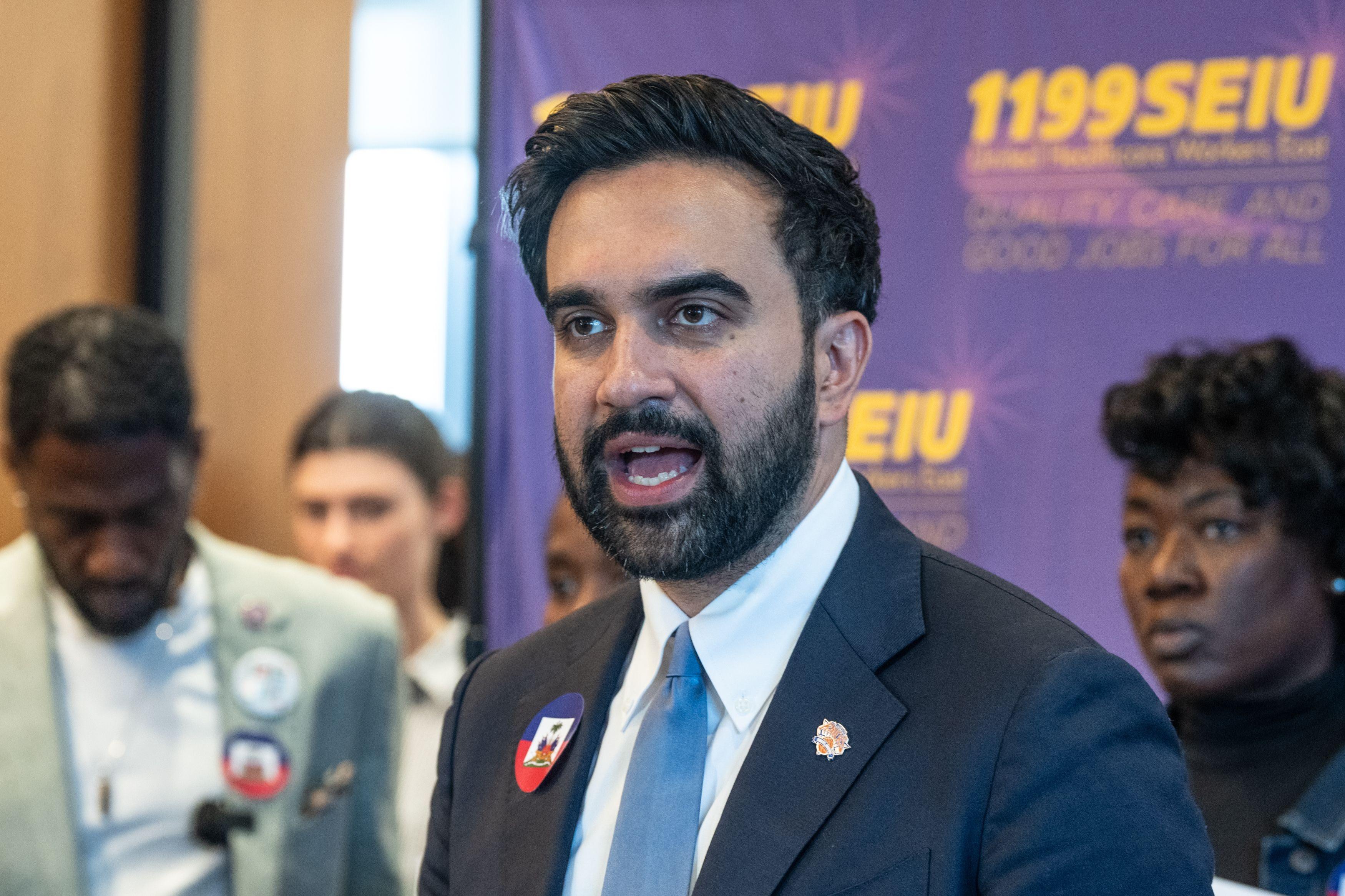
Mayor Zohran Mamdani speaks at the rally with immigration advocates and 1199SEIU members in New York, NY on June 25, 2026. Lev Radin/Shutterstock See more of our coverage in your search results.
Add The New York Post on Google With Mayor Zohran Mamdani’s supporters exultant over the rent freeze approved by his stacked Rent Guidelines Board, it’s perhaps rude to point out the many downsides of this latest pander to his voter base.
Point out we must, however: Mamdani’s board has created a crazily skewed housing market in which some people are big winners, and most others lose — while the city becomes less dynamic.
In the latest city survey in 2023, the median income for rent-stabilized tenant households was $60,000, and 30% had incomes over $100,000.
Are you one of the latter group — a graduate of a selective college, working a professional job and living in the “Commie Corridor” of northern Brooklyn and western Queens?
Your rent is frozen, even if you get regular raises.
Of course, many poor households have had their rent frozen, too.
But they will pay a price, because their landlord is likely losing money and can’t properly maintain their building. Their plight will now get worse.
Not so our “Commie Corridor” friend, whose landlord probably also operates market-rate units whose rents will go up even faster.
Are you a new college grad, taking your first job in the Big Apple? No freeze for you.
A vacant rent-stabilized apartment for rent is almost unobtainable.
In 2023, the rental vacancy rate for rent-stabilized apartments was about 1% — and that will now get worse: No sane tenant would move out.
And in the rare instance where a long-term tenant passes away or must move into a care facility, units stay vacant. Where is the landlord going to find the money to fix up the apartment?
No, my college grad friend, you’re competing with all the other grads for market-rate units.
Unfortunately, NYC also has very restrictive zoning, so we can’t supply the number of units people want. Thus, market rents keep hitting new highs — with the median rent hitting $5,125 per month in Manhattan.
Have you considered taking a job in Raleigh or Nashville instead?
Despite what progressives argue, rent-stabilized units, which make up 40% of the rental market, make New York less affordable.
Start your day with all you need to know Morning Report delivers the latest news, videos, photos and more.
It keeps the vacancy rate incredibly small, driving up costs. And people lucky enough to have rent-stabilized apartments are so trapped by fortune they never leave — whether they outgrow the apartment or it outgrows them.
Families of five are crammed into one-bedroom. And 41% of rent-stabilized tenants are single adults. How many of them live in 2- or 3-bedroom units where their children grew up and moved out?
Anyone paying attention knows “frozen” rents don’t work.
Consider what happened after the Mitchell-Lama public housing projects got into financial trouble in the 1970s. The legislature knew the system was unsustainable, so it demanded that rents on those buildings must cover operating costs.
If you live in the Mitchell-Lama project in The Bronx called Tracey Towers, your rent is going up by 31%.
One kind of private housing is getting a rent increase. But no such luck for rent-stabilized landlords.
So if you’re lucky enough to have a rent-stabilized apartment in a building where other units are deregulated, congratulations. Pretty much everyone else is a loser, in the short or longer term.
They will see their homes deteriorate or pay exorbitant market rents.
The political brilliance of the scheme is that many of these losers have a strong incentive to move somewhere cheaper.
They may be mad at Mamdani — but they won’t be here to vote against him for re-election in 2029.
Eric Kober is a senior fellow at the Manhattan Institute.