Add The California Post on Google The Palisades Fire trial ended with a hung jury. But for locals, the verdict has been clear since January 7, 2025: State and local officials are guilty of negligence.
Federal prosecutors had a familiar story to tell about Jonathan Rinderknecht, the 29-year-old Uber driver charged with lighting a fire that, six days later, ignited another fire that burned down the Pacific Palisades.
Rinderknecht is, supposedly, yet another lonely young man politically radicalized by social media seeking glory through a flashy act of class revenge. “He blamed the rich, felt the world was unfair, wanted relief and sought violence,” as one prosecutor put it.
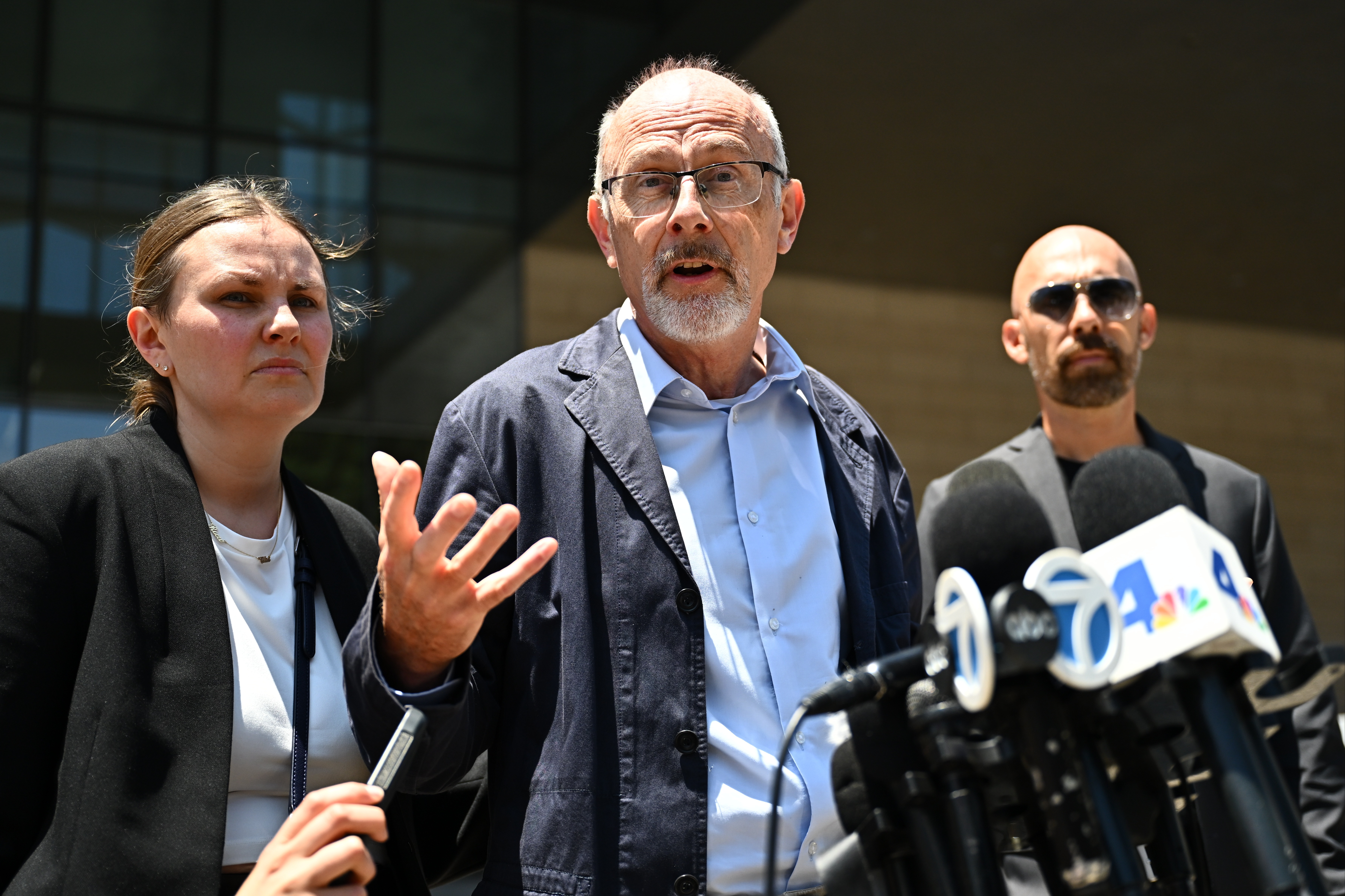
From left, Leah, Joel, and Joel Rinderknecht, family of Jonathan Rinderknecht, speak outside federal court after a federal judge declared a mistrial in the arson case against Rinderknecht, who is accused of sparking the deadly 2025 Palisades Fire, on Friday, June 26, 2026, in Los Angeles. AP Photo/William Liang This is a sadly common character: Luigi Mangioni with a less pleasing jawline. And when authorities originally announced the indictment, many news outlets dutifully presented the case as a fait accompli. We’d obviously found our villain.
That story hit a snag on Friday: Rinderknecht’s prosecution ended in a mistrial, with fully 10 of the 12 jurors dead set on acquitting.
I grew up in the Palisades and directed a documentary about the fire based on interviews with dozens of victims. And the response from the many locals I’ve talked to about the mistrial is not righteous indignation: it’s a shrug.
Many see the Rinderknecht case as a sideshow that’s been cynically played up by city and state officials to absolve themselves of blame, to redirect public attention away from their own epic failures.
“The government is trying to deflect blame to one individual –– unsuccessfully –– rather than taking responsibility for multiple massive governmental failures on so many levels,” says Alan Feld, who first spotted the fire. Local journalist Sue Pascoe thinks “the government desperately wants to blame this fire on someone and Jonathan became the scapegoat.”
“Obviously they just wanted to put it on this guy to distract from the city’s response,” says Masha Pronicheva, who lost her house in the Alphabet Streets.
Assume the prosecution’s case is true. In the early morning hours of January 1, 2025, Rinderknecht really did drop off some Uber passengers in the Palisades, sneak into the nearby hillside and spark dry brush with a cigarette lighter. The embers from that blaze lurked underground for six days until, on January 7, strong wings blew off the top soil and freed them to spark dry brush.
It was profound policy failures perpetrated by state and city officials that enabled that spark to grow into an inferno that swallowed a town. Rinderknecht’s guilt wouldn’t absolve them of that responsibility.
What’s more, the mistrial may even help Palisadians seeking justice through other means.
There are dozens of lawsuits, totaling nearly $100 billion in possible payouts, currently aimed at the Los Angeles Department of Water and Power. They’re centered on two of those profound failures: that infamous empty reservoir, and the department’s apparent failure to follow the standard protocol of de-energizing power lines early in a wildfire, likely leading to collapsed poles and exploding transistors that sparked additional flames.
These lawsuits were already an uphill battle. State and municipal authorities are afforded broad immunity protections in natural disasters. A Rinderknecht conviction would have created an official perpetrator and perhaps relieved them of legal liability.
And these lawsuits aren’t some vanity vengeance project of the ultra-wealthy; they’re largely backed by locals who lost the bulk of their life savings. These lawsuits are their only chance to be made whole.
The transformation of the Palisades into some of the most expensive real estate in Los Angeles is a relatively recent phenomenon, as East Coast finance titans noticed it’s got better weather than the Hamptons and tech entrepreneurs noticed it’s more cozy than Beverly Hills. The Palisades of the ’80s and ’90s I grew up in had a healthy middle class — people like my next door neighbor Lou, who built movie sets, or Richard Myer, the long-time minister at Palisades Lutheran Church.
Many of these people were still living in the Palisades when the fire broke out, and when they lost their homes, which had steadily appreciated over decades, they lost a huge chunk of their wealth.
California’s aggressive regulations prevented fire insurance providers from properly setting premiums to match the local risks. Most wound up simply leaving the market, cancelling over a thousand local policies. The government then filled the vacuum it itself had created with a state-sponsored option –– the “FAIR” plan –– which has notoriously skimpy benefits.
My mom is rebuilding, and her FAIR plan payout covers less than half the cost of construction.
If Rinderknecht is truly guilty, let’s hope that’s properly proven in a retrial. But there’s a reason so many Palisadians are apathetic about Friday’s news. He’s a minor player. The real people responsible for the blaze that burned down their homes still haven’t been held to account.
Rob Montz is CEO of Good Kid Productions and the director of “The Untold Story of the Palisades Fire.”