play Live Sign upShow navigation menuplay Live Click here to searchsearchSign upNews|ElectionsUK’s likely next leader Andy Burnham to unveil economic, devolution plansFrontrunner to be next PM expected to announce a 10-year mission to raise living standards.
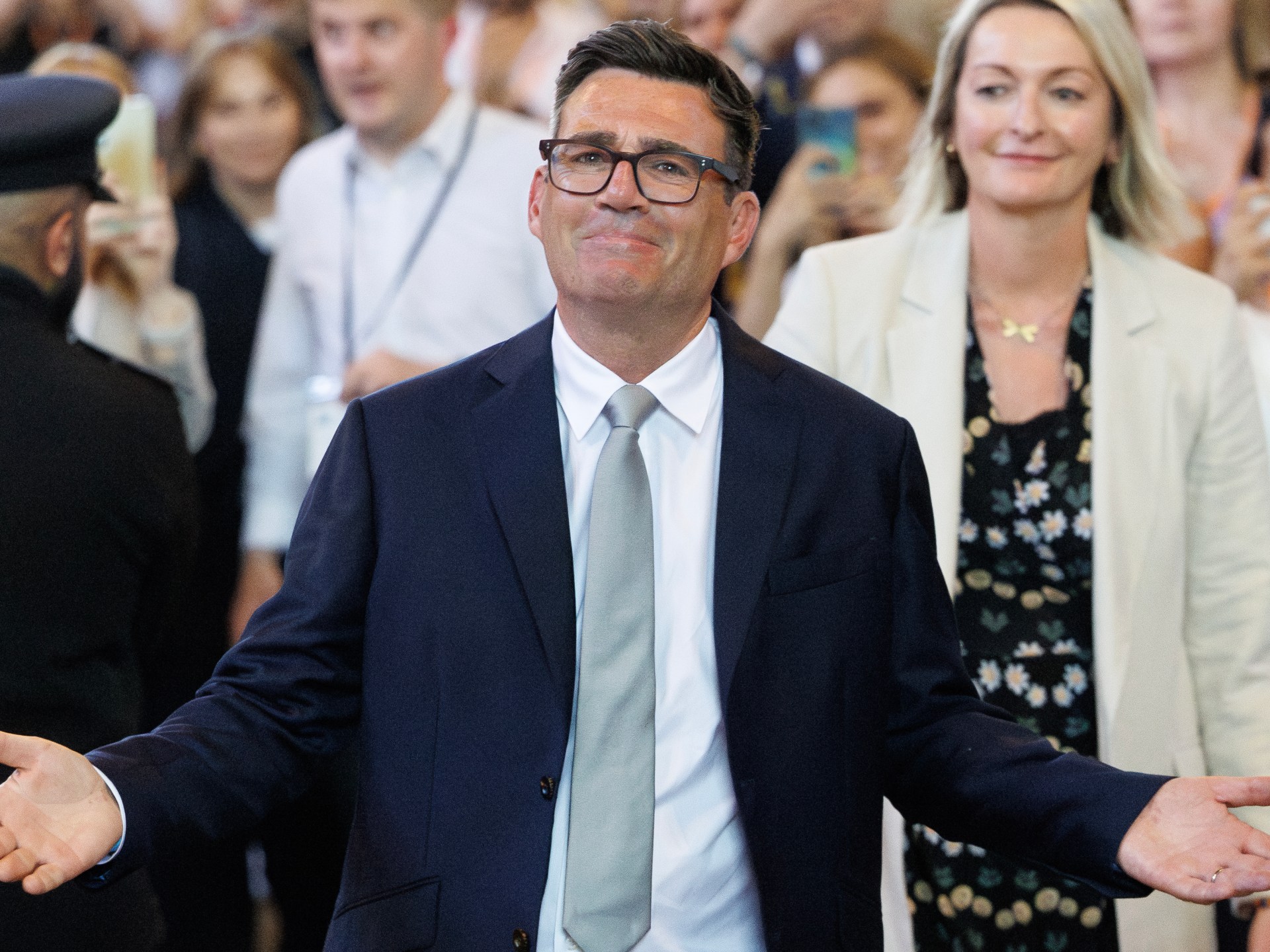
xwhatsapp-strokecopylinkgoogleAdd Al Jazeera on GoogleinfoAndy Burnham after being sworn in as MP for Makerfield on June 22, 2026, following his 54 percent by-election [Dan Kitwood/Getty Images]By AFP and ReutersPublished On 29 Jun 202629 Jun 2026Andy Burnham, the frontrunner to become the United Kingdom’s next prime minister, will unveil his economic agenda in his first major policy speech since Keir Starmer announced his resignation last week.
Monday’s address at a museum in Manchester is being seen as Burnham’s pitch to lead the country after a decade away from Westminster.
Burnham, who returned to Westminster earlier this month after winning a parliamentary seat, is the only declared candidate to replace Starmer, and if there are no other challengers he could take office by mid-July.
Starmer announced he would quit two years after winning a large Labour majority as his popularity sank.
Burnham, who rose to prominence as mayor of Greater Manchester and has been dubbed the “King of the North”, will use Monday’s speech to make devolving power to regions and local communities his flagship proposal.
He will also commit to a 10-year mission to raise living standards through reindustrialisation, housing, infrastructure and reform of utilities. The focus would be not just on who governs the UK, but on changing how it is governed, his office said.
“Andy wants communities in every part of Britain to seize their own agenda,” Labour Deputy Leader Lucy Powell told the BBC.
A pro-business socialist from Labour’s “soft left”, Burnham has sought to calm markets by backing the government’s current borrowing limits.
Housing Secretary Steve Reed told Sky News that Burnham was “committed” to the manifesto that delivered Starmer’s large majority two years ago and would keep Labour’s fiscal rules, including balancing day-to-day spending and cutting debt.
He brands his approach “Manchesterism” – business-friendly socialism opposed to trickle-down economics and neoliberalism. He wants to move some government operations to Manchester and favours greater “public control” of transport, water and energy.
He also backs cuts to business rates for pubs and music venues.
If he takes office, Burnham would be the UK’s seventh prime minister in a decade.
But fiscal pressures will be a constraint, with the UK economy struggling from the impact of the war in Ukraine and the US-Israel war on Iran.
Burnham once said the government should “get beyond this thing of being in hock to the bond markets”, but later said he was misrepresented.
His choice of finance minister will be closely watched as a sign of how left-wing his government could be. United States President Donald Trump called Burnham “extremely liberal” and unlikely to open the North Sea to oil and gas drilling.