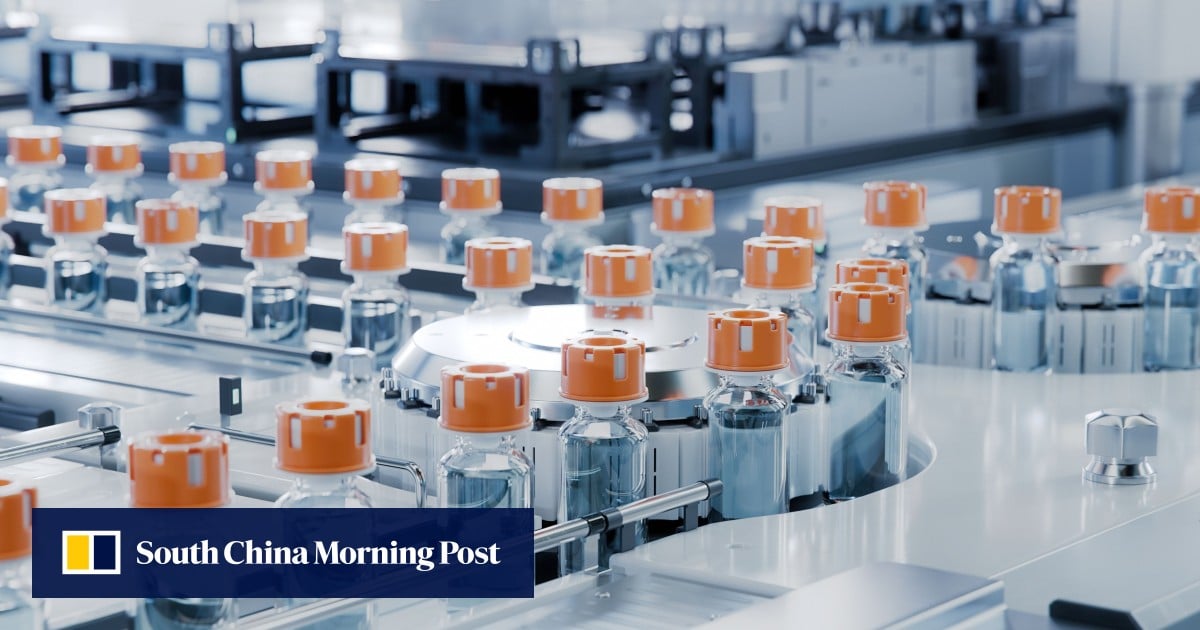
Likang Life Sciences says it has developed a personalised vaccine using advanced tech to identify tumour-specific mutations
2-MIN READ2-MIN ListenJulie ZhangPublished: 11:00am, 29 Jun 2026China has broken ground on what developers say is the country’s first production line for AI-assisted personalised tumour vaccines, raising hopes for millions of new cancer patients every year – a disease that ranks as the nation’s second-leading cause of death.
The facility will house cell therapy research laboratories together with a production line of the company’s flagship product, LK101, a personalised cancer vaccine that analyses each patient’s tumour DNA to pinpoint the specific genetic mutations driving the disease. With AI, the company said the procedure could be completed in a day.
The project reflects a global shift in the pharmaceutical sector towards harnessing artificial intelligence. The technology was widely used in drug discovery and clinical trials, as well as areas such as data analysis, data monitoring and medical writing, said Grace Wang, a partner based in L.E.K. Consulting’s Shanghai office, in a video posted in early June.
The global AI healthcare market could exceed US$1 trillion by 2035, according to Bank of America, highlighting the commercial potential of such technologies.
“AI offers a compelling solution by automating manual workflows, improving diagnostic accuracy and enabling personalised treatment strategies,” said Alec Stranahan, senior research analyst of small- and mid-cap biotechnology at Bank of America, in a note on January 21. “Current adoption, however, is still in its early stages.”