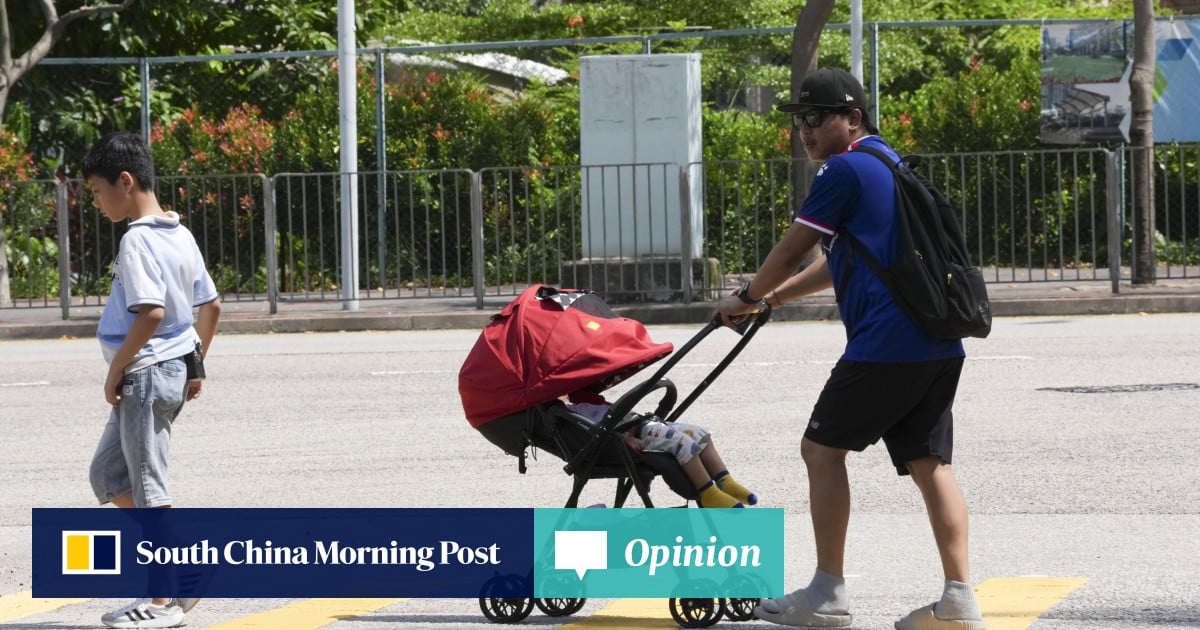
If homes remain painfully unaffordable and pitifully small, it’s very difficult to persuade couples to have children
3-MIN READ3-MINAlice WuAlice Wu is a political consultant and a former associate director of the Asia Pacific Media Network at UCLA. Published: 9:30am, 29 Jun 2026The public consultation for Chief Executive John Lee Ka-chiu’s last policy address of his current term is under way. Will he, for example, listen to the people about whether the baby bonus, one of the initiatives aimed at raising the birth rate and which is set to expire in October, should continue? Lee did say in an exclusive interview with the South China Morning Post that his government plans to “collect wisdom” before deciding.According to the chief executive, Hong Kong experienced a 10 per cent rise in the birth rate in 2024, a year after the bonus was introduced. It was the year of the dragon, after all, traditionally a year for more babies to be born. But, by 2025, births had fallen by 15 per cent to 31,100 – almost half the 59,900 in 2015.
Perhaps it’s time the government stopped using the fact our low birth rate is part of the “global challenge” in developed economies as a convenient excuse and instead looked inwards to understand the obstacles couples here face.
One thing the government must answer is whether it is willing to build larger homes to make living spaces big enough for families. Officials are well aware that some of the most vulnerable people living in subdivided flats are those with children. How hard is it to understand that if homes remain painfully unaffordable and pitifully small, it’s very difficult to persuade couples to have children?
The “wisdom” is abundant. Whether the government is willing to “collect” it is another matter. The Hong Kong Future Economy Institute recently released a report titled “Smaller and Smaller”, which found that the average floor area of newly completed units was about three-quarters the size of a flat built in 1995.
The shrinkage is evident. Public housing units have turned from family flats to micro units; subsidised housing has shrunk from family-sized homes to “starter” units unfit for families.