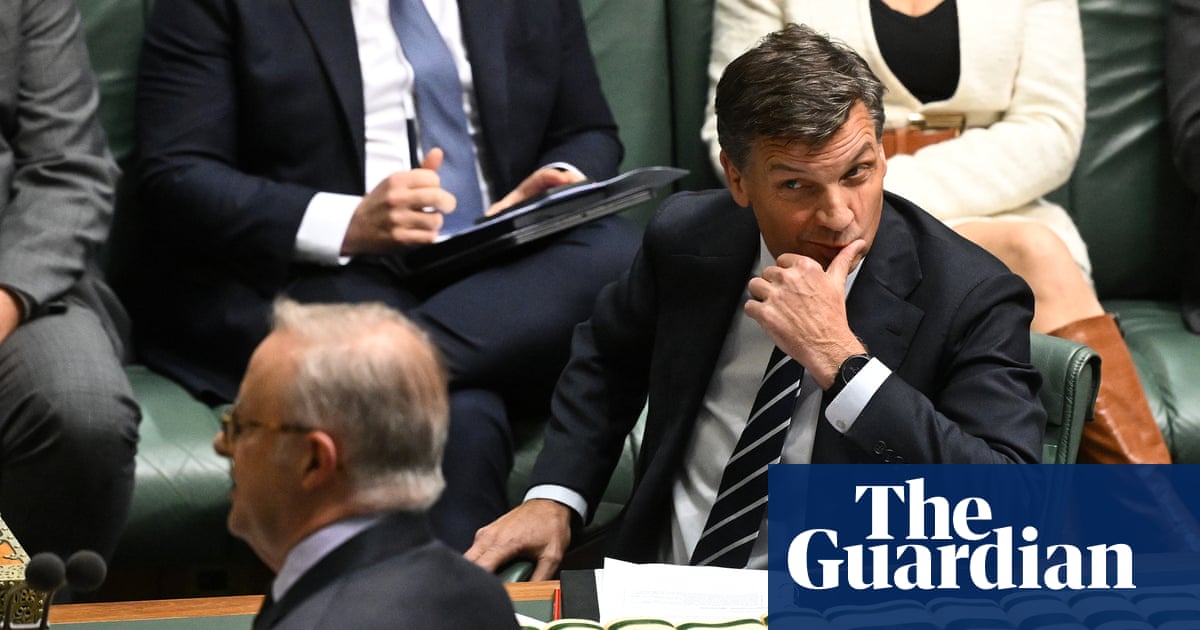
Coalition sources say Angus Taylor will continue to call the government ‘liars’, sharpening the focus on Albanese personally. Photograph: Lukas Coch/AAPView image in fullscreenCoalition sources say Angus Taylor will continue to call the government ‘liars’, sharpening the focus on Albanese personally. Photograph: Lukas Coch/AAPAnalysisParliament has been getting frosty as winter closes in – but Labor may make one more gamble before the breakJosh ButlerAs Labor pushes on with reforms, the Coalition must decide whether to join in the parliamentary deal-making
Get our breaking news email, free app or daily news podcast
It’s the last week of parliament before the winter break, and not a minute too soon; tensions have been running a little high lately.
The lower house speaker, Milton Dick, has been yeeting MPs mere moments into question time and accused Angus Taylor of “demeaning” the parliament by calling Anthony Albanese a liar; Andrew Hastie claimed One Nation “has declared war on me, so they shall have war”; Labor has been goading the Coalition and its media “cheer squad” for opposing the budget; the Greens hate Labor’s NDIS bill; and people in the Coalition seem to be mad at everyone, including themselves.
That’s all to say: there’s a bit still left in store for this last week, and the drama isn’t likely to ease.
First, the pomp and ceremony: Vanuatu’s prime minister, Jotham Napat, and his delegation will visit Parliament House on Monday to meet Albanese. Wednesday brings the annual Midwinter Ball, the black-tie highlight of the parliamentary social calendar.
Read moreThe off-record event’s traditionally light-hearted speeches from the prime minister and opposition leader have returned mixed recent results; Sussan Ley’s riotously funny address in 2025, joking about “negotiating with fundamentalists” in the Nationals, came after a few dour examples from Peter Dutton in previous years.
But the last week before a big break is also traditionally a time for last-minute horse trading and long sitting hours. MPs and senators might be rushing out of the ball on Wednesday night, or huddling around tables, as votes and negotiations continue.
With the first tranche of Labor’s budget measures and tax legislation quickly ushered through parliament last week, focus now turns to the rest of their slate. Namely, the unpopular cuts to the national disability insurance scheme and what will come in the next instalment of tax rules, including the carveouts and mop-ups Labor has promised.
The Coalition will continue to zero in on the unpopular aspects of Labor’s budget, including the so-called “widow’s tax”, and accusing the government of presiding over rising inflation and falling living standards. Coalition sources say Taylor will continue to call the government “liars”, sharpening the focus on Albanese personally.
Labor has agreed to Greens demands to hold up the NDIS bill until mid-August while a parliamentary inquiry continues. But scrutiny on the changes, and potential amendments, will be the flavour of the week – especially if Coalition concerns about the bill, thus far mostly in the margins, slowly come out into the open.
That is, if the Coalition breaks with its recent preference of dealing itself out of all negotiations and consigning itself to parliamentary near-irrelevance.
Taylor was asked last week in a press conference what Australians were getting out of an opposition “constantly dealing itself out of negotiations”. Specifically, why he had decided not to discuss the tax bill and seek amendments.
It’s not an unprecedented idea. Taylor’s press conference was to discuss news of the Greens having done exactly that; their decision to back Labor’s tax changes in exchange for reforms to their NDIS legislation, which the Greens also say they will never vote for.
The Greens hate the NDIS bill, but the government needed their support on tax. The Coalition hate the tax bill, but the government needs their support on NDIS. Each had a pretty good bargaining chip. The Greens didn’t deal themselves out and instead stayed at the table. Labor can pass its agenda with the Greens, bypassing the Coalition entirely, so the opposition’s default position of “no” without trying to negotiate is curious.
Another question for the Coalition will be its position on Labor’s also-contentious gambling advertising changes, which may be introduced into parliament this week after the short consultation period that followed the draft bill’s unveiling on budget day.
Plans to restrict TV and online wagering ads could come, ironically, after a week where more everyday Australians may have been exposed to gambling ads than usual, with SBS coverage of the Fifa World Cup often featuring promotions from a major betting agency (we’ll leave them unnamed here, they’ve had enough exposure).
Labor people close to the discussions have long said that any change would leave at least half the stakeholders unhappy. Harm reduction advocates would say the reforms are too weak, and industry would say they’re too heavy. Possibly both simultaneously.
Read moreBoth sides are united on one complaint: that some of the definitions in the exposure draft are confusing and vague. During consultation, both pro- and anti-gambling sources said rules around banning influencers and celebrities from endorsing wagering were unclear, as well as American-produced sports and lifestyle shows made for men (hello Joe Rogan) which feature gambling promotions.
Whether those definitions are tightened, in the legislation which finally goes to parliament, is worth closely watching.
The Greens have already voiced major worries about the gambling changes, but the Coalition has been less committal officially, even as more Liberals raise individual concerns. Gambling ads have been a major debate for years; soon the Coalition must say where it stands. Along with the NDIS, it’s an issue where the opposition’s vote and negotiating tactics really do mean something.