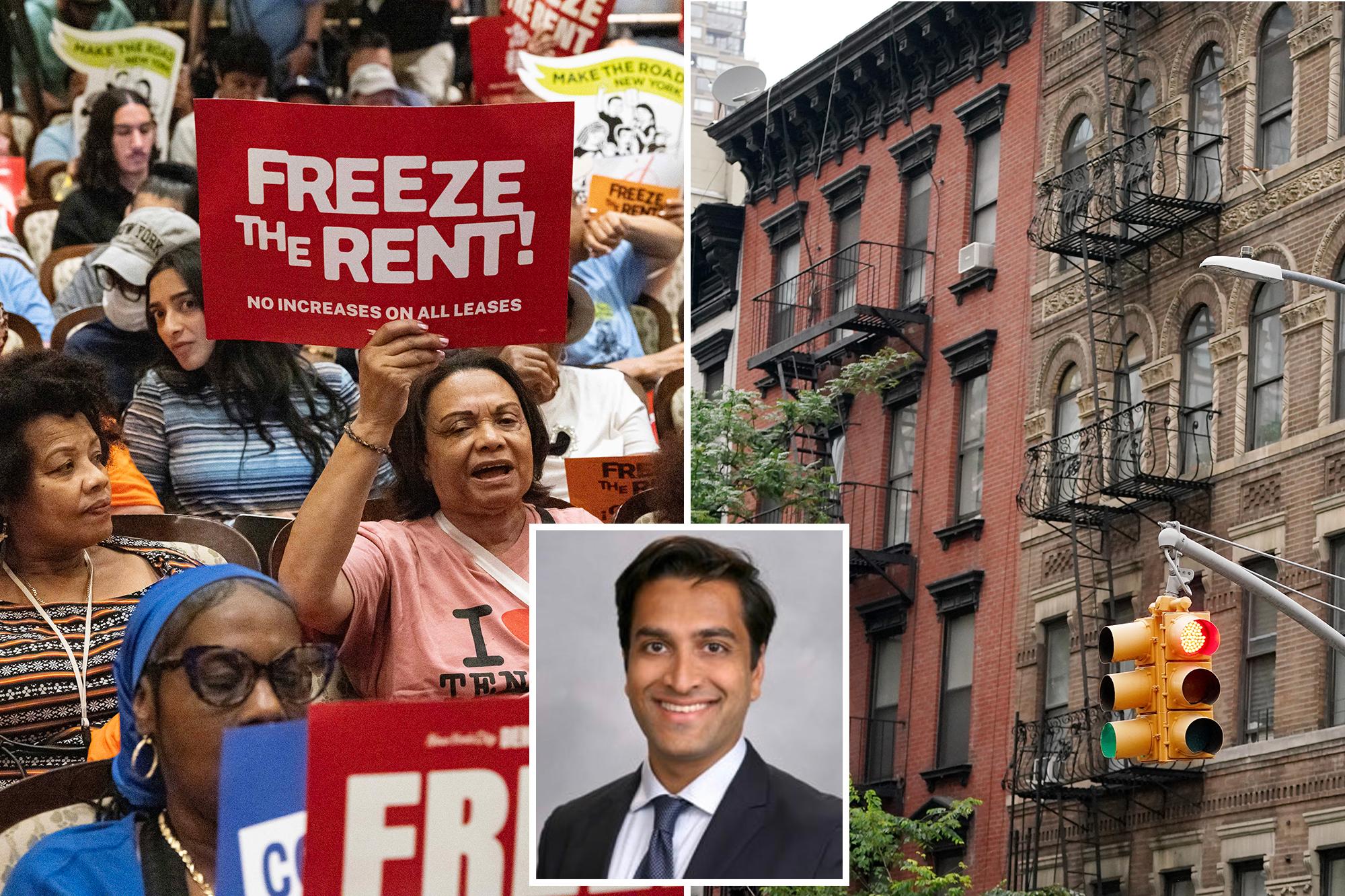
Add The New York Post on Google New Yorkers living in the city’s 1.1 million market-rate apartments are about to get stuck with the bill for the city’s rent freeze, according to the only member of New York City’s Rent Guidelines Board who is an economist and voted “no” on the freeze.
Arpit Gupta, who was appointed to the board by former Mayor Eric Adams, said landlords will likely jack up rents on market-rate units, as the rent-stabilized market stalls with tenants incentivized to stay put and owners forced to pull vacant units off the market.
“I think of this as trying to breathe with one lung,” said Gupta, an economist and associated professor of finance at New York University’s Stern School of Business.
“You have one half of the housing market now that’s just going to be frozen in place, so all the demand has to be accommodated by just the market-rate units, so I expect upward pressure on rents to those.”
The RGB approved Mayor Zohran Mamdani’s key campaign promise to “freeze the rent” for two-years Thursday by a 7-1 vote — in a move that saw Christina Smyth, one of the board’s two landlord representatives, resign in protest hours before the vote, slamming the whole thing as “theater.”
“The hearings, the reports, the public comment, the data. None of it was ever going to change the result,” Smyth lambasted.
Roughly 1.3 million rental units out of the city’s 2.3 million are outside the rent-stabilized system, including some 1.1 million market rate units, the most common type of rental, representing 48% of units, according to the RGB’s 2026 Housing Supply Report.
There are 960,700 rent-stabilized units across the five boroughs according to the same report, but a staggering 57,000 of them are sitting vacant. That’s up a record 9,000 since last year, according to a state’s Division of Homes and Community Renewal letter sent to the RGB earlier this month.
What’s worse is as many as 30% of rent-stabilized tenants earn six figures, according to the income data in NYC’s Housing and Vacancy Survey.
Until recently that included Mamdani himself, who lived in a $2,300 Astoria pad despite making $142,000 as a state assemblyman and his family wealth, before he moved into Gracie Mansion in January.
“The key thing is the rent stabilized stock is not income restricted or targeted in any way,” said Gupta. “Many people in market-rate housing are quite poor…and they’ll face upward pressure on their rents and many poor individuals will suffer as a consequence.”
Gupta also predicts the freeze will leave even more coveted rent-stabilized apartments gathering dust instead of housing New Yorkers. Already, 10% of those buildings are losing money instead of making it – with thousands of units facing foreclosure.
“The cost of rehabilitating a vacant unit can be quite high, and now owners might not perceive any legal way of recouping the revenue for the rehabilitation costs from a new tenancy,” he said.
Gupta said the other members of the board voted yes — despite the sobering data — because they assume taxpayers will ultimately foot the bill under the socialist mayor.
“They believe that more city resources can and will go towards the funding of these buildings.“