A new trade probe is reigniting a long-running clash over who should pay for medical innovation. Washington argues Germans benefit from lower prices while US patients shoulder a disproportionate share of the costs.
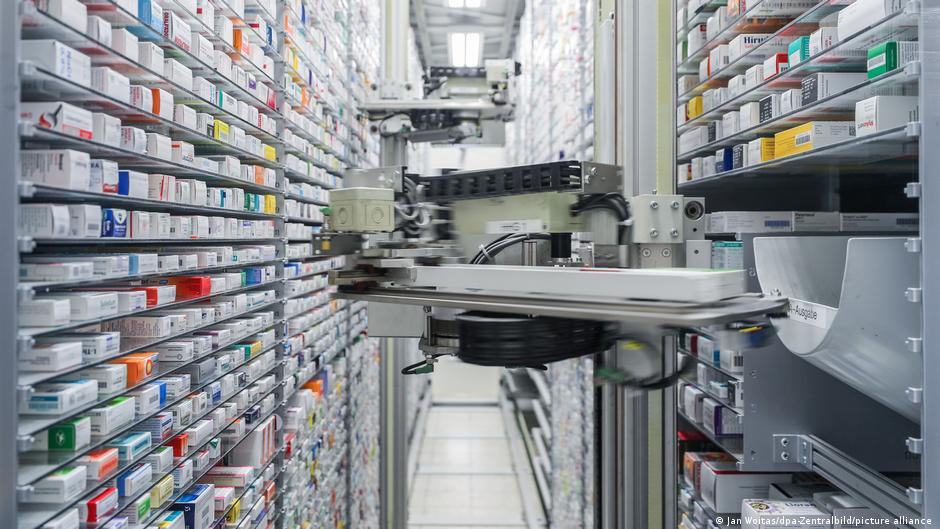
https://p.dw.com/p/5G8WhGlobally, US and German patients pay the most for medication but the systems could hardly be more different Image: Jan Woitas/dpa-Zentralbild/picture alliance AdvertisementIn the world according to Donald Trump, every nation on the face of the earth is "ripping off" the United States — that goes for pharmaceuticals, too, especially those from Germany.
Now, the Trump administration is targeting Germany with an investigation. Washington says it wants to find out if US patients and businesses are being forced to pay disproportionately higher prices for the research and development of top-tier pharmaceuticals so that German patients can pay less. The inquiry, scheduled to wrap up in September, is based on Section 301 of the Trade Act of 1974 and could ultimately lead to new US tariffs.
The conflict touches on a core aspect of health policy. Germany regulates drug prices through its public health insurance system in order to keep access affordable. The US sees this as market distortion. Berlin defends its price regulating practice as a legitimate instrument for keeping costs down. The issue of drug pricing has now evolved into a trade policy dispute that goes far beyond the pharmaceutical sector.
At its core, the question now is whether US pharmaceutical companies are put at a disadvantage as a result of Germany's price regulation system, which Washington says creates a trade imbalance. According to the OECD, an organization of wealthy industrialized nations, the US and Germany are the two countries that spend the most on drugs. In 2023, US patients spent an average of $1,713 (€1,502) per person on medicine compared to $1,158 per patient in Germany.
"This investigation will seek to determine whether persistent underpayment for innovative pharmaceutical products by Germany is unreasonable or discriminatory and burdens or restricts US commerce," according to US Trade Representative Jamieson Greer, who added that the "investigation follows months of meaningful discussions with our German partners in an effort to resolve this issue."
"President Trump has made clear that American patients should not be shouldering a disproportionate share of global pharmaceutical research and development," continued Greer. "I am particularly concerned with news that Germany is fast-tracking legislation that would further reduce its spending on innovative pharmaceuticals."
With that, the US is directly targeting German Health Minister Nina Warken's multi-billion-euro healthcare savings package slated to be passed by the Bundestag within the next few weeks and aimed at forcing further rebates from pharmaceutical companies.
A look at one specific innovative German drug is instructive in that it highlights massive price differences depending on where a patient is buying it: Jardiance, with the active ingredient empagliflozin, was developed by Germany's Boehringer Ingelheim and is the world's most popular medication for treating type-2 diabetes and heart failure.
The cost for a one-month supply of 30 tablets is roughly €80 for out-of-pocket and privately insured patients in Germany, those on public health insurance are liable for a co-pay of a maximum of €10. According to Boehringer Ingelheim's US subsidiary, uninsured patients or privately insured patients in the US who have not yet reached their annual deductible, must pay a full list price of roughly €300. Boehringer USA says that some pharmacies may charge even more.
On the other hand, Boehringer USA says that older, handicapped, seriously ill and low-income US patients covered under Medicare or Medicaid pay between zero and $50 dollars for the drug.
So does that mean the massive price differences the Trump administration is pointing to only apply to the uninsured and those with high deductibles?
One would be hard-pressed to find a health economist who would dispute the fact that US patients tend to pay more for top-shelf drugs than those insured in Germany.
That fact was documented in a March report based on research conducted by German media outlets NDR, WDR, and the Süddeutscher Zeitung and the New York Times newspapers. Accordingly, patent-protected medications remain more expensive in the US than in Germany. Lack of transparency in different national markets makes it easy for pharmaceutical companies to demand higher prices, says Helmut Schröder of the Wissenschafltliches Institut der AOK (WIdO) — a scientific research institute linked to the AOK network of German public healthcare insurers — who led the study.
"There are structural reasons for the difference in prices," as Susanne Uhlmann, pharmacy sector head and partner at management consultancy Deloitte, explained to DW. "Prices for statutorily insured patients in publicly financed health systems like Germany's are negotiated centrally. That gives health insurance funds much more leverage compared to insurers in the US, who must negotiate on their own or contract negotiators to act on their behalf."
That means "Pharmacy Benefit Managers" or PBMs, powerful negotiators who work as middlemen — negotiating and regulating prices in concert with pharmaceutical companies, insurers and pharmacies. PBMs are supposed to help save patients money, however, they have been heavily criticized for creating an opaque structure that is hard to understand for those on the outside. The result? Higher prices.
The three largest PBMs in the US are CVS Caremark, part of the CVS drug store and pharmacy chain; Express Scripts, subsidiary of the life and health insurance company Cigna; and Optum Rx, part of the healthcare company UnitedHealth. Together they control roughly 80% of the prescription medication market in the US, according to data published by industry information service Drug Channels.
US regulators have now begun to crack down on these structures. The US Federal Trade Commission (FTC) recently opened an investigation into the biggest players for engaging in what the agency labeled "anti-competitive and unfair discounting practices that artificially inflated the list price of insulin medications." In February, the FTC reached a settlement with Express Scripts that led to fundamental changes to the outfit's business practices.
The situation illustrates how utterly different drug pricing is in the US compared to Germany.
"Add to that the fact that manufacturers in Germany must prove that new drugs have added therapeutic value over existing therapeutic standards when setting prices," says expert Uhlmann. "So the bar for new and expensive drugs is correspondingly high."
But Germany's pharmaceutical industry is not feeling pressure from US investigators alone. More than 20% of Germany's pharmaceutical exports go to the US. That means it is more dependent on the US market than almost any other industrial sector in the country. Beyond that, it is also getting the squeeze from Berlin, which is looking for more rebates as part of planned public healthcare reforms.
And if the US imposes new tariffs this fall, things could get very uncomfortable. In an April 2025 report for Deloitte, Uhlmann pointed to "serious losses" for the industry in the event of tariffs. "If tariffs between 10 and 35% were applied for three to four years, that could shrink industry exports to the US, the world's largest pharmaceuticals market, by 5 to 53%, translating into losses between €1.3 and €13.4 billion."
German Chancellor Friedrich Merz has been relatively relaxed in his public statements on the Trump administration's investigation. "Reimbursement for modern, innovative medication through our health insurance funds is determined at the federal level," says Merz. "So if the Americans want information on that, we'd be happy to provide it."
German Health Minister Nina Warken also sought to dampen US expectations, saying, "The financial situation at Germany's health insurance funds is strained, so it will be tough to pay higher prices."
Speaking with DW, pharmaceuticals expert Uhlmann said, "In the past, rules covering price discounts for drugs sold in Germany were always binding and they will likely remain that way in the future."
This article was originally published in German.