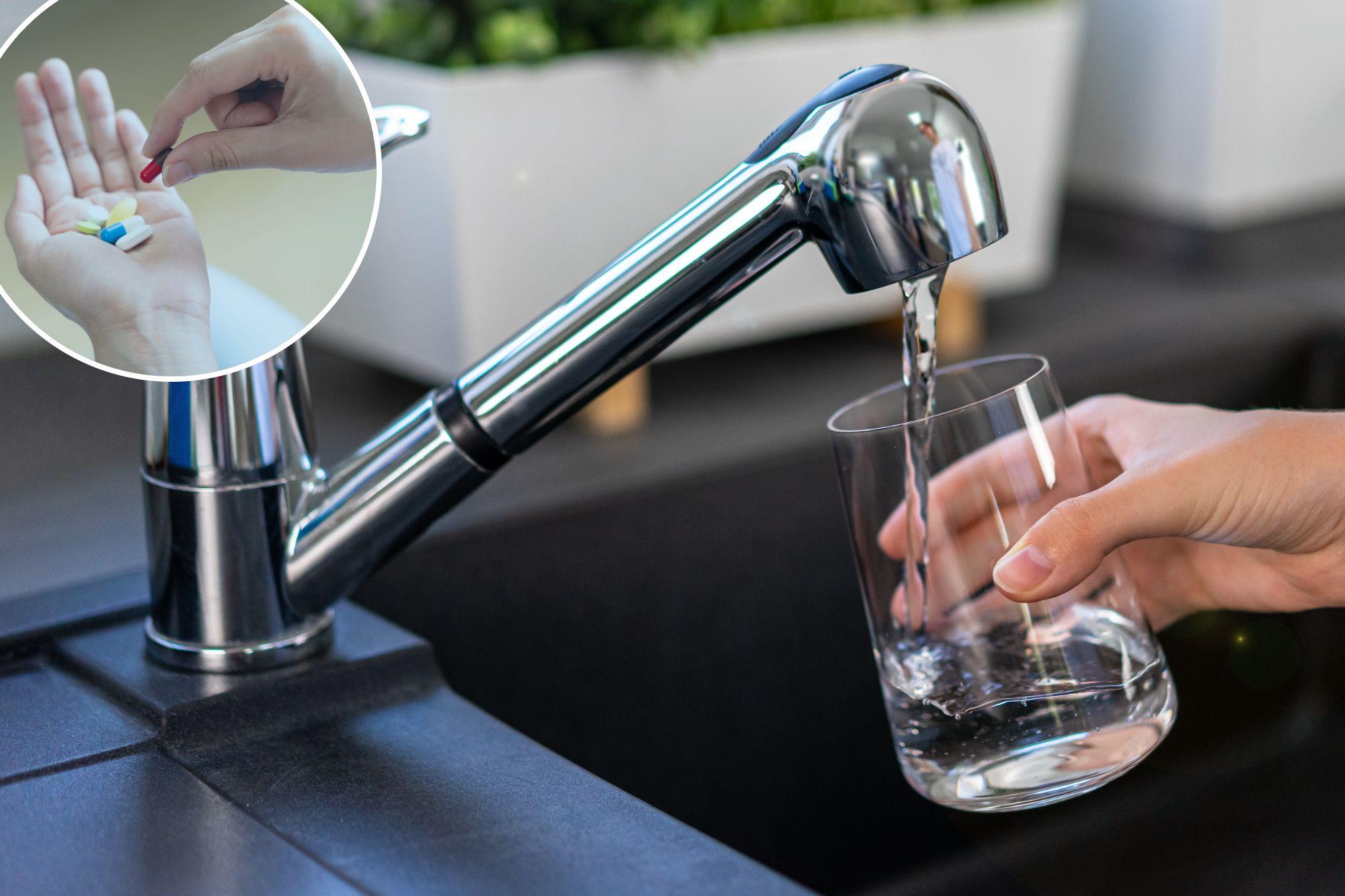
Add The New York Post on Google You are what you eat — but what you drink could make or break your medication.
New research suggests the beverage you wash down pills with could influence their effectiveness, but many drug labels offer little to no guidance on what should be used.
“In the pharmacy, we regularly see that many patients are unaware of how much it matters what they take their medication with,” Dr. Adrienn Demeter, student at the Faculty of Pharmaceutical Sciences of Semmelweis University and first author of the study, said in a press release. “This can also affect whether the treatment works as intended.”
What you take your pills with could make a difference in how well they work, new research suggests. Pormezz – stock.adobe.com In the study, Demeter and her colleagues focused on enteric-coated oral medications.
These pills are wrapped in a protective polymer coating that helps the active ingredients survive stomach acid before dissolving in the intestine, where they can be absorbed. The coating also helps prevent certain drugs from irritating the lining of the gut.
Enteric coatings are commonly used on anti-reflux medications, gastroprotective drugs, psychiatric medications and anti-inflammatory pain relievers.
To see how different beverages affected the pills, the researchers tested 22 common drinks on enteric-coated tablets, taking a closer look at seven — including mineral waters, tap water, filtered water and apple juice — in a lab.
The team found that alkaline bottled waters with high mineral content caused the greatest changes to the pills’ protective coating.
This type of water has grown in popularity in recent years, with some proponents claiming it may help with a range of health concerns, including acid reflux and bone loss, as well as supporting better hydration and even reducing the risk of serious conditions such as cancer and stroke.
But because alkaline bottled waters are less acidic than regular drinking water and contain higher levels of minerals and ions, researchers believe they sped up the breakdown of the coating.
In some cases, deterioration began after just five minutes. After 15 to 30 minutes of soaking, more than 90% of the active ingredient had been released prematurely.
The study authors said tap water appears to be the safest option for taking pills.ur pills down with, the study authors said. Sevda Ercan – stock.adobe.com More acidic beverages, on the other hand, had the opposite effect.
Apple juice, for example, showed almost no premature release of the active ingredient at the start of testing, suggesting the coating had remained largely intact.
“When the products were tested in tap water, the majority of formulations maintained coating integrity,” the study authors wrote.
The researchers said the findings could be especially important for people who struggle to swallow pills and open up their capsules before mixing the contents into liquids, yogurt or applesauce.
It’s more common than you might think. Past studies have found that about 40% of American adults have difficulty swallowing pills.
Older adults and young children are particularly likely to have the problem, though even a temporary sore throat can make swallowing medication difficult.
Notably, the researchers also found that patients often aren’t given clear instructions about what they should take their medication with.
The team reviewed the Summary of Product Characteristics (SmPCs) — official, regulator-approved documents that explain how a medication should be used and prescribed — for 103 enteric-coated drugs.
Of those, 42 didn’t specify what liquid should be used to take the medication. Another 31 mentioned only “liquid,” while 21 referred simply to “water” without further clarification.
Just nine SmPCs provided specific guidance on what beverage to take or mix the medication with, such as apple juice or another mildly acidic liquid.
The researchers said their findings underscore the need for more precise and explicit guidance in SmPCs regarding suitable liquids for enteric-coated medications.
“Recommending slightly acidic or pH-neutral liquids and discouraging the use of alkalizing mineral waters may significantly reduce the risk of unintended premature drug release and improve patient safety,” the study authors concluded.
The team stressed that their findings do not suggest mineral or medicinal waters are inherently problematic on their own, but that enteric-coated medications appear to be best taken with plain tap water.
Before opening a capsule or adjusting how a medication is taken, they also said patients should consult a doctor or pharmacist.