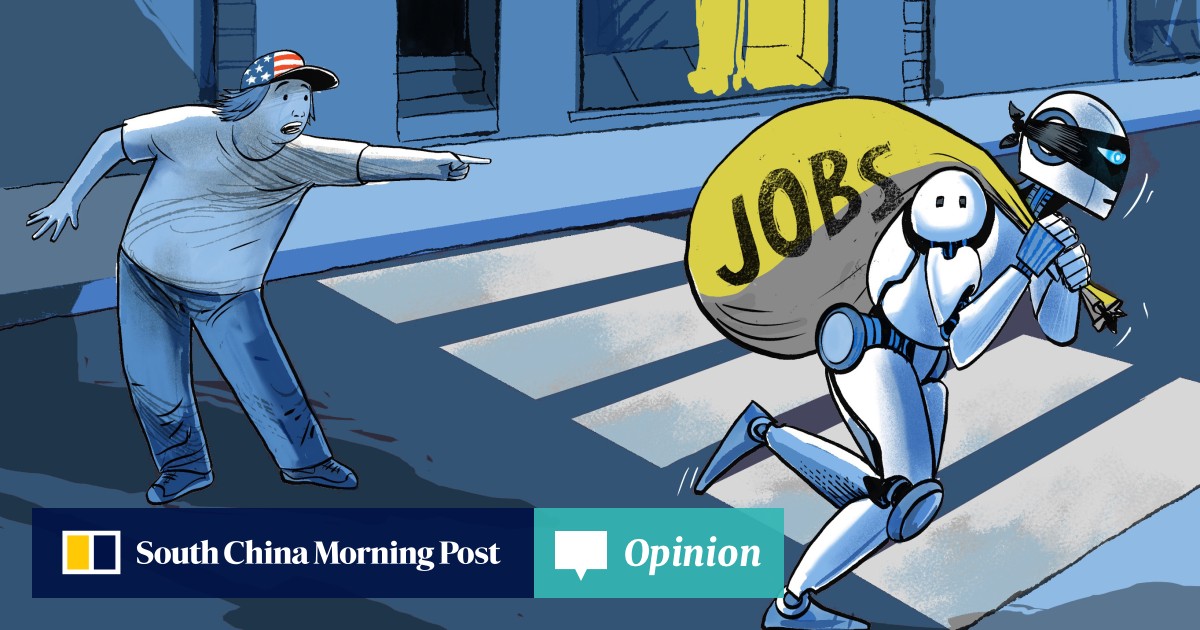
It starts with the fundamentally different economic outlooks and job prospects for young people in China and the US
3-MIN READ3-MINWei WeiWei Wei is the former chief correspondent of the Eurasian bureau of China Central Television, based on Moscow, covering events in the states of the former Soviet Union. Published: 6:08am, 27 Jun 2026My four-year-old son has become fascinated with his new friend, who has endless patience and an answer for everything. She is an artificial intelligence assistant on Doubao, one of China’s most popular AI applications.My son, obsessed with space, black holes and galaxies, keeps asking Doubao for related videos. When the video is of low quality or inaccurate, I would stop it and explain it may not be reliable. Despite my concerns about AI-generated information, I let him interact with AI within limits. I see AI primarily as a tool; like the internet or smartphone, it will become an important part of everyday life, so learning to use it matters.
In a recently released Chinese survey of more than 7,000 people, over 96 per cent report an awareness of AI, with over 54 per cent using it. More than 40 per cent use AI specifically in work, study or daily life, significantly higher than in the United States and other developed countries. The Edelman Trust Barometer shows 87 per cent in China trusting AI, compared with only 32 per cent in the US.
In contrast, last year’s Harvard Youth Poll found that 59 per cent of 18-29‑year‑olds in the US believed AI threatened their job prospects. According to Gallup, 48 per cent of Gen Z workers think the risks of AI in the workplace outweigh the benefits – up 11 percentage points from last year; meanwhile, those reporting excitement about AI fell by 14 points. In a Harris Poll survey, nearly half of Gen Zers believe AI made their degrees irrelevant.