Cape Coral, Florida – March 1, 2026 – The joint U.S.-Israeli military campaign against Iran, launched on February 28, 2026, has entered its second day with intensified strikes and retaliatory actions, escalating fears of a prolonged regional conflict and significant disruptions to global energy supplies.
President Donald Trump confirmed on Truth Social and in video statements that the operation—codenamed "Operation Epic Fury" by the U.S. and "Roaring Lion" by Israel—has successfully eliminated Iran's Supreme Leader Ayatollah Ali Khamenei, whom he described as "one of the most evil people in History." Iranian state media has confirmed Khamenei's death, along with other high-ranking officials including the Armed Forces Chief of Staff. Iran has declared 40 days of mourning and formed an interim leadership council to govern amid the power vacuum.
The strikes, involving hundreds of targets including command centers, air defenses, missile sites, nuclear-related facilities, and leadership compounds in Tehran and beyond, followed stalled nuclear negotiations. Trump has urged Iranian citizens and military forces to seize the moment for regime change, stating the Iranian people should "take over your government" and framing the action as a path to freedom. Israeli Prime Minister Benjamin Netanyahu echoed this in addresses to Iranians, calling for mass protests to topple the regime.
Iran has responded aggressively, launching missile and drone barrages targeting U.S. bases in the region, Israel (including Jerusalem and Tel Aviv), and Gulf states hosting U.S. assets such as the UAE, Saudi Arabia, Kuwait, Qatar, Bahrain, and Oman. Reports indicate civilian casualties, including deaths in residential areas near Jerusalem, injuries in Kuwait, and disruptions at airports like Dubai. Explosions continue in Tehran as Israel conducts fresh waves of strikes aimed at achieving air superiority and dismantling remaining defenses.
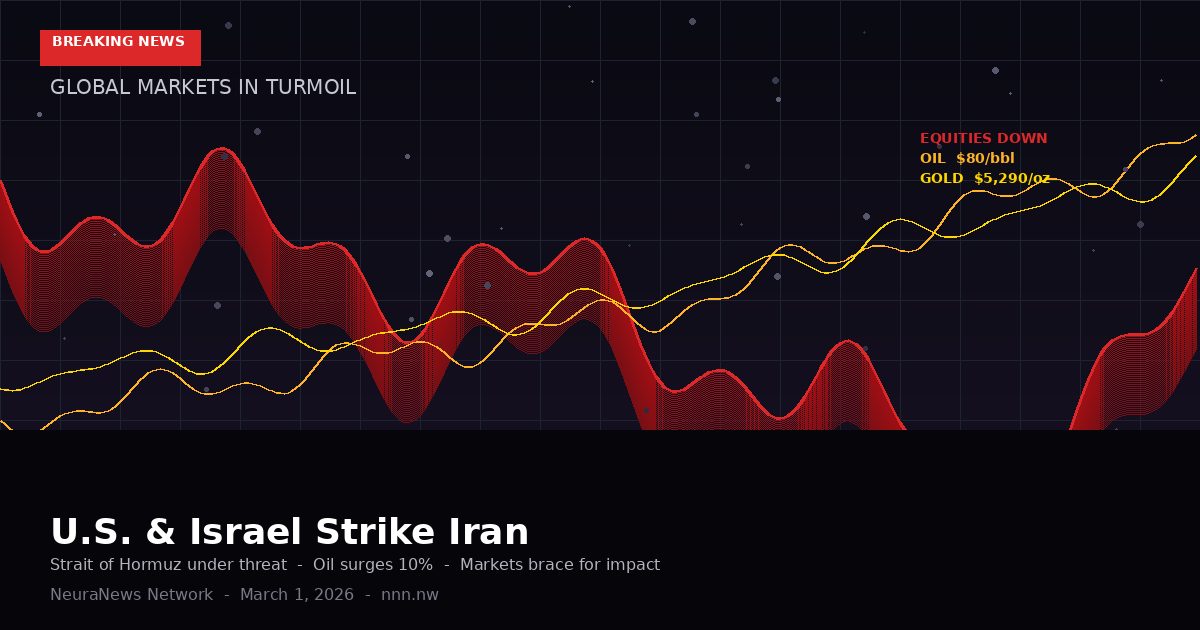
Even before the strikes, markets were tense with Brent crude above $72 per barrel and gold rallying toward $5,300 per ounce. In the immediate aftermath, oil has surged dramatically—Brent jumping around 10% in over-the-counter trading to near $80 per barrel on Sunday, with analysts warning of potential spikes to $100 or higher if disruptions persist. Gold has climbed further, trading above $5,290 per ounce amid safe-haven demand, with some projections eyeing $5,500 or new records.
The energy epicenter remains the Strait of Hormuz, through which roughly 20% of global oil and substantial LNG flows. Iranian Revolutionary Guards have issued warnings via VHF radio that "no ship is allowed to pass," leading to suspended tanker traffic, diverted vessels, and sharp drops in shipments. While not a formal closure—requiring higher-level approval—Iran's actions have created de facto restrictions, heightening supply shock risks. Analysts note that even brief or partial disruptions could inject severe volatility into energy costs, inflation, and growth outlooks.
Current buffers, including OPEC+ spare capacity (with a modest output increase announced), U.S. shale flexibility, emergency reserves, and inventory builds, offer short-term resilience. However, a sustained blockade or broader escalation—potentially involving proxy attacks or involvement from powers like China (a key Iranian oil buyer with rare earth leverage)—could trigger 1970s-style energy crises.
Internal destabilization in Iran adds another layer. Khamenei's killing and leadership losses could fracture the regime, drawing parallels to past oil-producing regime changes (average 30% oil price surges since 1979, up to 76% in extremes). The 1979 Iranian Revolution doubled prices and fueled global recession; a similar shock might push oil into the mid-$80s or beyond, adding 0.8–1.5% to U.S. inflation and dragging GDP if prolonged.
Equity markets face selloff risks akin to the Gulf War or 2022 Ukraine invasion, though defensive and energy sectors could rally. Safe-haven flows continue boosting gold, the U.S. dollar, and yen.
Prediction markets had signaled high odds of action by March; now, focus shifts to containment versus widening war. While many analyses maintain a constructive 2026 outlook—geopolitical volatility often fades absent major economic hits—events underscore a fragmenting global order.
Investors should enhance resilience: gold as a hedge, exposure to strategically vital sectors. Human costs mount with civilian casualties, flight disruptions, and regional turmoil; de-escalation remains uncertain amid vows of revenge from Tehran and warnings of "unprecedented force" from Trump.
Markets await next developments: further Iranian responses, potential Strait status changes, or diplomatic interventions from Russia, China, or others.
By S. Vincent Anthony