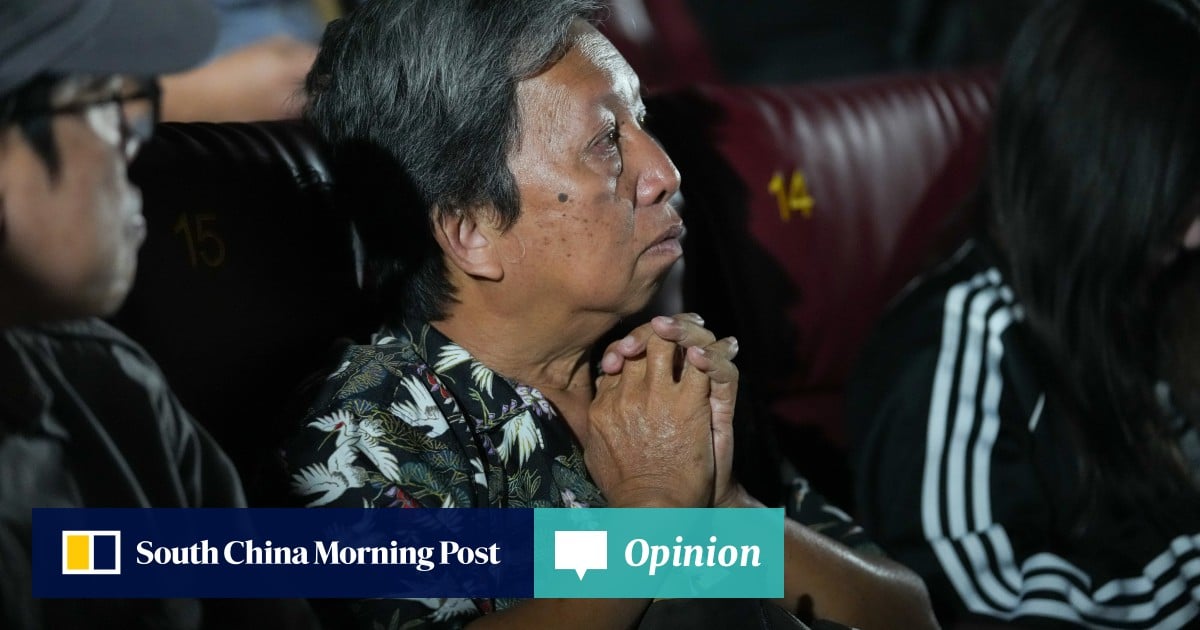
Some call the film soft power, but for many in the Chinese diaspora, it’s simply family history
3-MIN READ3-MIN ListenBernard ChanBernard Chan, born in 1965, is a Hong Kong businessman. Published: 8:30pm, 25 Jun 2026When a modest Chaoshan-dialect film about an indebted grandson, a missing grandfather and a bundle of yellowing remittance letters opened quietly in China in late April, few expected it to become one of the biggest films of the year. Yet Dear You has earned more than 1.8 billion yuan (US$265.75 million) at the Chinese box office. It has done so without major stars or heavy promotion – an unlikely triumph for a film told largely in Teochew or Chiu Chow.As the film is released across Southeast Asia, however, it has also prompted reflection on how Chinese communities remember migration.
That recognition gives the film its emotional force. Qiaopi were lifelines, envelopes with a few banknotes, sometimes a small token – proof that someone overseas had not forgotten.
Part of the film’s impact stems from its language. Dear You is spoken almost entirely in Teochew, the dialect of Chaoshan and some Chinese communities in Hong Kong and across Southeast Asia. With amateur actors and ordinary village backdrops, the conversations feel genuine and unvarnished.
For younger viewers raised on sleek productions, that roughness has felt personal – like listening to their grandparents or seeing their hometown streets projected onto a big screen.