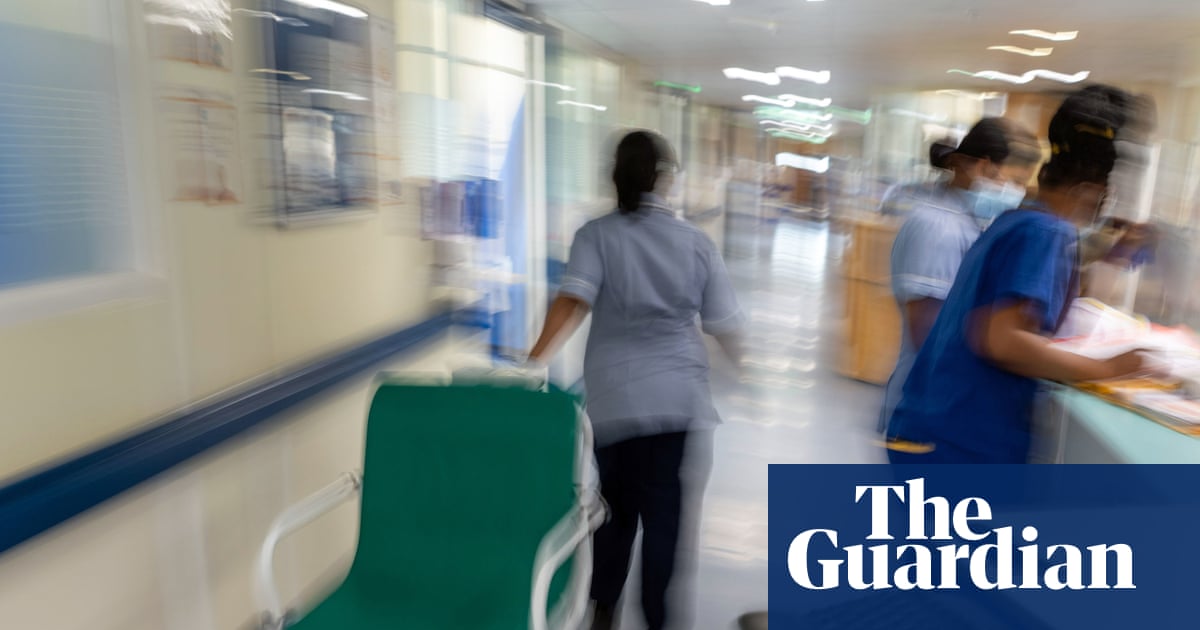
NHS buildings must be upgraded to withstand extreme heat, said the clinical vice-president of the Royal College of Physicians. Photograph: Jeff Moore/PAView image in fullscreenNHS buildings must be upgraded to withstand extreme heat, said the clinical vice-president of the Royal College of Physicians. Photograph: Jeff Moore/PAHospitals in England declare critical incidents as machines and IT fail in heatExtreme weather breaks MRI scanners and cooling units, as workload rises for sleep-deprived staff on sweltering wards
Doctors have sounded the alarm over the disastrous impact of extreme heat on the NHS in England, with radiotherapy machines and MRI scanners failing, critical IT systems stalling and cooling units that serve entire hospitals breaking down.
The hot weather has also prompted a surge in admissions and people arriving at A&E, causing severe overcrowding in some places and exacerbating heat-related pressures on infrastructure.
“Lots of people, especially older patients, are turning up having collapsed or with dehydration,” one physician said. “In terms of inpatients, the conditions are awful due to overcrowding. Very few places have air conditioning and staff are really struggling.”
Older patients in one geriatric ward had been forced to endure temperatures as high as 35C, a second doctor said. Even wards with built-in air conditioning were affected, as some units were shut down to prevent them being damaged by the extreme heat.
Read moreAnother doctor said their workplace was “unfit to cope”, with patients and staff experiencing “awful conditions” in sweltering wards, clinics and corridors. NHS staff were also navigating the challenge of providing care while sleep-deprived. Like much of the UK population, many have struggled to sleep this week.
Several NHS trusts in England have declared critical incidents as a direct result of the extreme heat. One hospital had done so after its machines failed in multiple areas, a doctor said. Labs used for testing were also affected and two linear accelerator machines, used to treat cancer patients, had stopped working amid the high temperatures.
The doctor said that, although they were working in a relatively new care setting, it was “tacked on to an old Victorian hospital”, creating severe infrastructure challenges. “It’s hopeless, really,” they said.
The doctor also said their NHS trust had faced “major issues” with IT servers overheating on Wednesday. “We thought we were going to lose everything, so we were all asked to turn off non-essential computers and electrical equipment, including lights.”
In Portsmouth, the Queen Alexandra hospital declared a critical incident after extreme heat caused cooling units to fail, leading to “elevated temperatures” across the hospital.
The failure of the cooling units affected the hospital’s digital systems and critical clinical services, including operating theatres, cardiac catheter laboratories and diagnostic scanning facilities, Portsmouth hospitals university NHS trust said.
“The unprecedented pressures created by the current heatwave, combined with the failure of a number of our chiller units, have led to significant disruption across several of our services,” said the trust’s deputy chief executive, Mark Orchard.
Some planned care and appointments were cancelled, while patients attending appointments were advised to bring lots of water as the hospital was “very hot”.
In Norfolk, hundreds of patients had hospital appointments cancelled after MRI scanners stopped working in the extreme heat.
Norfolk and Norwich university hospitals NHS foundation trust declared a critical incident, saying cooling systems that kept its scanners running had been affected by the hot weather and humidity.
It said it currently had “no working MRI scanners” across its Norwich sites, including those at its main hospital and its community diagnostic centre.
Dr Hilary Williams, clinical vice-president of the Royal College of Physicians, said the impact on patients and staff exposed an NHS that was dangerously underprepared for this week’s extreme heat.
“There are reports of older patients arriving at hospital having collapsed or with dehydration. Patients are facing overcrowding, and there are issues with machines, laboratories and kidney dialysis – all fundamental to providing safe patient care,” she said.
“The impact of heatwaves on staff cannot be overstated. There is a sense of foreboding when we see the weather forecast, because we know what is to come, and there is very little staff can do.
“It is not as simple as buying fans, which can present a fire risk when used alongside oxygen and may increase the spread of infection,” she added.
If you have something to share about this story you can contact Andrew using one of the following methods:
The Guardian app has a tool to send tips about stories. Messages are end to end encrypted and concealed within the routine activity that every Guardian mobile app performs. This prevents an observer from knowing that you are communicating with us at all, let alone what is being said.
If you don’t already have the Guardian app, download it (iOS/Android) and go to the menu. Select ‘Secure Messaging’.
If you don’t need a high level of security or confidentiality you can email andrew.gregory@theguardian.com
Finally, our guide at theguardian.com/tips lists several ways to contact us securely, and discusses the pros and cons of each.
Show moreThe NHS was already under “enormous pressure” owing to rising demand and workforce shortages, Williams said. Coupled with an ageing estate, those challenges intensified with the arrival of record temperatures this week.
“As clinicians, there are immediate steps we can take to protect patients, such as reviewing medications that affect hydration and ensuring they are stored appropriately,” she said.
“But this must be matched by system-level change – strengthening infrastructure and embedding resilience into NHS reform.”
Buildings must be upgraded to withstand extreme heat and other climate risks, she said. “Hospitals should be places of safety, not settings where extreme heat puts patients and staff at risk.”
The Department of Health and Social Care and NHS England were approached for comment.