Add The New York Post on Google Corporate events have changed in ways that aren’t always obvious from the outside. It used to be enough to fill a schedule with speakers and leave space for networking. Now, the expectation leans more toward shared experiences that hold attention and carry through the rest of the event. That’s the space where Josh Pele has built his work, focusing on how performance can fit into those moments without feeling disconnected from them.
Attention moves quickly, especially in rooms where people are used to constant input. Holding that attention requires something more active than a standard presentation.
Live entertainment at corporate events used to sit on the edges of a schedule. It was often treated as a break without integrating into the experience itself.
That separation doesn’t always hold anymore. Events now tend to blend different elements together, which means performances need to adapt to a range of settings. A room might shift from formal presentations to smaller conversations, then back again. Keeping people engaged through those changes requires a different approach than a fixed stage act.
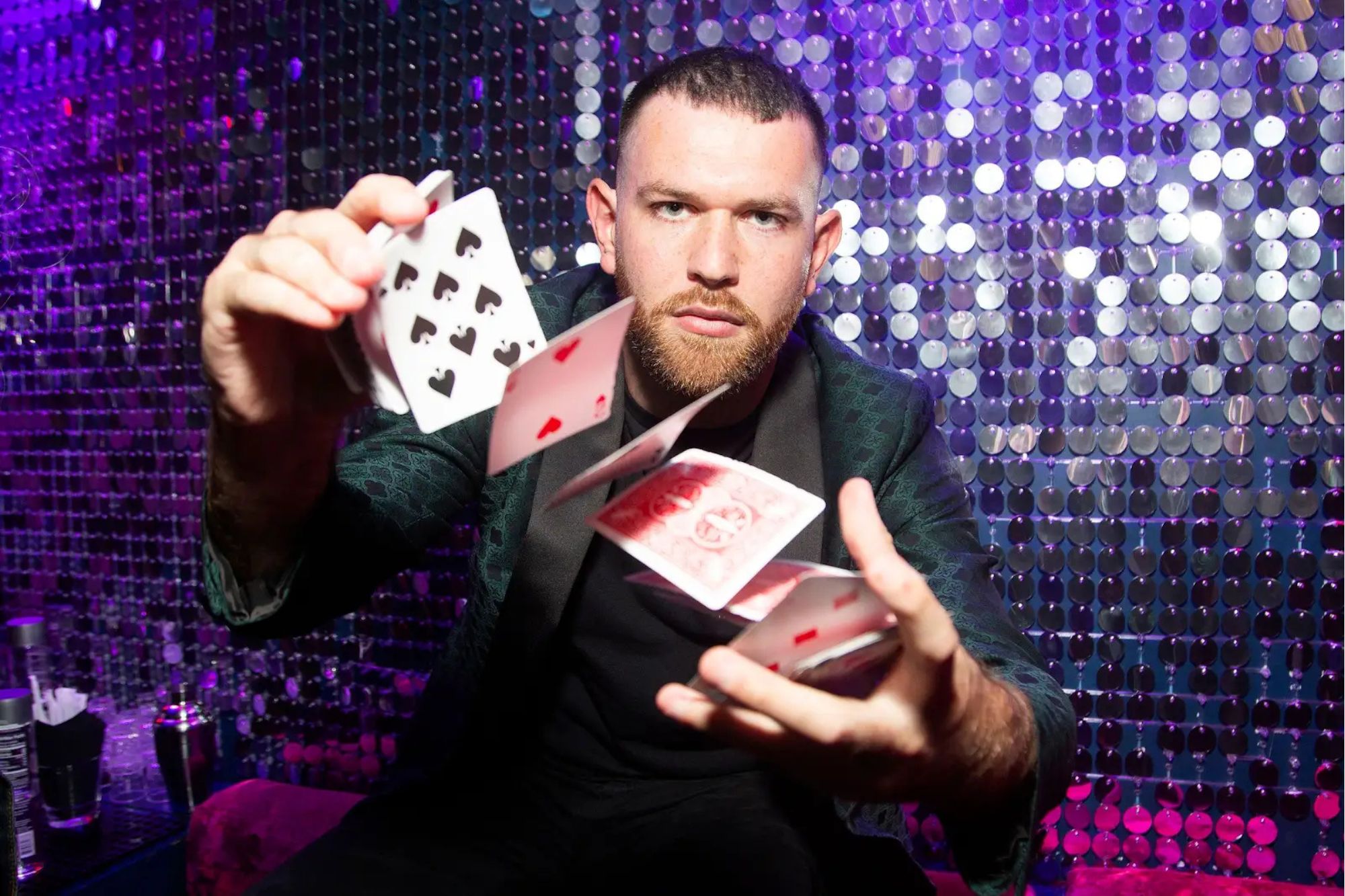
Josh Pele works as a magician and mentalist, though his approach leans heavily on interaction. Instead of treating the audience as observers, his performances tend to pull people into the experience as it unfolds. That structure changes how the room responds. A performance can move between a larger stage setting and smaller group moments without feeling like a reset.
That variation shapes how a performance needs to be structured. The focus is on reading the room and adjusting in real time. That might mean changes in pacing, how people are involved, or reworking how a moment is delivered.
Language has also played a role in that adaptability. Having performed in more than 20 countries and in 11 languages, Pele’s work reflects a growing demand for experiences that feel personalized, interactive, and culturally relevant. The emphasis stays on how the performance fits the audience in front of it.
Adapting to different environments often involves understanding the event structure, audience, and expectations tied to both. In some cases, that preparation has included learning an entirely new language in order to perform magic and mentalism for native-speaking audiences. To date, Pele has performed in 11 languages, including Swedish, Indonesian, Korean, Vietnamese, Italian, Portuguese, Russian, Spanish, Ukrainian, Japanese, and English.
Rather than treating language as a novelty, the goal is to create genuine moments of connection by meeting audiences in a language and cultural context that feels familiar to them.
Those details don’t always stand out during the event itself, though they shape how smooth the experience feels.
That kind of preparation also supports consistency. Even when the format changes, the performance can still hold together in a way that feels intentional.
While corporate events remain a central part of his work, other areas have started to take on more space over time. Pele has performed at corporate conferences, executive retreats, private events, international festivals, and television appearances, demonstrating how adaptable interactive entertainment has become across different environments.
Pele also serves on the Advisory Council of Smiles Through Cars, a nonprofit organization dedicated to creating memorable experiences for children and families facing difficult circumstances.
That balance between professional work and community involvement adds another layer to how his work is structured. It moves between different environments while keeping a similar focus and connection.
That creates ongoing pressure on how performances are designed. What works in one setting may need to change in another. The ability to move with those needs becomes part of the job itself. Live performance in these settings develops through a mix of preparation and awareness.
The foundation is built ahead of time, though the delivery continues to shift once the event begins. That shift depends on how people respond, how the space feels, and how the schedule moves forward. Over the course of an event, those smaller moments begin to form a larger experience that stays consistent from start to finish.
As corporate audiences continue to seek experiences that feel more personal and engaging, performers capable of blending interaction, cultural awareness, and adaptability are likely to play an increasingly important role in the future of live events.