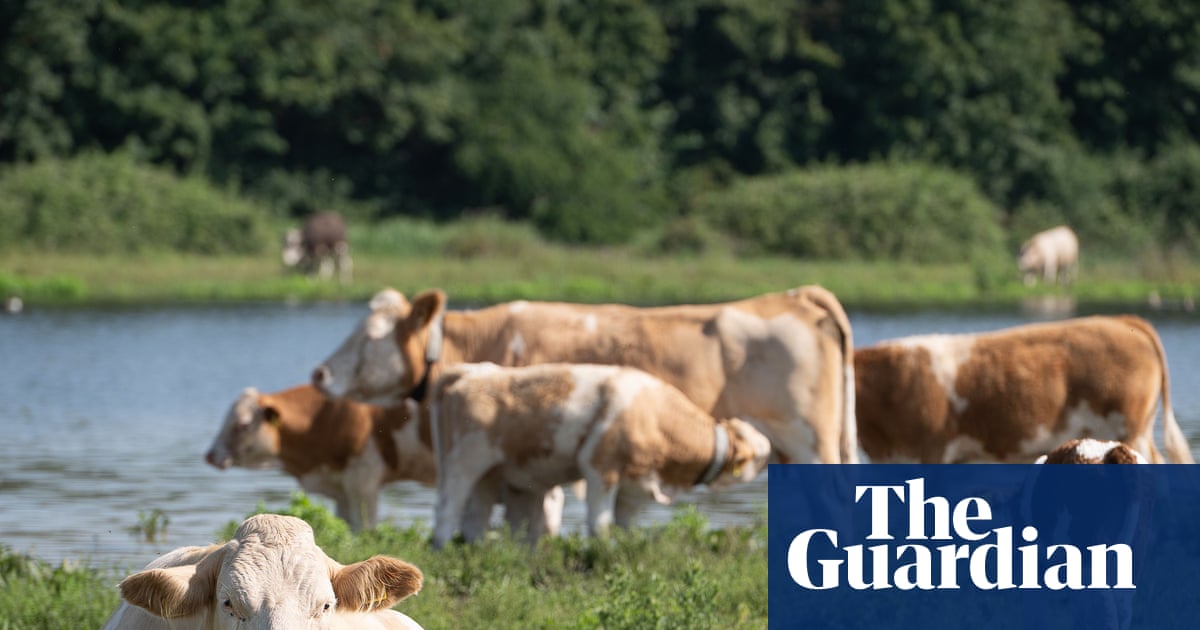
The National Farmers’ Union says continued record temperatures show what the farming sector is up against. Photograph: Maureen McLean/ShutterstockView image in fullscreenThe National Farmers’ Union says continued record temperatures show what the farming sector is up against. Photograph: Maureen McLean/ShutterstockFarmers criticise government plan to counter threats to UK food securityPlan warns climate crisis will lead to food price shocks and shortages but farmers say it fails to adequately fund response
The climate crisis will lead to food price shocks and shortages, the government has warned in its new plan for British farming.
But farmers criticised the plan, which outlines for the first time the government’s vision for the long-term direction of farming, for failing to adequately fund a response to this threat to the UK’s food security.
In the plan, published on Wednesday, the government warns that geopolitical instability, the climate crisis, environmental degradation and supply chain disruptions are affecting the UK’s food security.
It warns this could increase the risk of “severe food price shocks” and in some “extreme situations, lead to reduced availability of certain foods”. The climate crisis is already affecting food prices – for example, potato prices rose by 22% in the UK during January and February 2024 after heavy rain the previous year.
A key solution to this, the plan says, is a shift away from fertilisers and pesticides and towards more sustainable farming systems.
“Nature-friendly farming systems can sustain or enhance production while strengthening resilience and reducing input dependency. Too often, the debate around farming and the environment is framed as a trade-off, with food production on one side and nature recovery on the other. But the most resilient farms are profitable precisely because they work with the environment, not against it,” the report says.
Tom Bradshaw, the president of the National Farmers’ Union, recognised the risk the climate crisis posed to the future of farming, and said the continuing “record temperatures” showed what the farming sector was up against.
However, he criticised the plan for failing to allocate long-term funding to deal with climate breakdown. The plan says the budget for environmental land management (ELM) schemes will increase to up to £2bn a year by 2029. This funding increase was first announced last summer.
View image in fullscreenWheat harvests are among the farming practices to be affected by extreme weather conditions proving the climate threat to food security. Photograph: Bloomberg/Getty ImagesELM schemes are packages of payments that replaced the EU’s common agricultural policy (Cap) after Brexit, which paid land managers for the amount of land in their care. The aim of the schemes is to pay farmers to look after nature, soil and other public goods, rather than simply for farming and owning land.
“The Treasury is conspicuously absent in this plan. Instead, it tips the balance of risk even more on to the shoulders of farmers,” Bradshaw said.
On Wednesday, the government allocated an additional £53m to the farming innovation programme, which will include dedicated funding rounds focused on robotics, soil health and water management.
It has also launched a new £30m farmer collaboration fund to support groups of farmers to grow their businesses, build partnerships and share best practice.
Last March, the Department for Environment, Food and Rural Affairs (Defra) suddenly closed applications for the sustainable farming incentive (SFI) ELM scheme, prompting outrage from farmers.
The plan says applications for a “simpler, fairer” SFI scheme will open this month for small farms and those without an agreement, and in September for all eligible farms.
With the UK facing its second record-breaking heatwave in two months, Martin Lines, the chief executive of the Nature Friendly Farming Network, said it was “a great relief that the plan recognises the interconnectedness of farming, food production, climate and nature”.
However, he said the government now needed to support implementation of the plan by “backing England’s farmers with the right investment, schemes, and market conditions so our landscapes can deliver for food production, nature recovery, climate resilience and economic growth”.
“The current soaring temperatures show the stark choice we face. With the right support and investment, farming systems built on healthy soils, clean water and living ecosystems can deliver a range of produce and outcomes while restoring nature and helping to mitigate the impacts of climate change,” he said. “Delay and inaction, on the other hand, would be disastrous.”
The environment secretary, Emma Reynolds, said the plan marked a “shift away from only looking to the next harvest and towards a plan that gives farmers the long-term clarity they need to innovate, invest and grow with confidence for generations to come”.