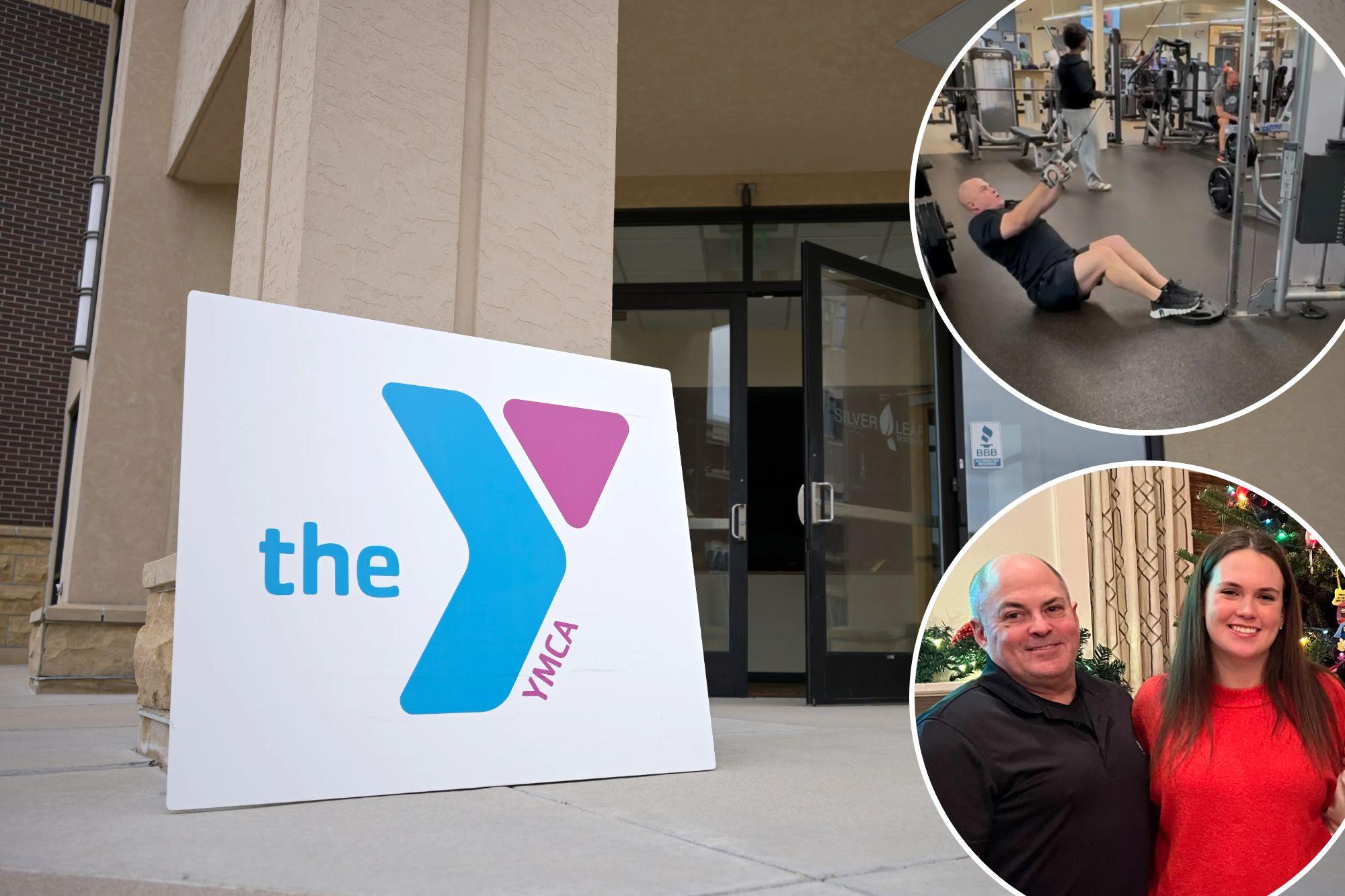
Add The New York Post on Google Tracy Bowers thought he knew exactly what he was getting by being a 20-year member of his local YMCA — community, affordable prices and a place where he and his family could focus on their health.
So when the Delaware resident shockingly discovered nearly $35,000 in personal training charges years after formally canceling them, he assumed there had been a mistake.
How could the globally known non-profit pull a fast one like that?
The dad of two told The Post that he canceled the pricey sessions for his teens in October 2021 but kept his regular $138-a-month membership, so when he saw recurring Glasgow-Bear YMCA charges on his credit card over the past few years, he didn’t think much of it.
Fast forward to December of 2025, when, while more carefully reviewing credit card statements, Bowers and his sister-in-law, who had offered to cover some costs as a gift, realized he “was still getting charged for personal training sessions for Gavin, and they were also being auto-renewed,” he alleged of his son’s phantom sessions.
But when Bowers confronted the gym, it said it had no record of the requests and maintained that billing was authorized.
According to emails and text messages reviewed by The Post, Bowers informed the then-YMCA director, Lamar “Marty” White, that his son, Gavin, and daughter, Christina, would no longer be participating in personal training.
In their October 2021 texts, White told Bowers he was unable to process the cancellations himself and would instead send him a link to file them in their online system.
“I need to send you the PT termination request for the kids,” White wrote in a text message to Bowers.
According to documentation reviewed by The Post, White sent Bowers the forms, which Bowers claims he completed, and assumed his kids’ memberships had been terminated.
However, in a statement to The Post, the Glasgow-Bear YMCA said the Bowers family was enrolled in a recurring monthly personal training subscription that included a set number of sessions. Under the program’s terms, unused sessions did not roll over, and the subscription remained active until the member canceled it.
The organization acknowledged emailing Bowers a cancellation link in October 2021 but said, “No cancellation request was submitted through that process, and the subscription remained active.”
In email correspondence reviewed by the Post, YMCA officials told the family their records did not show a completed termination request.
They also stated that without proof that the forms had been received, the personal training auto-renewal agreements remained active.
The YMCA said it reviews refunds within two billing cycles and maintained that the billing was proper.
Much to the Bowers family’s disappointment, the gym offered a refund for two months of charges, a two-year complimentary membership, and 25 training sessions, which the family declined.
“This resolution is offered as a gesture of appreciation for your long-standing relationship with the YMCA and represents our best effort to balance fairness, policy, and goodwill,” then vice-president of community management, Terry Mullen, wrote in an email to Bowers reviewed by The Post.
“Two months refunded was ridiculous,” Bowers scoffed to The Post in response. “That’s not even a fraction…”
After combing through the gym’s website for policies on memberships and training session refunds that were not clearly stated anywhere and much back and forth between the Y and their credit card company, the Bowers eventually filed a complaint with the Delaware Attorney General.
The dispute raised questions about the YMCA’s tracking of sessions and recurring billing, which staff admitted could be vague.
“We recognize there may have been contusion, particularly during a period of transition and disruption related to COVID, and while our records indicate that the agreement remained in effect, we want to move forward in a way that reflects our appreciation for your family’s long-standing commitment to the YMCA,” Mullen wrote in an email reviewed by The Post.
When The Post sought clarification from the YMCA of the USA about personal training and billing policies, a company representative said there was little national oversight because individual YMCA associations operate as separate nonprofit organizations and set their own policies for memberships, personal training, and other programs.
“Each YMCA, being its own separate 501(c)(3) organization, handles membership fees, personal training fees, childcare fees, etc., differently, so there is no national data on personal training,” Emily Waldren, the organization’s director of public relations and brand reputation, said in an email to The Post.
The issue of record-keeping became more apparent after the family challenged the charges.
Bowers said one of his longtime trainers, who kept detailed spreadsheets of client sessions, was asked to reconstruct portions of his training history because the YMCA did not have complete records readily available.
“They asked my trainer to pull his own records — they didn’t have records of me,” Bowers complained to The Post.
The family also questioned how charges could continue after their trainer left and no replacement was assigned.
“If you don’t even have a trainer assigned to people, how are you still billing for this?” Bowers questioned. “The trainer is gone, she left, she left the company.”
The YMCA rejects the suggestion that the matter reflects broader billing issues.
The organization said it serves hundreds of personal training clients each year, considers situations like the Bowers family’s “highly unusual,” and is not aware of any similar personal training billing disputes.
Since filing the complaint with the Delaware Attorney General seeking full reimbursement of the disputed charges, the complaint hasn’t been resolved — but the family remains hopeful that the matter will eventually be settled, despite feeling like they’ve exhausted all their options.
“My wife, she took it really hard; it made her sick, and made both of us sick coming home every day, knowing that we lost this money,” Bowers explained. “It made me feel twice as bad, because half of that money was my sister-in-law’s.”
While continuing to fight for their money back, Bowers canceled his YMCA membership and joined a nearby Crunch Fitness along with his son, an ROTC student who used to work out at the family-friendly gym during school breaks.
For a family that trusted the nonprofit with their fitness for decades, that’s the biggest loss of all.
“It’s sad it ended this way,” the frustrated dad said. “They shouldn’t take that money and provide nothing.”