Individuals choose the university and course but the state sets the collective outcome, steering human capital towards development goals
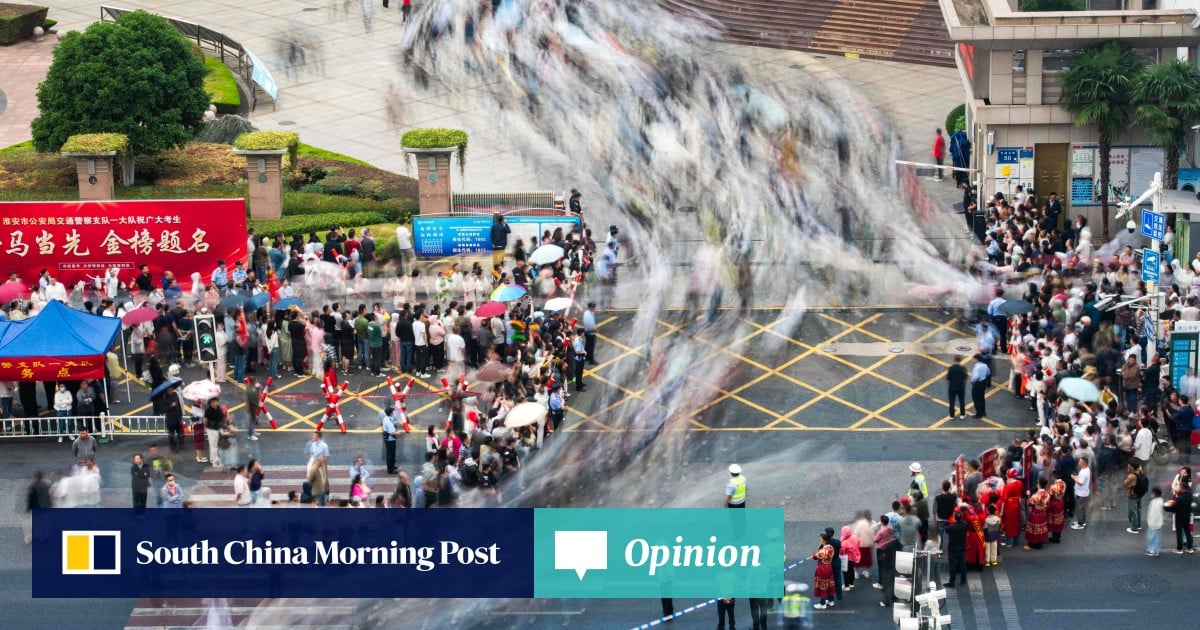
3-MIN READ3-MIN ListenWinston MokWinston Mok, a private investor, was previously a private equity investor. Published: 4:30pm, 23 Jun 2026This week, the results of China’s National Higher Education Entrance Examination, or gaokao, will be released. Within days, candidates will submit their prioritised preferences for universities and majors. Families will have to make the most consequential choices with imperfect information amid uncertainty.It is a sorting mechanism. Candidates need to find the right match by choosing programmes their gaokao results can gain them entry to. Historical admission marks only serve as indicative guidance. And parents have to make educated guesses as to what the employment market will be like four years hence.
As preferences fluctuate, so do the required admission marks for majors at targeted universities. Candidates essentially commit to a sequence of auctions based on expected odds, with their gaokao results as bids.
More than half of Chinese university graduates have a STEM (science, technology, engineering and mathematics) degree and roughly one in three bachelor degrees are in engineering. This compares to about 21-23 per cent in industrialised economies such as South Korea and Germany.