The US has launched "major combat operations" against Iran, with President Donald Trump delineating key military objectives in a speech. DW talks to analysts who weigh in on whether these targets can be achieved.
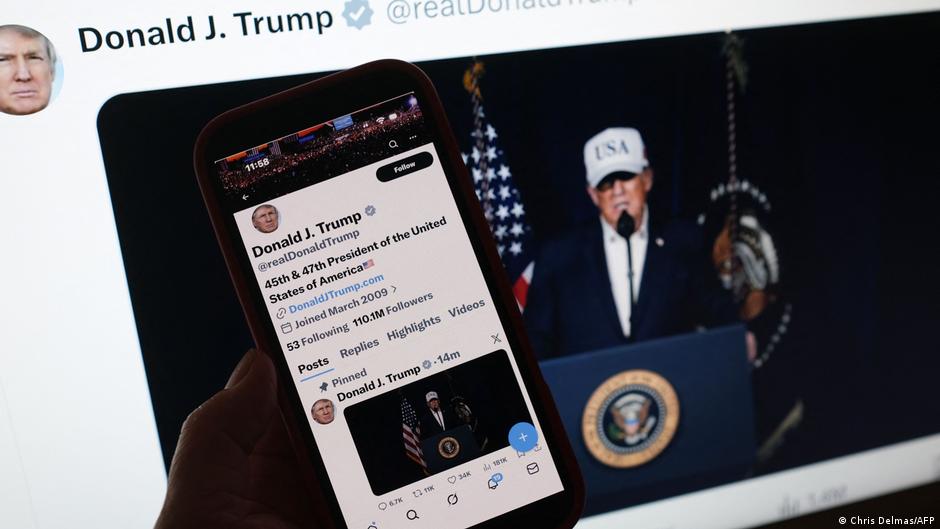
https://p.dw.com/p/59aOsUS President Donald Trump announcing military campaign against Iran in a video posted on social mediaImage: Chris Delmas/AFPAdvertisementAfter Israel launched "preemptive strikes" against Iran on Saturday morning, President Donald Trump announced in a speech that "major combat operations" by the US were also underway.
"Our objective is to defend the American people by eliminating imminent threats from the Iranian regime," Trump said in a video shared on social media, vowing to destroy Iranian nuclear and military capabilities.
"We will ensure Iran does not obtain a nuclear weapon," he said.
Laying out the campaign objectives, Trump also said the US would obliterate Iran's ballistic missile program and its naval forces.
As the US-Israel military campaign against Iran doesn't appear to be short-term and limited, analysts believe the conflict could continue for weeks, if not months.
After the 12-day war between Iran and Israel in June 2025, Trump declared that the US had "obliterated" Iran's major nuclear facilities and that the Islamic Republic would not be able to build nuclear weapons in the foreseeable future.
"A year-and-a-half later, the US is conducting a war whose aim is to destroy this (nuclear) program, again, so I think this, by and large, is a pretext," Marcus Schneider, an expert at the Friedrich-Ebert-Stiftung (FES) in Lebanon, told DW.
"Iran's nuclear program was set back at the time by US attacks; some say by a few months, others say by a few years. But I believe it cannot be eliminated. It is also a question of expertise, which means that if Iran has the expertise to build these centrifuges and to enrich [uranium], then that is something you cannot eliminate through air force," he added.
Analyst assesses Iran politics as US launches attacksTo view this video please enable JavaScript, and consider upgrading to a web browser that supports HTML5 video
Shahin Modarres, an Italy-based security analyst, says a nuclear-armed Iran will always be viewed by Israel and the US as "unacceptable."
"Preventing nuclear weaponization is, therefore, a strategic objective, not merely a policy preference," Modarres told DW.
Diba Mirzaei from the German Institute for Global and Area Studies (GIGA) dubs it "a pretext to justify the war," arguing that "currently no practical danger is emanating from Iran" in this regard.
The negotiations between the US and Iran in Geneva this week over Tehran's nuclear program didn't yield any result.
Some experts are of the view that the US and Israel consider Tehran's ballistic missile capabilities a bigger threat than its nuclear program. In last year's 12-day war, Iran had demonstrated that it could inflict damage on Israel and US military facilities in the region through its missiles.
"Operationally, production facilities, storage sites, and solid-fuel procurement chains are targetable — as recent strikes on missile-related infrastructure have demonstrated," Modarres underlined. "However, technological know-how cannot be bombed away," he said, adding that a complete eradication of the Islamic Republic's missile program "is unlikely, but severe degradation and long-term limitation of capacity is possible."
FES' Schneider agrees with this view: "It is a domestic industry, which means that these are not imported ballistic missiles. Iran is in a position — something it has proven since the end of the last war — that it can produce them by itself. It is, of course, possible to destroy the arsenal, but the question is how long it will take and who gets harmed in the process."
What are the risks of a US military attack on Iran?To view this video please enable JavaScript, and consider upgrading to a web browser that supports HTML5 video
For Schneider, it is more feasible for the US to annihilate Iran's navy than its missile capabilities. "Of course, that is militarily possible. But one must understand that they (Iran) also have many small boats — the so‑called speedboats. So, I think that is not something that can be achieved in a week," the analysts said.
Shahin Modarres argues that there is a historical precedent for this kind of operation by the US.
"During Operation Praying Mantis (1988), the US severely damaged Iran's naval capabilities. If the freedom of navigation — particularly in the Strait of Hormuz, which is a critical global energy chokepoint — is threatened, the US could justify large-scale naval action. The strategic objective for this would be to guarantee the opening of sea lanes," Modarres stressed.
Sara Kermanian, a researcher of international relations at the University of Sussex, shares this view: "The United States could severely damage Iran's active naval forces in the short term, significantly degrading their ability to disrupt maritime traffic."
It is unclear how President Trump wants to achieve this goal through his latest military campaign, as Washington has not hinted at initiating ground operations inside Iran. But reports of Israeli and US air strikes on military and government targets inside Iran show that the campaign aims to substantially weaken the regime.
"When we are finished, take over your government. It will be yours to take. This will be probably your only chance for generations," Trump said in his speech. "For many years, you have asked for America's help, but you never got it."
Modarres says renewed mass protests against Supreme Leader Ali Khamenei's hardline regime, something similar to those in January, could be probable but it would require a powerful triggering event. "Given the memory of repression, spontaneous uprising is unlikely without structural weakening of the regime. Statements suggesting opportunity may function more as strategic signaling than firm commitment," the expert added.
Marcus Schneider believes the toppling of a regime usually involves ground troops. "That Trump intends to do it only with air power and then believes that the Iranian population will rise amid a war and act against this brutal regime, I find that rather fantastical to imagine," he said.
"If the actual goal is regime change, then I would assume this war will last longer — possibly for several months. And the big question that arises is that of the regime's resilience," he underlined.
Modarres believes Trump's immunity offer to Iran's Islamic Revolutionary Guards Corps (IRGC) members "is a classic strategy aimed at encouraging elite defection and accelerating internal fragmentation."
"Its effectiveness will increase if sustained military and economic pressure weaken regime cohesion. However, institutional surrender of the IRGC would only be plausible under conditions of a profound systemic collapse."
Researcher Sara Kermanian believes that if Trump's regime collapse goal is not fulfilled, the short-term consequences for citizens could be severe.
"A wounded but intact state may respond with intensified repression, particularly if it perceives segments of society as having welcomed external pressure. Much would then depend on whether escalation is followed by a negotiated settlement that restructures relations and at least eases sanctions, or whether confrontation continues in cycles of sanctions, proxy conflict, and periodic strikes," she said, adding that in the absence of a settlement, Iran could enter a prolonged and more severe period of militarization and economic attrition.
Additional reporting by Niloofar Gholami and Kersten Knipp.
US-Military pressure on Iran: Is a regime change the goal?To view this video please enable JavaScript, and consider upgrading to a web browser that supports HTML5 video