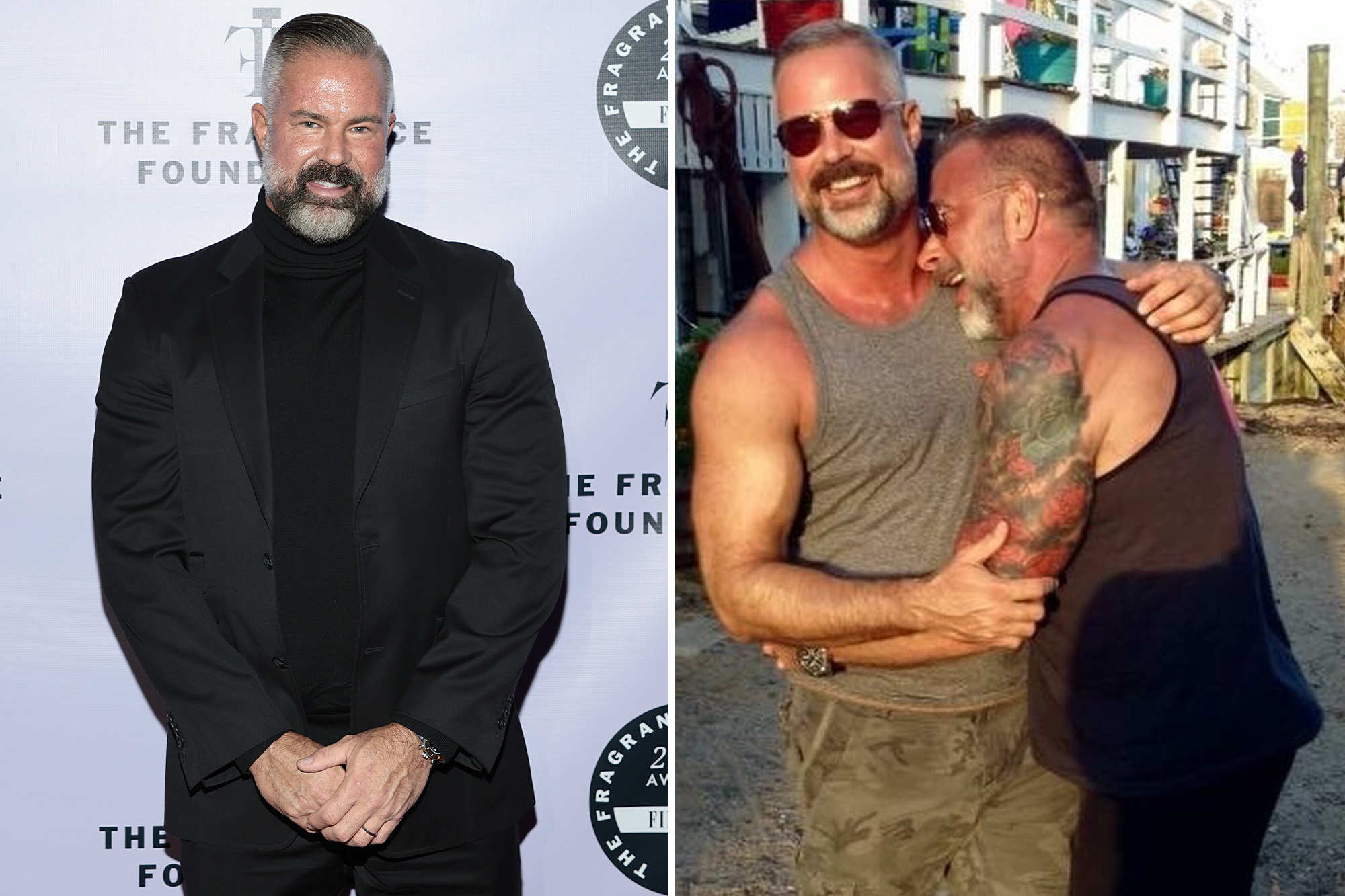
Cornell University student Austin Franco turned down an interview offer for an internship because he is "not interested in working for a Jew." Linkedin / Austin Franco See more of our coverage in your search results.
Add The New York Post on Google As if you needed more reasons to worry about America’s future, now we have Austin Franco.
The 19-year-old Cornell student logged on to the school’s job board recently and applied for a summer internship with a New York-based start-up.
But when invited for an interview, he declined to show up.
The Ivy League school, no surprises there, released an embarrassingly idiotic statement, accusing Franco of being “in violation of the [university’s] online job board’s terms of service” and announcing it will further investigate Franco.
The administrators in Ithaca needn’t bother: No further investigation is necessary.
He’s merely a symptom of something far darker, a hatred that, left unchecked, may have disastrous consequences.
What is it? Since the story broke, enraged pundits referred to Franco’s attitude as “antisemitism.”
But that, alas, is a misnomer, a distraction that, if we’re not careful, could keep us from identifying, and thereby solving, the real problem.
Because the real problem isn’t that a dim and arrogant college kid somewhere dislikes Jews.
It’s that we now live in an America where being openly, even proudly, antisemitic is a form of social clout.
When given a chance to clarify his statement, Franco doubled down.
So did his supporters: A crowdfunding effort was quickly launched to reward Franco for his bigotry, raising more than $13,000 in just a few days.
And that’s a problem, because antisemitism, as any semi-serious student of history knows, is a virus that has a nasty way of devouring any host society that lets it spread unchecked.
It’s a tricky yet crucial insight to understand: Antisemitism has absolutely nothing to do with actual Jews, which is why it can surge uninterruptedly even in societies, like those in the Arab world, which have long ago expelled or executed all of their Jewish citizens.
Instead, it’s a unique strand of moral and intellectual rot, highly resistant to reason or logic, which metastasizes and completely consumes its host culture.
That a student in one of America’s most celebrated academic institutions feels it’s not only right but also righteous to publicly hate Jews should tell you everything you need to know about what antisemitism is doing to the American mind.
But if it doesn’t, spend two minutes watching Tucker Carlson, or Candace Owens, or any number of other popular podcasters.
There you’ll hear nothing but terrifying — and patently moronic — tales of “the Joos” being guilty of everything from running pedophile rings that control the American government to assassinating Charlie Kirk.
It doesn’t take an Ivy League degree to understand that this deranged, Third World way of thinking is profoundly un-American.
Or that a society that accepts such drivel as legitimate popular discourse is a society at risk of collapsing.
The answer, thankfully, is simple: stop “combating antisemitism” — an effort into which everyone, from the federal government to the organized American Jewish community, is currently pouring tremendous resources these days.
It’s an enormous waste of time and money, because antisemitism, the world’s oldest hatred, isn’t something we’re going to solve anytime soon.
Instead, we should treat antisemitism as what it is: a symptom for a much larger problem that isn’t political but spiritual — the problem of no longer knowing what it is that we believe.
Defining and defending our core, common American virtues is hard.
Hissing that all our problems are due to the nefarious interference of a shadowy minority is much easier.
We must resist this temptation at all costs and by any means necessary.
We can set up a federal task force to make sure our shared values — liberty and dignity, to name but two — are taught vigorously and at every level of education.
We can reinstate the draft, not only for the military but for mandatory public service as well, giving young Americans a deep and real sense of community.
We can invest mightily in cultural start-ups dedicated not to tearing down America’s past but to propping up its future.
But whatever we do, we need to do it urgently, before more of our children are felled by the un-American infection currently eating their brains.
Liel Leibovitz is editor at large for Tablet and senior fellow at the Hudson Institute.