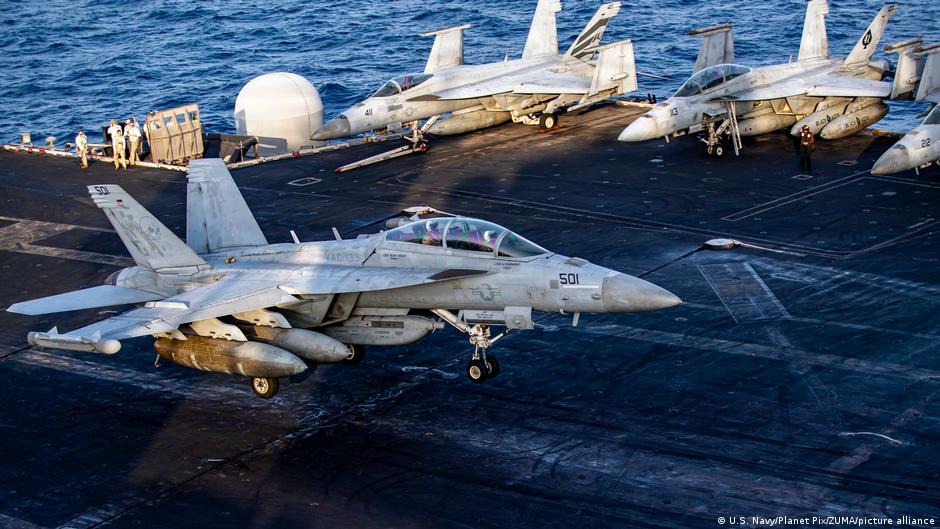
The US is still unrivaled in its ability to project military strength around the world, but Iran's success in blocking the Strait of Hormuz has raised tough question on America's role as protector of global trade.
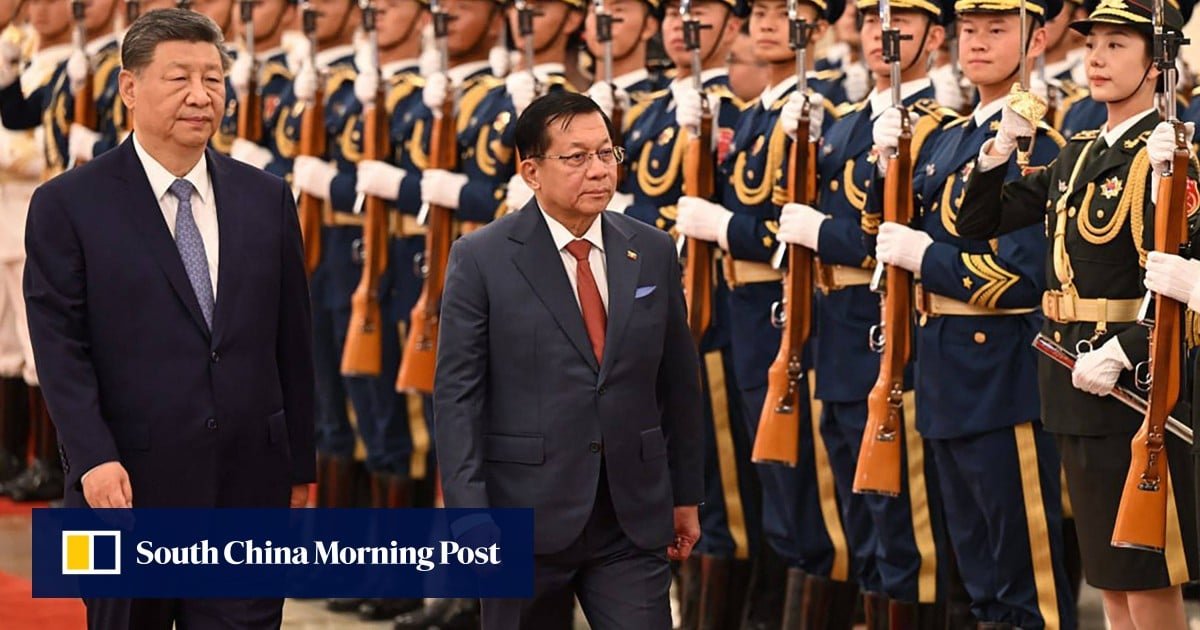
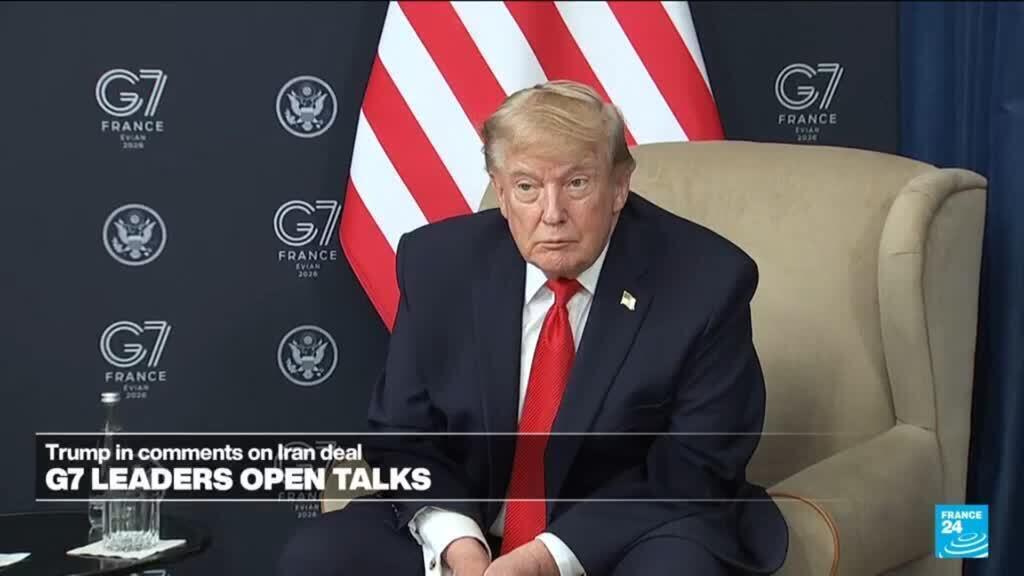
https://p.dw.com/p/5FVPNUS military power serves as the ultimate security guarantee for global tradeImage: U.S. Navy/Planet Pix/ZUMA/picture allianceAdvertisement"Ships of the World, start your engines," US President Donald Trump said while announcing a deal with Iran to end the conflict he launched along with Israel more than three months ago.
The online post on Sunday also saw Trump "fully authorize" the toll-free reopening of the Strait of Hormuz.
The US and Iran are due to sign a memorandum of understanding (MoU) in Geneva later this week. With the details still under wraps, Trump later said Hormuz would "fully reopen" only after the deal is signed.
US, Iran announce initial 'peace deal'To view this video please enable JavaScript, and consider upgrading to a web browser that supports HTML5 video
But unconfirmed reports on the MoU published in pro-regime Iranian media claim that Tehran's future role in Hormuz is still up for negotiation. Fars news agency reported that "Iranian-Omani sovereignty over the Strait of Hormuz" had been added to negotiations at the last minute, while claiming that the US had "accepted" that fees would be paid to Iran.
When asked for clarification on Monday, US Vice President JD Vance told CNBC news outlet that Washington's "expectation is that the strait is going to be opened in a toll-free way for the long term," adding, "that's the sort of thing that we're going to figure out in these technical negotiations."
Opacity aside, it is clear that the US is not able to dictate the terms regarding the Strait of Hormuz to Iran, despite Washington's overwhelming military strength.
Moreover, Iran's ability to use drones, mines and small boats to shut down free movement of shipping has shed uncomfortable light on the role of US power in protecting freedom of navigation and ensuring free trade.
"The Iran war showed America's exceptional military prowess — and its inability to convert those capabilities into anything resembling strategic victory," said Rebecca Lissner, senior fellow for US foreign policy and director of the Future of American Strategy Initiative at the US Council on Foreign Relations (CFR).
"This is a blow to America's image as a global superpower and undercuts its status as a guarantor of freedom of navigation. This war has left the United States in a weaker position than when the war began," she told DW.
Trump laid out an array of objectives when launching the war, including the "annihilation" of Iran's conventional navy. This one objective, at least, seems to have been met — the Center for International and Strategic Studies (CSIS) has assessed that "Iran lost the majority of its naval capability in less than 10 days."
But Iran didn't need a conventional navy to hold shipping in Hormuz hostage. And its drone-based asymmetric strikes on Gulf energy facilities proved an effective deterrence against US escalation. Tehran's proxies in Yemen and Lebanon also remain a threat.
The US-Israeli airstrikes have also taken out much of the Islamic Republic's leadership and degraded its military. At the same time, the conflict has made life much harder for ordinary Iranians, who faced a brutal crackdown for protesting against the regime just weeks before the war. Trump has not mentioned their fate, nor the idea of "regime change" since the first weeks of the conflict.
And regionally, ties between Tehran and neighboring Gulf states have also been degraded, portending protracted regional instability. Gulf states have also been left questioning the reliability of the US security umbrella after their civilian infrastructure and energy facilities were left vulnerable.
Why Saudi Arabia is redrawing its global alliancesTo view this video please enable JavaScript, and consider upgrading to a web browser that supports HTML5 video
Still, the key strategic issue moving forward is the Strait of Hormuz, with the world waiting to see if the US will grant Iran even partial control over shipping through the waterway.
"Even if the deal succeeds in reopening the strait, Iran now has leverage it did not have before," said Lissner, who served as deputy national security adviser to former US Vice President Kamala Harris.
"The United States has shown itself to be unable or unwilling to coerce Iran into reopening the strait, which means the world will live with the risk that Iran can close the strait again at will," she added.
And with the Iranian regime having blocked the world's energy supplies for months, it remains unclear why they would hand over that leverage without getting something in return.
One widely reported part of the MoU is Iran receiving some $12 billion (€10.34 billion) of its frozen funds before the nuclear talks even begin, in what would amount to payment for reopening the strait. The US denies this.
And as global markets breathe a sigh of relief, there are still doubts that shipping through Hormuz will ever return to normal.
"This deal seems likely to effectively codify Iranian control over the strait by creating a framework for Iran to extract fees from transiting vessels," said Lissner. "That may be why Trump has thus far refused to release the text of the deal — making it impossible to verify its contents."
For decades, the central pillars of US power were its military superiority and a commitment to upholding what Washington calls a "rules-based order" with like-minded allies. Translated into global trade, this meant that US power could ensure freedom of navigation and efficient movement of goods, such as oil, around the world.
The US designed this global system and has been its largest beneficiary. Donald Trump, however, has always been skeptical of this, framing it as the world "ripping off" the US for little in return. Trump's rejection of this global system was illustrated by the US president's erratic imposition of tariffs last year, which continue to inject uncertainty into the world's economy even as the levies are rolled back.
The first Iran nuclear deal in 2015, negotiated by the administration of Barack Obama, was an example of US-led multilateralism. It was hashed out in painstaking cooperation with European allies, along with China and Russia. While imperfect, it allowed for pressure on Iran to be applied slowly and in unison, with guardrails keeping disagreement from spinning out into open conflict.
Trump tore up the deal during his first term in 2018, and seems to still believe he can use US force to strongarm Iran into something better. On Monday, Trump said that Obama was "basically paying them [Iran] off" and that his administration has "negotiated from strength."
Iran-US peace deal leaves many major issues unresolvedTo view this video please enable JavaScript, and consider upgrading to a web browser that supports HTML5 video
Lissner, along with other analysts like historian Timothy Snyder, have called the Trump administration's approach to US foreign policy "superpower suicide."
Under Trump's leadership, the US has "progressively dismantled the system that Washington built, alongside its allies, to keep itself powerful and prosperous," she said.
"The Iran war has only advanced this trend, further undermining the rules-based order and alienating American allies. These steps are moving towards a 'new world disorder' characterized by growing violence and instability."