AI-powered toys are replacing traditional play, raising alarms about kids' development. Walt Disney Co./Courtesy Everett Collection See more of our coverage in your search results.
Add The New York Post on Google Ari was not just a stuffed polar bear.
He was the constant companion to Kathy’s grandson Julian — sitting with him at restaurants, traveling by his side on family trips and occupying a special spot in the 4-year-old’s bedtime ritual.
Until the day Julian accidentally left Ari behind at Kathy’s house.
To keep Ari “alive” until we could return him, we sent Julian photos of Ari’s “new adventures” — taking tennis lessons, making cookies and tagging along on daily errands.
This type of childhood play, however, may soon become extinct.
Today’s children are increasingly being offered playthings powered by artificial intelligence instead of traditional toys — interactive dolls and plushies that converse with kids, remember previous interactions, say “I love you” and sometimes even express sadness when switched off.
Some connect directly to the internet in unsafe ways; others are explicitly marketed as social companions.
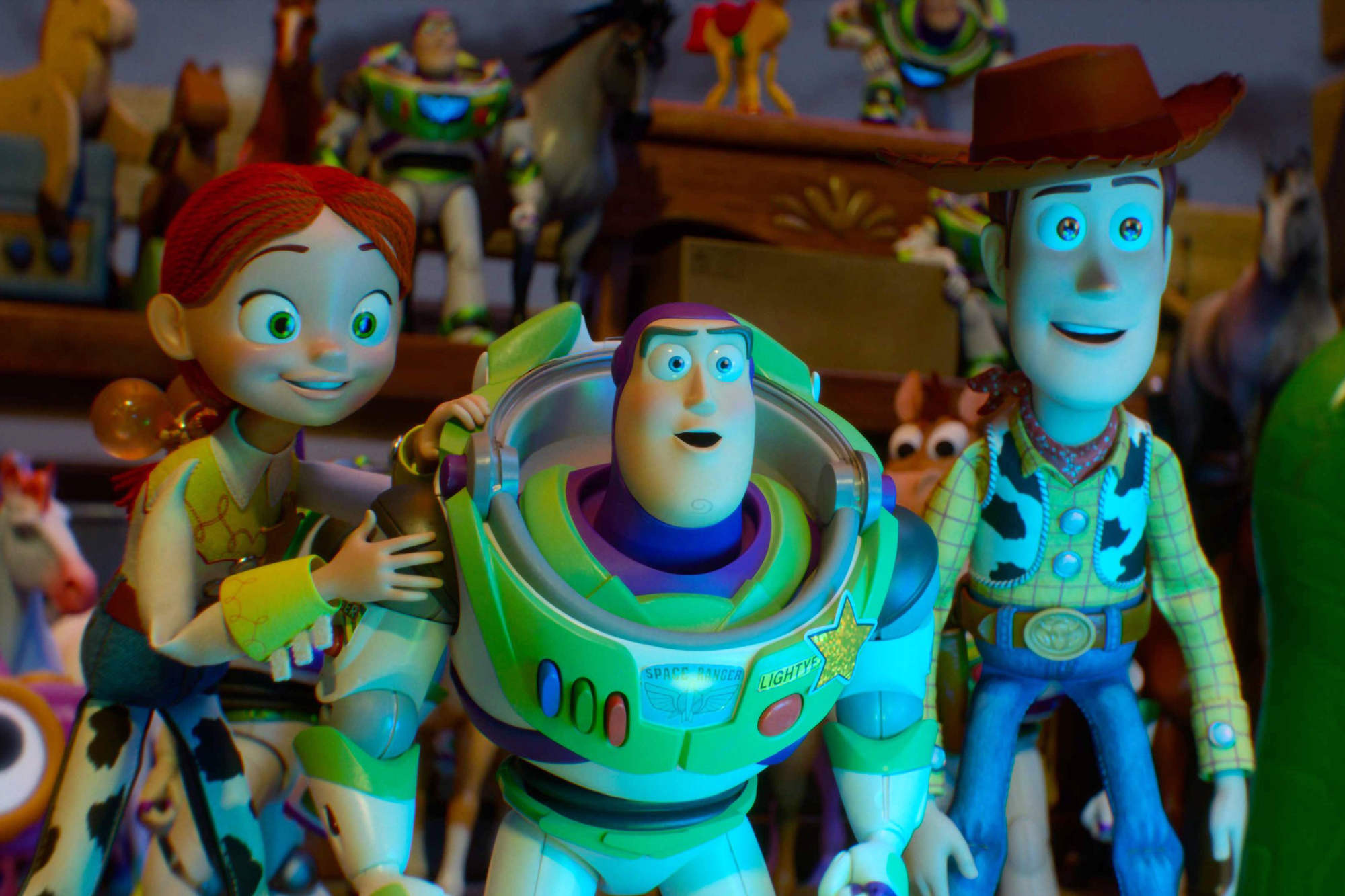
This week, Disney’s “Toy Story 5” will confront this question directly: What happens when technology competes with imagination for children’s attention and affection?
As developmental scientists and educators, we believe this conversation could not come at a more important time.
This isn’t an argument against technology — AI will undoubtedly become part of children’s lives, schools and futures.
But young children develop emotional intelligence and mental agility through human relationships, hands-on exploration and imaginative play — not through responsive machines designed to maximize engagement or to simulate human interactions.
And the research increasingly suggests that the distinction matters.
In one of our studies, we examined what happened when parents and children played together using electronic toys.
When a shape sorter announced “square” or “triangle” on its own, parents spoke less, interacted less and engaged less naturally with their children.
The toy effectively replaced vital parts of the human interaction necessary for learning.
That’s crucial, because the work of early childhood is not simply preparation for book learning — it’s where children learn to become human.
Through conversations, pretend play and relationships, children develop language, empathy, self-regulation, curiosity and creativity.
A stuffed animal like Ari does not do the imaginative work for a child: The child supplies the voice, the story and the emotional meaning.
The toy supplies the safe place where children try out what they learned in the world beyond their bedroom door.
Digital toys and AI companions can change that equation.
Unlike traditional toys, many AI toys are designed to sustain attention and emotional attachment.
They’re like energy drinks, supplying sugary stimulation without nutrition.
Some repeatedly flatter children to encourage continued interaction.
Others blur the line between pretend friendship and simulated emotional dependence.
We should pause before allowing this dynamic to become the norm for preschoolers.
Our children will use technology. But we must ask whether we’re willing to outsource some of childhood’s most important developmental experiences to machines.
Several years ago, when we were part of a group of researchers who reviewed the 100 most-downloaded “educational” apps for preschoolers, we found that only a tiny fraction of them met basic standards for supporting meaningful learning.
Yet parents are routinely sold technology that claims to be educational simply because it’s interactive.
But interactivity alone is not education — and neither is adaptive interactivity that parrots back a child’s thoughts or extends her conversation.
Children need experiences that nurture curiosity rather than passive consumption or endless stimulation.
Education expert Rebecca Winthrop has warned that poorly designed technologies may even contribute to what she calls “cognitive stunting” or, we’d add, “curiosity stunting” — cutting off deep thinking, exploration and imagination.
The irony is that children themselves know what they need.
Give a young child a cardboard box, a blanket fort, a beloved stuffed animal or a collection of assorted figurines and he’ll build entire worlds.
Children don’t need digital toys or AI-generated affirmation and algorithmically optimized companionship.
The conversations sparked by “Toy Story 5” shouldn’t focus on nostalgia for Woody and Buzz, but on a far more urgent debate — over the forces we should allow to shape the emotional lives of our youngest children.
Kathy Hirsh-Pasek is a professor of psychology at Temple University and author of “Einstein Never Used Flashcards.” Aimee Ketchum is a therapist and author of “The Early Childhood Promise.”