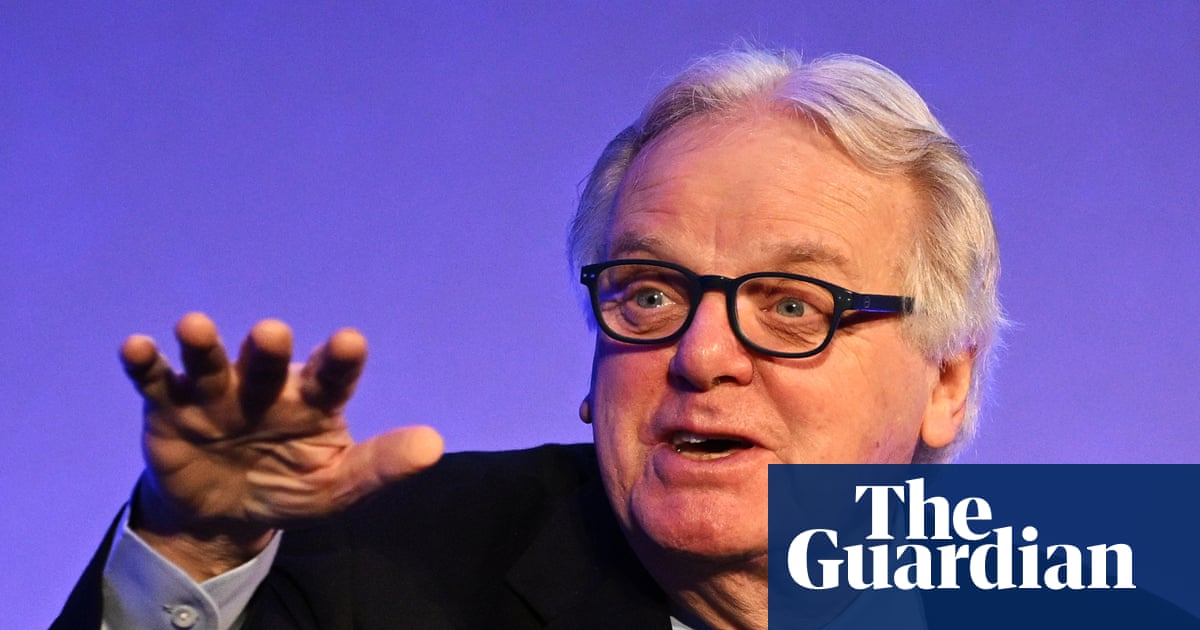
Michael Grade dismissed claims he had failed to understand the impartiality rules Ofcom was tasked with upholding. Photograph: Leon Neal/Getty ImagesView image in fullscreenMichael Grade dismissed claims he had failed to understand the impartiality rules Ofcom was tasked with upholding. Photograph: Leon Neal/Getty ImagesGB News critics want to limit free speech to ‘liberal, Islington consensus’, Grade saysFormer Ofcom chair says he welcomed arrival of rightwing news channel five years ago in name of ‘plurality’
Critics of GB News are part of a “liberal, Islington consensus” bent on limiting freedom of expression, Michael Grade, the recently departed chair of Britain’s media watchdog, has said.
The Conservative peer, whose time at Ofcom has been criticised over the handling of the rightwing news channel, said he welcomed the arrival of the broadcaster five years ago in the name of “plurality”.
In an interview with the Guardian, Lord Grade also said a long-term failure to give “the white majority a voice in the debate” would damage social integration in Britain.
“The fact is, what people don’t like is the fact that there is a television station giving voice to a strong body of opinion in this country which has been ignored for years,” he said. “They just don’t like the idea that there’s any voice or any agenda, news agenda, which is different from the kind of liberal, Islington consensus.”
Ofcom’s approach to regulating GB News under Grade has faced a series of complaints. He was appointed to the role by Boris Johnson’s government in 2022. Former Ofcom figures have questioned the watchdog’s lack of intervention, given the persistent political slant to the right among GB News presenters and guests.
Defending Ofcom’s approach to GB News, Grade cited a recent interview by Tony Sewell, the Conservative peer who oversaw a controversial report on racial disparity ordered by the Johnson government.
“If you want integration, which we all do, and we want everybody to live happily ever after, irrespective of their background or their race or religion or anything, [Sewell] said that you have to give the white majority a voice in that debate,” Grade said.
“I hung on to that and I thought: ‘That is so brilliant. That’s why Reform is doing well in the polls.’ Of course it’s right.”
He added that it “certainly hasn’t” been the case that the voice of “the white majority” had been heard properly in recent times, and claimed that the BBC had a history of being out of sync with the public mood.
“It’s the London, metropolitan elite argument again,” he said. “The BBC missed Thatcherism, when [Margaret] Thatcher happened … They were so buried in this traditional, metropolitan-elite Westminster bubble. They couldn’t see it and they missed it completely.”
Grade dismissed accusations that he had failed to understand the impartiality rules that Ofcom was tasked with upholding. He claimed it was his critics who did not understand the rules.
He said the rules required due impartiality, giving flexibility to broadcasters to offer different opinions across its programming, adding that the real red line was stopping politicians from delivering news bulletins.
“What these … people do not understand – these alleged upholders of free speech and freedom of expression, but they want to close down a news broadcaster – they want the regulator to have the power to say who can and can’t appear on these programmes,” Grade said.
“That’s for the birds. That should never be allowed to happen.”
GB News has said it was designed “to serve the people of our nation and not the media establishment elite” and that the channel complied with all broadcasting rules.
Grade denied claims that Ofcom treated its shows differently to programmes on the BBC such as Radio 4’s Today programme and World at One, or BBC 2’s Newsnight.
“Just because it’s called GB News doesn’t mean that all their programmes are news,” Grade said. “They’re discussion programmes, they’re political chat shows. We could argue this forever, but we’re dancing on the head of a pin. It’s irrelevant really. The real point is... you don’t get any politicians delivering the news.”
Particular attention has been drawn to the GB News interview with Donald Trump last year, in which the US president’s claims about the climate crisis, Islam and immigration went unchallenged. Ofcom rejected complaints about the original broadcast of the interview, but is investigating a show that repeated it.
Grade said the interview “wasn’t journalism’s finest hour”, but that the original broadcast was “immediately followed by a discussion programme where a lot of people tore into Trump”.
He said that if the government wanted stricter impartiality rules, such as a ban on politicians presenting programmes, it should change the law.
“Impartiality is a state of grace to which you aspire,” Grade said. “And as long as you’re aspiring and seem to be trying to be impartial, that’s fine. One person’s impartiality is another person’s bias.”