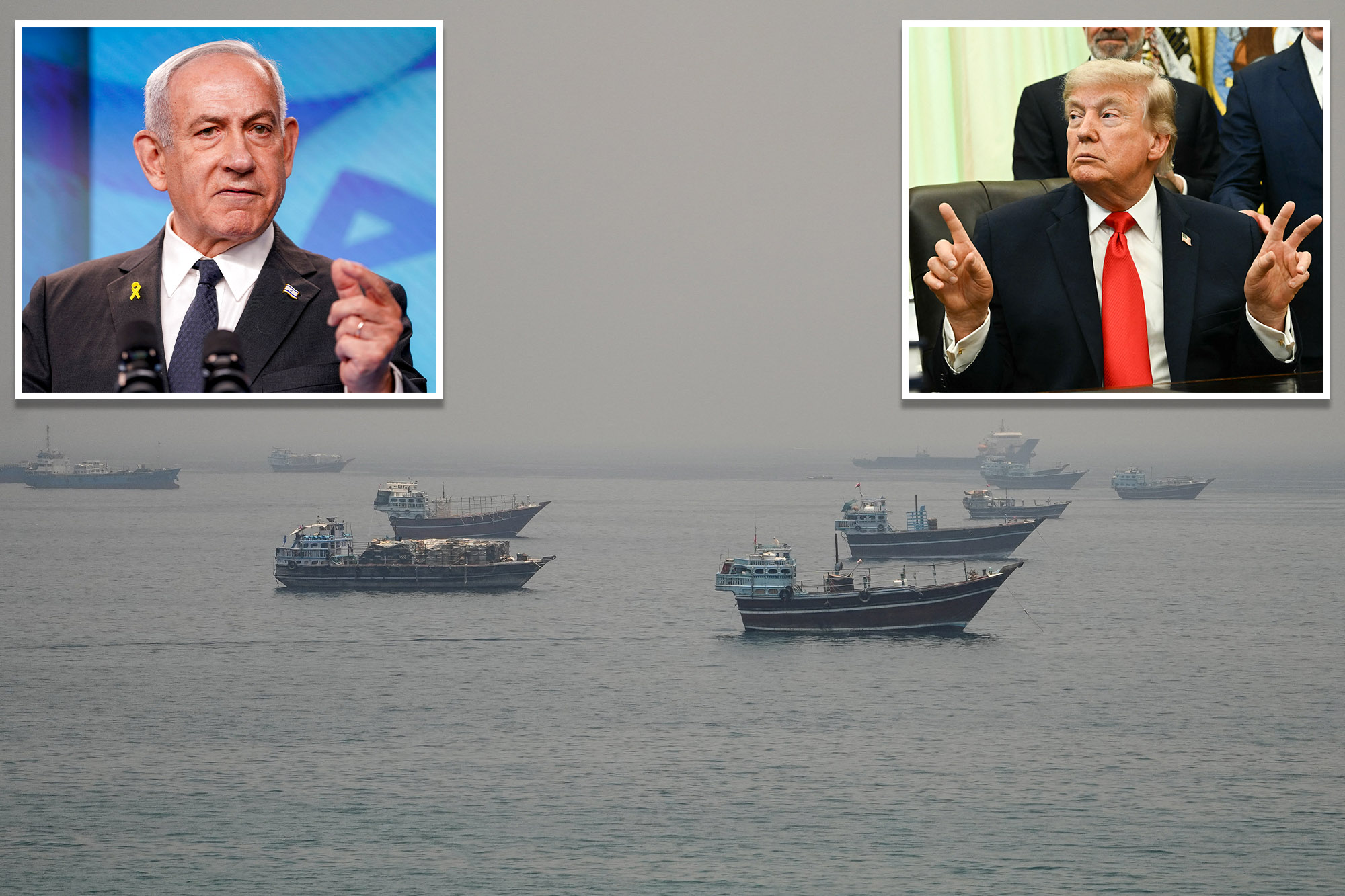
Add The New York Post on Google President Trump’s emerging cease-fire agreement between the US and Iran has drawn backlash among Israelis, with critics warning the deal could undermine the country’s military campaign and leave fundamental security concerns posed by Tehran unaddressed.
Trump said Sunday that the US and Iran were still on track to sign a peace deal that will reopen the Strait of Hormuz, despite Israeli airstrikes in Lebanon that apparently infuriated Tehran.
But outrage has erupted across Israel’s political spectrum over details of the proposed cease-fire and Israel’s exclusion from being directly involved in negotiations led by the Trump administration, the New York Times reported.
The frustration was summed up in the main headline of the Israeli newspaper Yediot Aharonot on Sunday, describing the agreement as a “bad deal,” the Times said.
The backlash follows Trump’s anger at Israel-led strikes near Beirut on Sunday, which came in response to Hezbollah firing shots toward Israeli territory.
Trump told Fox News’ Chief Foreign Correspondent Trey Yingst that he asked Israeli leader Benjamin Netanyahu, “What the f–k are you doing?” in response to the strikes.The “memorandum of understanding” would extend the cease-fire with Iran for 60 more days, reopen the Strait of Hormuz, and create the conditions for broader talks over Iran’s nuclear program.
At the start of the US-Israel-led war on Iran in February, Netanyahu said Israel’s objective was to eliminate “existential threats,” including Iran’s nuclear capabilities and ballistic missile program, the Times reported.
Israeli leaders also repeatedly demanded an end to Tehran’s support for hostile regional proxy groups, including Hezbollah in Lebanon, Hamas in Gaza, and the Houthis in Yemen.
But critics, including Former Israeli Defense Minister and right-wing politician Avigdor Liberman, contended that those objectives are absent from the deal’s framework.
Liberman called the agreement a “catastrophe from Israel’s perspective,” in a social media post on Sunday.
An Israeli briefed on the deal with Iran told the Times that the cease-fire does not answer questions about the treatment of Iran’s stockpile of enriched uranium and does not have enough curbs on Iran’s nuclear program.Officials are upset that the deal appears to allow funds to flow back into the coffers of the Iranian government, instead of creating conditions for its collapse, and that there is no clear mechanism to force Iran to cut off support to proxy forces, the source told the outlet.
“No matter what will happen, President Trump will declare victory, a total win,” Jacob Nagel, a former acting national security adviser to Netanyahu, also said during a video briefing described by the paper.
“It’s very easy to say what topics will be up for future negotiations,” Nagel said, adding that Iran’s ballistic missiles and its support for proxy groups in the region do not appear to be addressed in the budding cease-fire deal.
Netanyahu has avoided confronting Trump publicly over the negotiations as pressure builds from his governing coalition and Israeli national elections expected to take place by late October, the outlet reported.