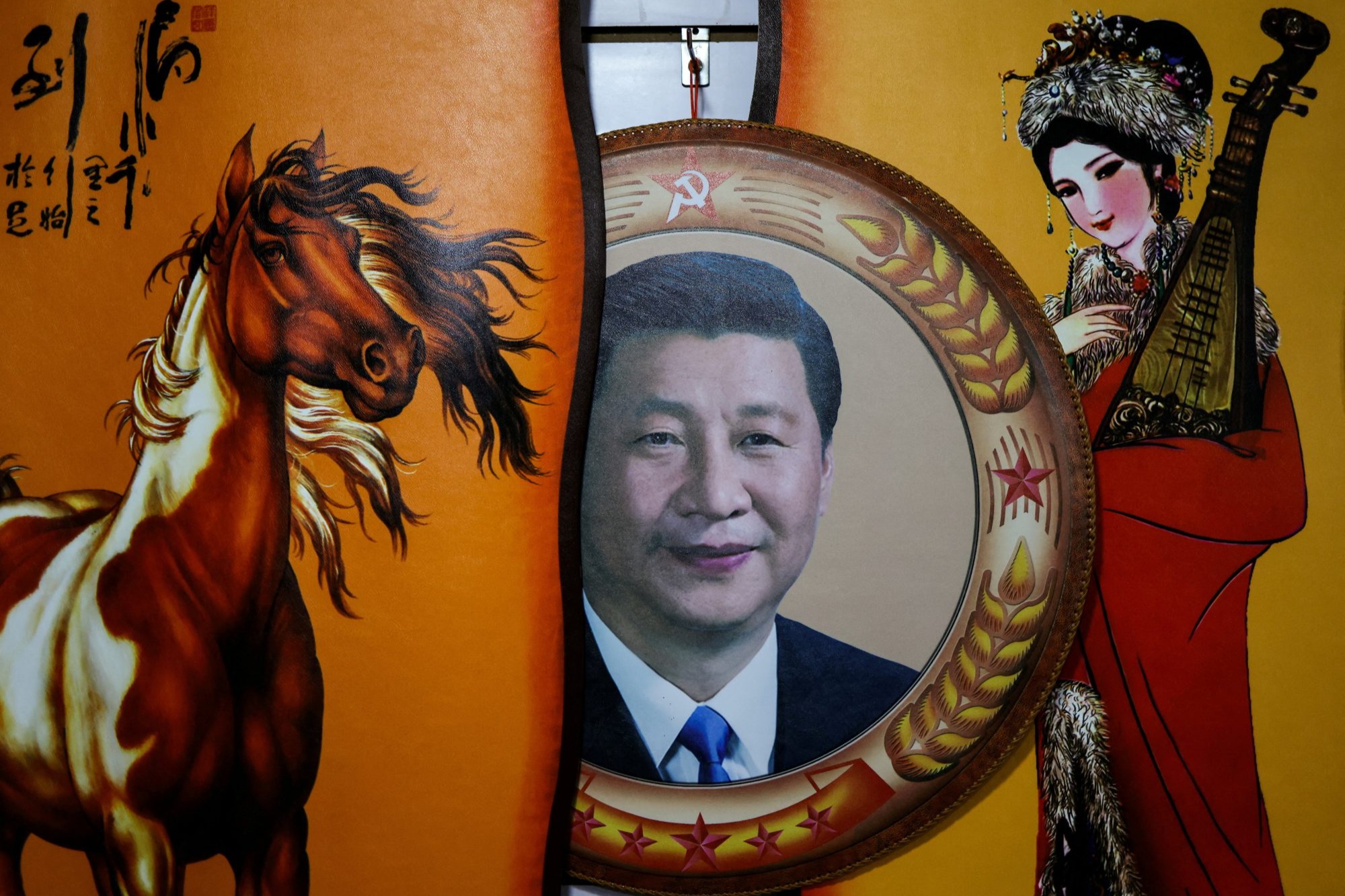
Chinese leader Xi Jinping's September US visit is crucial "not only for trade negotiations and economic priorities," but also for President Trump to secure "the release of political prisoners," plead Olivia Enos & Michael Sobolik at the Washington Examiner. REUTERS See more of our coverage in your search results.
Add The New York Post on Google Faith beat: Gen Z’s Commodified Christianity Gen Z’s interest in Christianity is booming, but they seem to be “just finding content about God,” laments Freya India at The Free Press. Ample content online — from influencers, podcasts and hashtags to Bible apps and subscriptions — makes “learning about the faith” feel “easier than ever,” but yields a “shallow faith,” one “fast and convenient.” Beyond the apparent “gamification of Christianity,” religious apps share the same problem as Instagram communities or online porn: You encounter “the virtual version of everything first, before the real thing.” Instead, offer Gen Zers “something otherworldly” that “doesn’t abide by market logic”; warn them that faith is complex and “to know more about it, the subscribe button won’t help.” They must “step into church.”
Thomas Piketty, the “rock star” French economist, offers a plan for “global managed decline dressed up in the language of climate justice and equality,” warns Reason’s Veronique de Rugy. He’d “cap gross domestic product (GDP) per capita in wealthy countries at roughly $69,000.” This allows just 0.115% annual growth for the United States, which now averages over 3%. Anyway, it’s impossible to “restructure the global economy at that scale without a coercive apparatus that dwarfs anything in human history.” Above all, the scheme conflates “two very different things”: poverty and inequality. Degrowth is dreamed up by “people who already have high incomes, comfortable apartments, generous health care, and pensions.” This “villainous plan” would harm not “just the billionaires but every American.”
“Inflation was too high again in May, with the consumer-price index coming in” at 4.2% for the last year, laments The Wall Street Journal’s editorial board. One silver lining: “This was better than markets expected given the oil price shock,” and core inflation (sans food and energy) slowed to a 2.9% annual rate, suggesting “the oil shock isn’t spreading into the broader economy.” Yes, even 2.9% is too high, prompting the Federal Reserve to eye interest-rate hikes. But “a rate hike doesn’t seem warranted until price increases spread beyond energy.” “The oil shock is a blow to economic growth”; no need for “the Fed raising the price of borrowing to compound the blow.”
Chinese leader Xi Jinping’s September US visit is crucial “not only for trade negotiations and economic priorities,” but also for President Trump to secure “the release of political prisoners,” plead Olivia Enos & Michael Sobolik at the Washington Examiner. In Beijing, Trump “raised by name the cases of famed Hong Kong pro-democracy advocate and billionaire Jimmy Lai, Chinese Christian Pastor Ezra Jin Mingri,” and other political prisoners. Congress “passed resolutions calling for the release of high-priority political prisoners,” which “hands the president a mandate” to make release a precondition for Xi’s visit. Trump should “leverage” China’s need for US market access; if Beijing doesn’t show mercy, he “should make clear that negotiations will not proceed.” After all, “there is nothing more American than securing the freedom of someone unjustly detained.”
New York state legislators used the last “days of the 2026 legislative session to approve what could soon become a first-in-the-nation moratorium on large data-center construction,” grumbles City Journal’s Ken Girardin. The yearlong pause “would be open-ended, and even when lifted, would permanently increase the cost of deploying even relatively small facilities in New York.” Lawmakers sought “an energy boogeyman” to blame for soaring “residential electricity rates,” and data centers are easy to scapegoat as they “embody popular anxieties about artificial intelligence as a job killer.” Yet “state policymakers, not data centers,” were drivers of “rising electricity prices.” Plus, the ban “would exempt ‘public research institutions’” like the state’s “15-megawatt Empire AI project,” a sign “Albany lawmakers might be less worried about data centers than they would have you believe.”