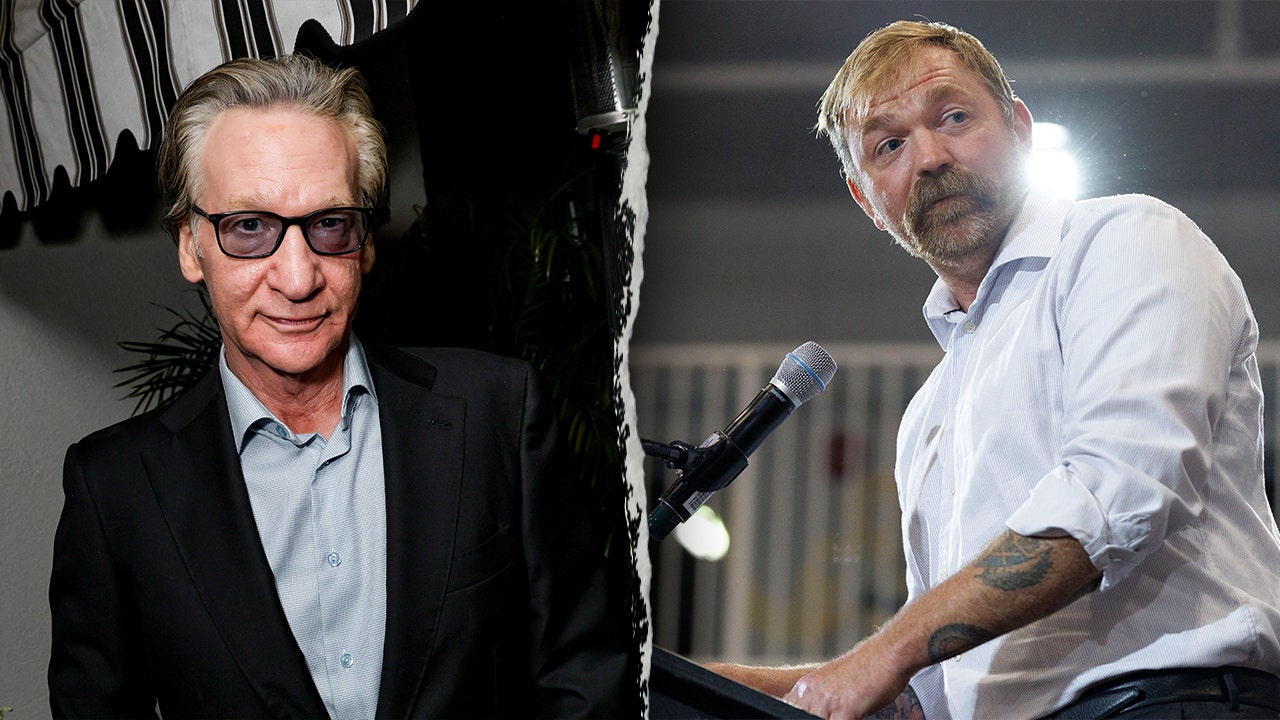
Video Soldier mocked by Platner cannot excuse his ‘abhorrent behavior’ with PTSD U.S. Army veteran Teddy Daniels addresses criticism he received from Maine Democratic U.S. Senate candidate Graham Platner on ‘The Ingraham Angle.’
Some people just like classic Coke. Others insist on the original Reese’s recipe. New York Times reporter Jodi Kantor went on CNN to explain why Democrats can vote for Maine senatorial candidate Graham Platner despite multiple women coming forward to denounce him: this is really not the classic Me Too allegations that Kantor and others seem to prefer for outrage.
Kantor won a Pulitzer Prize for her reporting on Hollywood mogul Harvey Weinstein’s sexual abuse and was called forth by CNN to explain why it is OK for liberals to support an alleged abuser of women. A prior girlfriend has accused Platner of physically abusing her and even locking her into a room overnight. He is also accused of sexting women and dismissing rape victims.
None of that, however, necessarily presents a barrier for those who want to retake power by any means necessary.
Kantor clinically explained that these "are not classic MeToo accusations." Specifically, "they’re not about a boss and a young female employee being subjected to sexual advances. They were mostly made in the context of consensual relationships. … There are these, like, very sensational texts about sex. There are allegations from former girlfriends that are not — the way my colleagues reported them were not like classic abuse allegations," she stressed.
NEW YORK TIMES REPORTER UNDER SCRUTINY AS BIDEN ACCUSER SAYS SHE HAD SIMILAR EXPERIENCE AS GRAHAM PLATNER'S EX
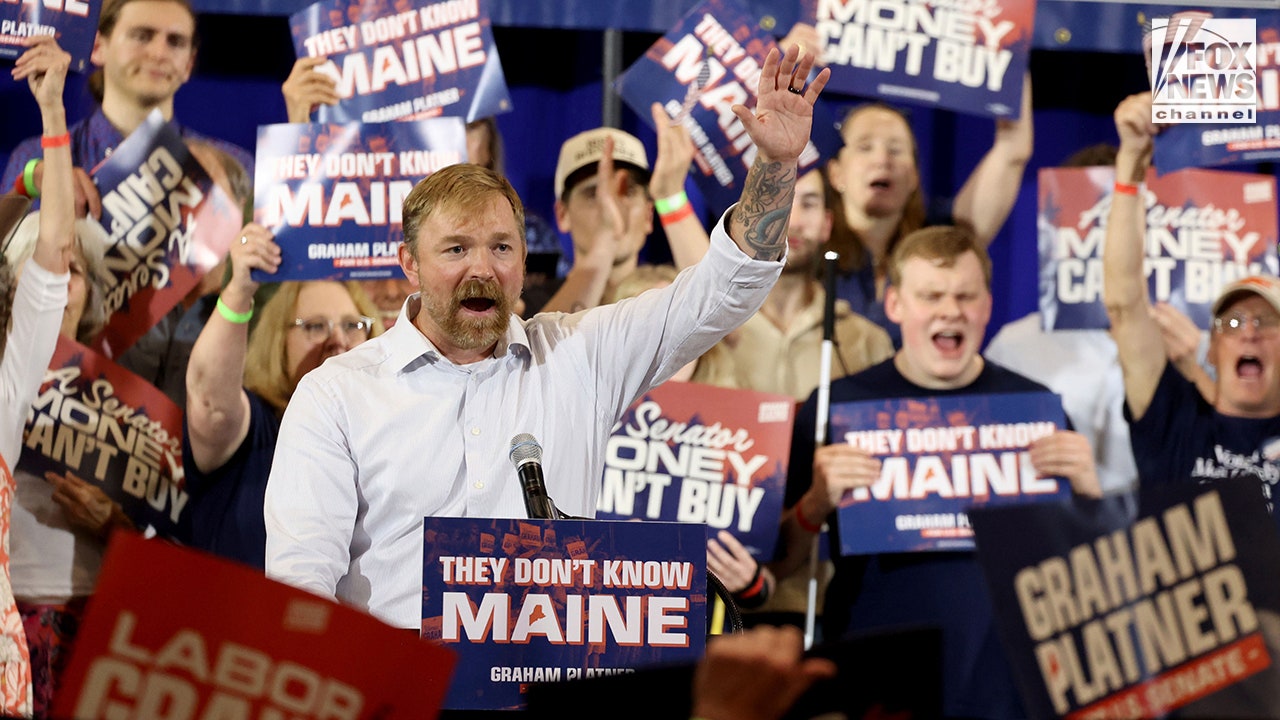
Graham Platner addresses the crowd at his watch party after winning the Democratic nomination for U.S. Senate at a YMCA in Blue Hill, Maine, June 9, 2026. (Matthew Symons for Fox News Digital)
In a statement that would have produced a torrent of condemnations if used during the Brett Kavanaugh controversy, Kantor insisted that "they were mostly like being his boyfriend gave me a view into him and I did not like what I saw. His character was scary. He had this Nazi tattoo. Etcetera."
In fairness to Kantor, she was attempting no small feat: to allow liberals to continue to claim Me Too outrage while grabbing Maine.
Of course, Kantor quickly brushes over the other controversies beyond the abuse allegations as simply a Nazi tattoo. She omits his mocking of a wounded veteran, rural people and rape victims while praising Hamas and embracing communism.
‘HE HATED WOMEN’: EXPLOSIVE ABUSE, NEW NAZI TATTOO ALLEGATIONS FROM EXES ROCK PLATNER'S CAMPAIGN
However, her diminishing of the account of women like Lyndsey Fifield as "they were mostly like being his boyfriend gave me a view into him and I did not like what I saw."
What Fifield alleges that she "saw" were marks left on her body after being yanked and grabbed by Platner. In one case, she claimed "he twisted her arm behind her back, shoved her into a bedroom and held the door closed from the other side so she couldn’t get out, telling her to remain there until she was ‘calm.’"
Kantor seems to begrudgingly acknowledge that "there was one allegation of crossing a line physically, but I think that means that these are pretty different accusations than, say, the one that — the ones that President Trump faced."
NYT PANEL DEBATES WHETHER GRAHAM PLATNER IS A ‘DIRTBAG’ OR DEMOCRATS’ ANSWER TO TRUMP-ERA POLITICS
Previously, Kantor did not draw this distinction between classic MeToo and new knockoffs involving non-employment situations. She once grouped a wide variety of controversies from former Democrat Sen. Al Franken to Supreme Court Justice Brett Kavanaugh to Jeffrey Epstein under the banner:
"[I]t felt like there was this period where discussion of #MeToo was actually pretty bipartisan. Democrats like [Sen.] Al Franken were accused, but so were Republicans, like [Alabama Judge] Roy Moore. And also, a lot of these stories played out in the corporate arena, which is not particularly political. But the Kavanaugh hearings almost felt in a way like a return to an older pattern, like a return to a pattern that we saw with the allegations against Bill Clinton, Clarence Thomas, and Donald Trump. Those are scenarios in which the allegations take on all of the heat and the poison of American political life. And in those stories, it turns into a holy war very, very quickly and can almost feel like it’s not even about the women anymore.
Of course, Kantor quickly brushes over the other controversies beyond the abuse allegations as simply a Nazi tattoo. She omits his mocking of a wounded veteran, rural people and rape victims while praising Hamas and embracing communism.
…The #MeToo movement has proven so durable and so self-correcting. I think there was a moment after the Kavanaugh hearings where it all just felt like it had become impossibly politicized, to the point where it was almost preventing constructive conversation."
'THE VIEW' ERUPTS AFTER HOSTIN DECLARES 'I WOULD HOLD MY NOSE' AND VOTE FOR SCANDAL-PLAGUED GRAHAM PLATNER
Ironically, Kantor’s rationalization returns to the very partisan "older pattern" that she once denounced in how allegations from women are treated in the media.
In rationalizing the Platner support, Kantor was obviously singing to the choir on CNN. Democratic figures like Senate Minority Leader Chuck Schumer and Democrat Massachusetts Sen. Elizabeth Warren celebrated his securing the nomination.
CLICK HERE FOR MORE FOX NEWS OPINION
Yes, he may be a rape-mocking, sex-texting, Hamas-praising, Nazi-tattooed, veteran-abusing, self-proclaimed communist. However, he will return them to power.
Democratic Senate candidate Graham Platner has continued to receive support from several prominent Democrats after abuse allegations surfaced, drawing comparisons to positions many of the same lawmakers took during the 2018 confirmation battle over Supreme Court Justice Brett Kavanaugh. (Amanda Sabga/Reuters:Kenny Holston/Reuters)
Other media figures, like "The View" co-host Sunny Hostin, have added their own rationalization for choosing power over principle. She has declared that he is "a liar, a racist, an antisemite, and a homophobe." However, he is still better than voting for a moderate Republican woman. This week, Hostin explained:
CLICK HERE TO DOWNLOAD THE FOX NEWS APP
"let’s be strategic, let’s get some power, let’s take over the Senate, let’s take over the House and let’s right the ship. Let’s get our country back…I am sorry, I am someone that believes in character, I am someone that believes that morals matter," she concluded. "But because of the state of this country, I would — if I lived in Maine I would hold my nose and I would vote for Platner. I would."
CLICK HERE TO READ MORE FROM JONATHAN TURLEY
Jonathan Turley is a Fox News Media contributor and the Shapiro Professor of Public Interest Law at George Washington University.
He is the author of the new book "Rage and the Republic: The Unfinished Story of the American Revolution" (Simon & Schuster, Feb 3, 2026), on the 250th anniversary of the American Revolution.on the 250th anniversary of the American Revolution.
He is a nationally recognized legal scholar who has written extensively in areas ranging from constitutional law to legal history to the Supreme Court. He has written over three dozen academic articles that have appeared in a variety of leading law journals.
Professor Turley also served as counsel in some of the most notable cases in the last two decades including the representation of whistleblowers, military personnel, former cabinet members, judges, members of Congress, and a wide range of other clients.
Professor Turley testified more than 50 times before the House and Senate on constitutional and statutory issues, including the Senate confirmation hearings of cabinet members and jurists such as Justice Neil Gorsuch. He also appeared as an expert witness in both the impeachment hearings of President Bill Clinton and Donald Trump.
Professor Turley received his B.A. at the University of Chicago and his J.D. at Northwestern. In 2008, he was given an honorary Doctorate of Law from John Marshall Law School for his contributions to civil liberties and the public interest.