@rockmarooned Published Feb. 27, 2026, 9:30 a.m. ET Photos: Paramount Pictures ; Illustration: Dillen Phelps More On: Scream Has All The ‘Scream 7’ Drama Finally Killed This Long-Running Slasher Franchise? Is ‘Scream 7’ Streaming on Netflix, Prime Video or Paramount+? Where to Watch All the ‘Scream’ Movies on Streaming Ahead of ‘Scream 7’ Stream It Or Skip It: ‘The Scream Murder: A True Teen Horror Story’ On Hulu, A Docuseries About A 2006 Killing That Two Teens Planned Out On Camera Here’s a horror-movie rule that seems to have escaped the attention of both the characters and filmmakers from the genre-conscious Scream series: The seventh entry in a slasher franchise often represents a surprise turning point. It may not be as clear as the rules for sequels that Randy Meeks (Jamie Kennedy) attempted to lay out in Scream 2, or even the sketchier ideas he laid out for trilogies in Scream 3 (when genuine trilogies were a relative rarity to begin with). But the signs are there if you look for them.
Friday the 13th Part VII: The New Blood was the filmmakers’ attempt to do something more ambitious and respectable than past Jason sequels by introducing a telekinetic teenage girl to truly do battle with the slasher; it wasn’t especially well-regarded, but they tried! Halloween: H20, meanwhile, dropped the numbering all together and erased all the movies following Halloween II, bringing back Jamie Lee Curtis for one of horror’s first legacy sequels. (After Curtis’s dad, of course, came back for decades-later Psycho II.) And in the seventh Nightmare on Elm Street, Wes Craven returned to the iconic series he created for New Nightmare, where several franchise figures played themselves as filmmakers haunted by Freddy Krueger’s intrusion into the “real” world after years on screen. This meta approach laid the groundwork for what Craven and screenwriter Kevin Williamson would explore two years later… in the first Scream.
Comparably speaking, Scream has outlasted many of its predecessors and influences. It’s not into the double digits yet, which is what Jason hit before heading into a long hibernation, but a couple of decade-long breaks have allowed the rotating cast of Ghostfaces to reach seven installments within a single continuity and really only notching one box office flop, 2011’s Scream 4. Scream 7 is likely to continue the franchise’s box office success, at least for a gangbusters first weekend, and leaves plenty of room for further sequels. But the turning point might not be in the series’ on-screen narrative so much as its creative focus. It seems like Scream might have cooked itself, with the help of ample corporate interference.
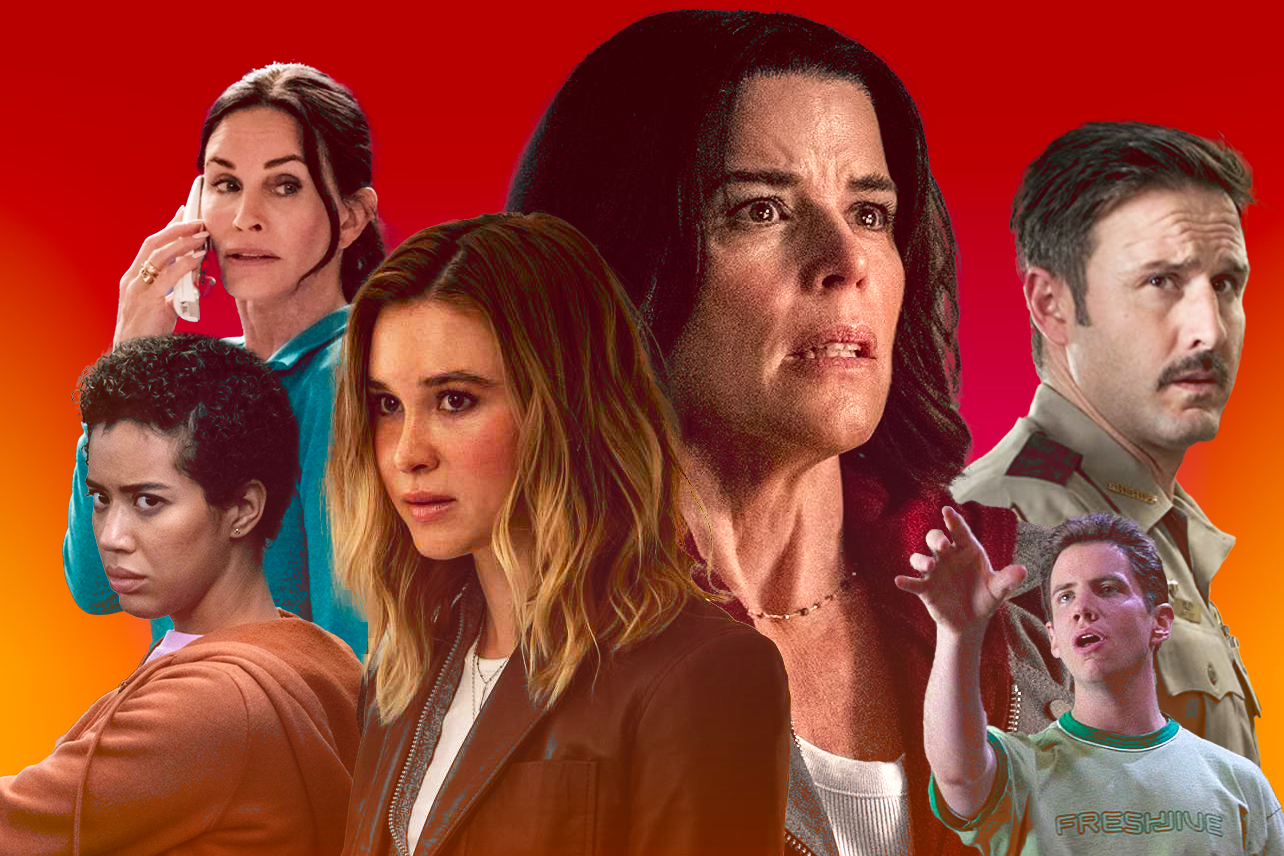
Specifically, that influence comes from current rightsholders Spyglass Entertainment. They lost Neve Campbell from Scream 6 based on a salary dispute, which was disappointing but at least creatively justifiable; the series had been stuck on Campbell’s Sidney despite a wonderfully flexible central conceit (a slasher mystery set in a world that’s highly aware of horror tropes) and the fact that Sid got a perfectly elegant happy ending in Scream 3. Scream 6 was a bit of a mish-mash thematically, but it established that the series could do well without relying on old characters when it hit a series high in grosses (not when adjusted for inflation, but still: big hit). Naturally, the company then saw fit to fire star Melissa Barrera in a fit of pique when she referred to Israel’s actions in Gaza as a genocide, a statement echoed by a United Nations commission. Shortly thereafter, it was announced that Jenna Ortega – easily the most famous member of the new cast, and arguably more famous than many of the legacy actors – would not be returning either. (She later confirmed it was the bad vibes and absence of Barrera, along with filmmaking duo Radio Silence, that inspired her to drop out.) Christopher Landon, the Happy Death Day director who had signed on to make the movie, eventually followed them out the door.
With the primary anchors of the fifth and sixth movies suddenly gone, Spyglass was forced to return to Campbell and abruptly start selling Scream 7 as a back-to-basics return of your fave Final Girl, attempting to amp up franchise goodwill by hiring Kevin Williamson, the screenwriter behind the first, second, and fourth movies, to direct (and co-write, though weirdly it seems like he was handed a pre-existing script from the writers of the fifth and sixth films). Rather than embrace fresher talent, the series decided to go all in on legacy, creating a universe where Neve Campbell is a massive star and Williamson (whose only other feature is the 1999 bomb Teaching Mrs. Tingle) is a guiding creative force.
I don’t mean to sound dismissive of Campbell, who is fine in Scream 7, or Williamson, whose knack for slasher-literate patter was never quite replicated in the Scream movies he didn’t write. But it seems like such a massive unforced error, all for the sake of disciplining Barrera for entirely mainstream humanitarian views. This stubbornness leaves Scream 7 in the uncomfortable position of having to pretend like the well-reviewed hit Scream 6 was in fact a bizarre aberration in the movie’s history simply because Sidney wasn’t in it – no matter how much sense it actually made for her character to not rush to attention when Ghostface took Manhattan. On top of which, almost everything Sidney says to her teenage daughter Tatum (Isabel May) runs in direct contradiction to what she tells Barrera’s Sam Carpenter in the fifth movie, so Sidney can re-learn a lesson she already taught to re-center her character.
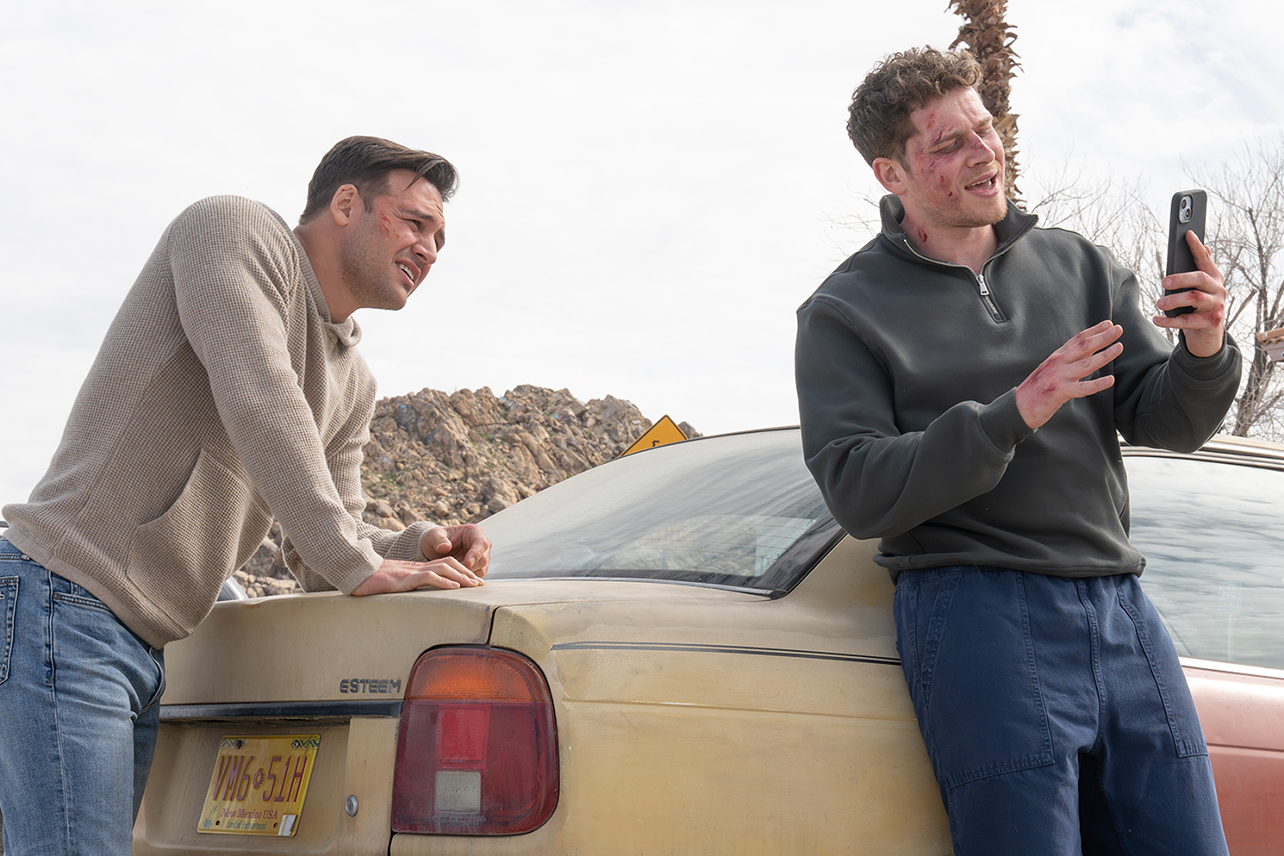
Now, retcons are no stranger to horror fans, who have largely learned to roll with the punches. But Scream 7 seems to expect its audience to not just roll with some inconsistencies, logic leaps, and retcons, but actively welcome them, all for the sake of bringing back Sid (who was gone for exactly one movie) and Gail Weathers (Courteney Cox, who for all of the back-to-OG-basics hype, has about as much screen time here as she has in the previous film). The murder mystery they find themselves in is entirely rote – I’m a bona fide dum-dum and nonetheless made several correct guesses about the mystery before the halfway mark – but we’re supposed to be excited not because of the trenchant horror commentary, or exciting stalk-and-kill scenes (there are a couple, granted), or the filmmaking (this is one underlit movie) but because it has Sidney and Gail, characters who have never really been fully absent from the series.
It’s especially baffling because so many slasher movies have failed to execute a torch-passing or chapter-closing moment. Friday the 13th tried A New Beginning with part five sans Jason, only to hastily bring him back for part six. Jamie Lee Curtis made her triumphant return with H20, only to be brought back and unceremoniously killed off in Halloween: Resurrection. The fifth and sixth Scream movies actually pulled it off: The original cast was there for the fifth, and the new kids introduced there largely took over for the sixth, with some assistance from Cox in a supporting role. Legacy characters could still potentially come and go as they pleased. New horror trends could be referred to and satirized. The series seemed well-positioned to continue in any number of directions.
But Scream 7 has almost no interest in the world of horror, which feels like an admission of defeat. It brings in a few barely-there ideas about A.I. (if you’ve heard anything about old cast member cameos, well, you can probably put that together) and the line between true crime and entertainment (which feels pretty musty at this point). Odds and ends, in other words, lacking the giddy propulsion that carried previous entries through even if they weren’t as tightly executed as the first film. It makes sense that there isn’t much actual dialogue about horror movies in Scream 7 – easily less than ever before. It’s because anything the characters would talk about would have to be related to late-stage franchise stagnation, bad decisions, and corporate cowardice. At this point, it would hit too close to home.
Jesse Hassenger (@rockmarooned) is a writer living in Brooklyn podcasting at www.sportsalcohol.com. He’s a regular contributor to The A.V. Club, Polygon, and The Guardian, among others.