Stargazers are in for a treat later this month when six planets form a line during a rare event scientists are dubbing a “planetary parade.”
The celestial sextet will go down in the weeks leading up to Saturday, Feb. 28, marking the first time this phenomenon has occurred in more than six months, Forbes reported.
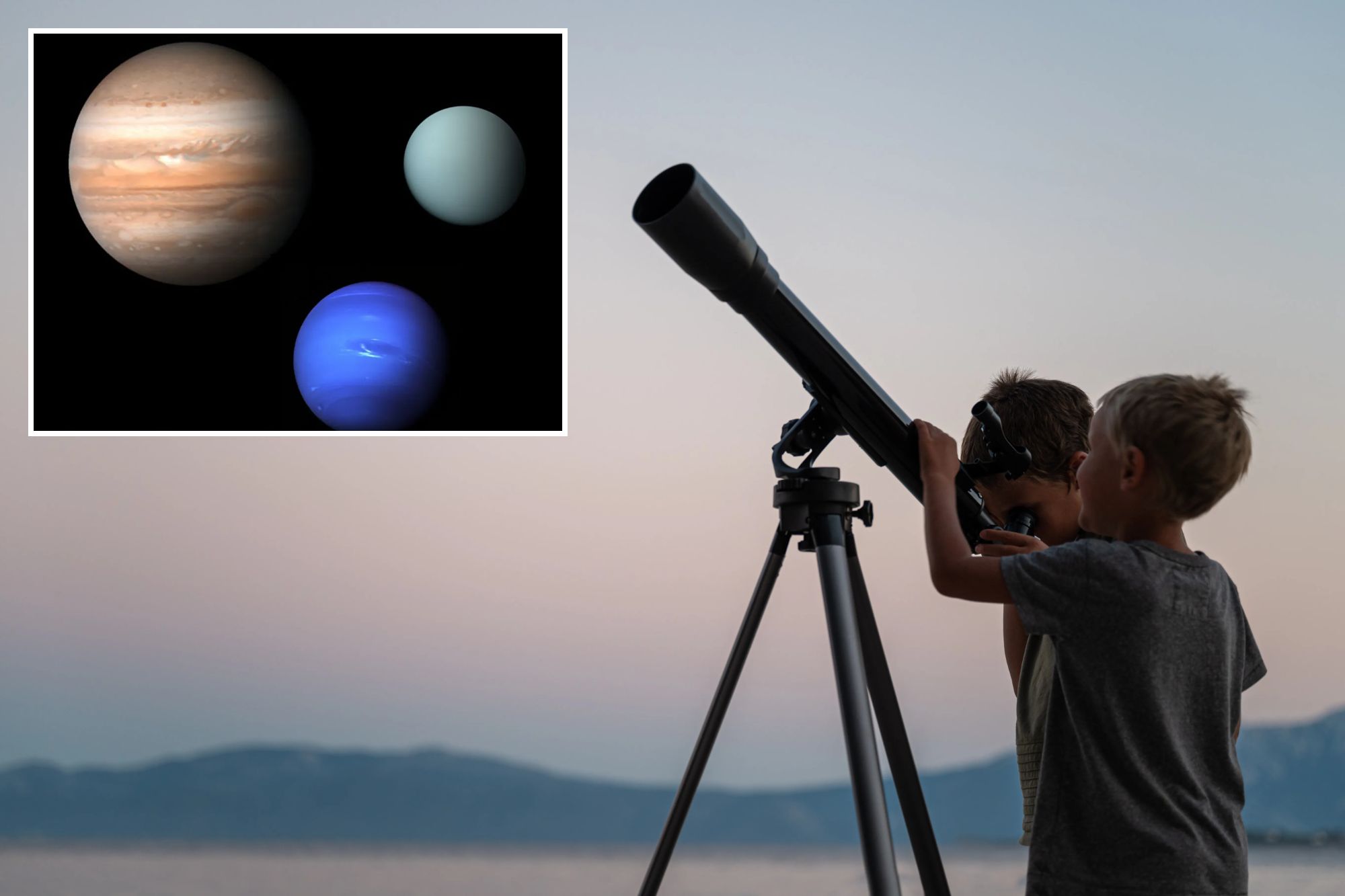
Stargazers will be able to see Mercury, Venus, Jupiter, Saturn, Uranus and Neptune. NASA/Alyssa Lee “The planetary parades are a really tangible and exciting, observable astrophysical phenomena,” Michigan State University astronomy professor Darryl Seligman told The Post.
During this particular event, stargazers will be able to see Mercury, Venus, Jupiter, Saturn, Uranus and Neptune bunched together like a cosmic conga line, the BBC’s Sky At Night Magazine reported.
Despite their peculiar formation, the planets aren’t actually aligned. The event is an optical illusion that occurs when the cosmic bodies happen to appear in the sky at the same time.
“The planetary parades are a really tangible and exciting observable astrophysical phenomena,” Michigan State University astronomy professor Darryl Seligman told The Post. Gajus – stock.adobe.com In actuality, they’re millions to billions of miles apart and orbiting the sun’s ecliptic plane at different speeds and distances.
Nonetheless, the intergalactic meetup presents a unique spectacle for amateur astronomers, who “should be able to see six planets at the same time,” Seligman affirmed.
According to NASA, the planets Mercury, Venus, Saturn and Jupiter will be visible to the naked eye, weather permitting, but “only those with optical assistance will be able to view Uranus and Neptune.”
For optimal viewing, stargazers should look for “clear skies,” per Seligman, who said that a “clear night with low clouds and precipitation” is ideal.
He also advised getting “away from city lights, ideally, to a dark sky area,” such as the dedicated ones in certain national and state parks.
The best minimal-light, unobstructed vantage points in New York City include the Hudson River Waterfront, the Brooklyn Heights Promenade, a high-floor rooftop and the Rockaways, according to Secret NYC.
Per NASA, the planetary parade will be most visible around 30 minutes after sunset, which in NYC, will be around 6:16 -p.m.; the sun will set at 5:46 p.m. on Feb. 28.