play Live Sign upShow navigation menuplay Live Click here to searchsearchSign upESSAYFeatures|Human RightsShackled, bleeding, raped: Palestinians describe abuse in Israel’s prisonsFormer detainees tell Al Jazeera they were chained, stripped, sexually abused and filmed, with repeated allegations involving dogs.
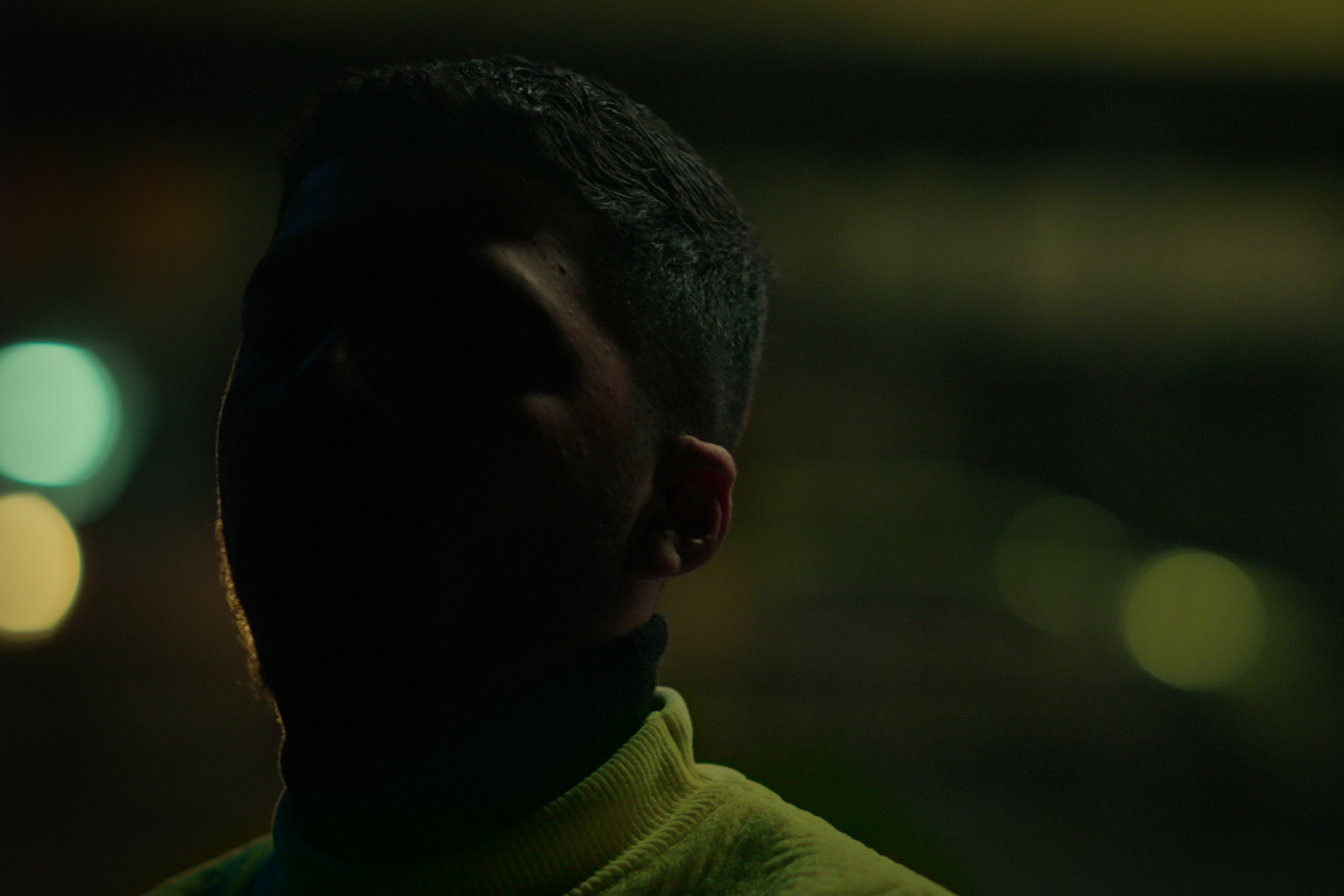
xwhatsapp-strokecopylinkgoogleAdd Al Jazeera on GoogleinfoAdnan Hassan, a victim of Israeli abuse in the occupied West Bank [Al Jazeera]Published On 9 Jun 20269 Jun 2026Warning: This story contains descriptions of sexual assault that some readers may find disturbing.
He does not begin with the name of the prison. He begins with the dog. In testimony gathered for Bodies of Evidence: Israel’s Darkest Weapon, an Al Jazeera original documentary I directed and executive produced, Mohammed Zaki al-Bakri describes being stripped, restrained and left powerless while Israeli soldiers laughed and filmed.
Al-Bakri, a survivor of the Israeli genocide in Gaza and a former detainee from Khan Younis, says he was held for 20 months and moved through five Israeli prisons.
“They stripped us of our clothes,” he says in the interview. “We are handcuffed … our hands were behind our backs and our legs were bound and we were blindfolded.”
Then came the allegation of violence, almost impossible to describe in words. “I was raped after being stripped of my clothes,” he says, “by a large dog.” In a separate part of the interview, he adds: “The seven of us were sexually assaulted by the dog.”
Across months of reporting, Al Jazeera’s documentary team gathered accounts from former Palestinian detainees who described dogs used not only as instruments of fear, but as part of a ritual of sexualised humiliation: prisoners stripped, blindfolded, handcuffed, forced to lie on their stomachs, beaten, threatened, filmed and attacked.
One former detainee from Gaza – we identify him with the pseudonym Job – who moved through eight Israeli detention facilities, describes how dogs were unleashed on prisoners in the same ritualised way when he was held at Israel’s Sde Teiman prison. A third Palestinian survivor from Gaza also describes a dog assault.
The pattern extends beyond the prison wall. Kifaya Khraim, international advocacy coordinator at the Ramallah-based Women’s Centre for Legal Aid and Counselling (WCLAC), tells Al Jazeera about what one family – the Ajlounis – in Hebron faced in July 2023. Israeli forces, she says, forced their way into their home “under the threat of large dogs,” ordered the women to undress and walk naked around the house in front of female soldiers.
Aside from the use of dogs, Shereen, a former detainee and activist whose identity we are concealing, describes repeated stripping and invasive searches. Adnan Hassan, a former child detainee from Jenin in the occupied West Bank, says he was arrested at 17 and held for five months. Mays Abu Ghosh, a former detainee from Jerusalem, describes the prison as a place where humiliation became routine.
Their testimonies do not describe one prison, one guard or one isolated act.
Since 1967, Palestinian official sources estimate that more than 750,000 Palestinians have been detained by Israel. A United Nations-cited figure says more than 800,000 Palestinians were imprisoned between 1967 and 2006. In April 2026, Addameer Prisoner Support and Human Rights Association reported 9,600 Palestinian political prisoners were in Israeli custody, including 3,532 held under administrative detention – imprisonment without charge or trial – alongside another 342 children and 84 women.
For Palestinians, prison is not a marginal experience. It is a generational one.
A detainee can be arrested at home, at a checkpoint, inside a hospital, at a shelter or during a military raid. He or she may then be moved between soldiers, intelligence officers, military detention sites, police custody, military courts and prisons run by the Israel Prison Service.
The names of the facilities change: Sde Teiman, Ofer, Negev, Ashkelon, interrogation centres, checkpoints and military camps.
The details recur. A name becomes a number. Clothes are removed. Eyes are covered. Hands and legs are tied. Food is restricted. Sleep is denied. Dogs are brought in. Prisoners are threatened with rape. Many are raped. Some say they are filmed. Many say complaints go nowhere.
In al-Bakri’s case, he said, the dog was not merely present. It was part of the assault itself. “They walk dogs at you, and then they start kicking you,” he said. “They attacked us from behind using dogs… They attacked us with dogs in a crazy way,” he added in another section of the interview.
Then: “We are all powerless to do anything. They are laughing. And of course they are filming us.” Al Jazeera is not publishing every graphic detail of the testimony. But the pattern is clear: dogs appear repeatedly in accounts of nakedness, restraint, sexual violence and degradation.
Job, the second Palestinian survivor identified in Bodies of Evidence: Israel’s Darkest Weapon by a pseudonym, his face and voice concealed for his safety, points to how the dogs attacked under verbal instructions from soldiers. “I don’t think it’s a dog. It’s a human being.”
“They unleash the dogs. There’s no way around it; the dog must pass. He [the dog] will either rape you, or he will smash your head with an iron bar in his mouth,” he says. The dog, he tells Al Jazeera, “doesn’t just bark and howl”, it acts on signals from its handler. “The word you give the dog, it will do.”
The allegation that dogs were used in sexual assault has recently entered wider international debate after new reporting on sexual abuse of Palestinian detainees triggered a barrage of Israeli denials and attacks by pro-Israeli commentators. Israeli officials and allied media figures have called the reporting a “blood libel”, focusing especially on claims involving dogs.
But for Palestinians and the organisations that document prisoner abuse, these allegations did not appear overnight.
Francesca Albanese, the UN’s special rapporteur on human rights in the occupied Palestinian territory, says in an interview for the film that Palestinians have long been subjected to “the use of animals, the use of dogs to attack, to abuse, and even to inflict sexual abuse”.
“These are facts that were known,” she says. Albanese describes a broader pattern reported by prisoners: “Shackling until bleeding, beating, dragging, starvation, exposure to cold, denial of medical care, attacks by dogs, solitary confinement, sexual abuse, forced stripping, and threats to rape and kill family members.”
Khraim, the advocacy partner at WCLAC, said sexual humiliation and threats were used to produce silence. Men and boys often do not speak because of stigma. Women fear social punishment. Children carry shame that they do not have the language to explain.
That’s why the testimonies shared by survivors with Al Jazeera matter. These are not lawsuits. They are damaged memories, communicated through fear, anger and survival.
Sde Teiman, the Israeli military detention facility in the Naqab/Negev desert, became a symbol of Israel’s post-October 7 detention regime after reports of blindfolded and shackled Palestinians, medical neglect, torture allegations and sexual abuse emerged.
Five Israeli soldiers were accused of sexually abusing a Palestinian detainee at Sde Teiman. In March 2026, Israeli authorities dropped the charges. But Bodies of Evidence: Israel’s Darkest Weapon shows that Sde Teiman is no exception.
Palestinian detainees can pass through multiple systems: military detention, intelligence interrogation, police custody, military courts and formal prisons. The Israel Prison Service and police fall under the Ministry of National Security, headed by Itamar Ben-Gvir. Military detention sites such as Sde Teiman fall under the Israeli military chain of command. The Shin Bet, Israel’s internal security agency, operates under the authority of the Prime Minister’s Office. The Ministry of Justice oversees state legal policy, prosecutions and government legal defence. Responsibility is fragmented.
A prisoner may be arrested by soldiers, interrogated by intelligence officers, held by prison guards, brought before military courts and processed through civilian legal bodies. If questioned, each institution can point to another part of the chain. But all of it is part of the Israeli state’s detention architecture. That is why Raji Sourani, founder and director of the Palestinian Centre for Human Rights, said the problem is not one prison.
“We have the crimes. We have the evidence. We have the chain of command,” he says in the film. For Sourani, Sde Teiman is “the tip of the iceberg”.
Sexual violence in detention can include rape, threats of rape, forced nudity, invasive searches and sexual humiliation.
Under international law, depending on context and intent, it may constitute a war crime, a crime against humanity or an act of genocide.
The survivors in Bodies of Evidence: Israel’s Darkest Weapon describe different forms of that violence. Job from northern Gaza says he was gang-raped and filmed by Israeli soldiers. He describes a female soldier using a strap-on device while others clapped. Shereen, whose identity is concealed for safety, says she was repeatedly stripped. “They took me to a room,” she says. “They told me to remove my clothes.” She goes on to describe how she was violated through invasive and gruesome methods.
Adnan Hassan – a pseudonym used to protect his identity – was a 17-year-old schoolboy in Jenin in the occupied West Bank when, on his way to school, he walked into an Israeli military raid. Soldiers threw an explosive device towards him; the blast cost him his right hand. About a week later, while he was still recovering from the amputation, the same military returned and arrested him. He was held for five months. He describes being beaten on sensitive parts of his body and subjected to repeated strip searches, despite the injury that had just taken his hand.
Mohammad Abu Kabash heard the dogs first. It was about 1am on a Friday in Khirbet Hamsa al-Fawqain, the Jordan Valley of the occupied West Bank, and his family was asleep. He took a flashlight and stepped outside to see what had disturbed them. “As I shone the flashlight towards the mountain, I was surprised to find that there was a group, people walking alongside the mountain from several directions.”
He tried to steady himself. “I tried to control myself from the fear and terror that had overcome me,” Mohammad says, “but I couldn’t.” Moments later, he says, settlers attacked him. “Four men attacked me. Settlers grabbed me and tied my hands,” he says. He was stabbed in the hand and beaten across his body.
His brother, Sohaib Abu Kabash, says the settlers moved through the encampment while people were still asleep. “They entered every house here, 20 settlers in each house. One was handcuffing us, the other beating us,” he recalls. Sohaib says the settlers stole all of the family’s sheep, beat children, handcuffed him, stripped him and tied his genitals. “They dragged me 100 metres, and they sprinkled water and soil on me.”
Mohammad says he saw several settlers surround his brother. “Too many of them were attacking him,” he says. “I don’t know exactly how many, 10, nine or eight. A big number.” They stripped and beat him, Mohammad says. Then he pauses in the interview. “Can I mention it?” he asks. “They brought a plastic zip and tied it on his penis.”
Later in the interview, Sohaib holds up the plastic ties that he says were used to “tie my hands, legs and genitals”.
Mohammad says that after the settlers left, Sohaib came to him “unable to even walk”. He did not know what to do. “I was so confused,” Mohammad says. “What should I do in this situation? This is a sensitive area, how should I handle it?”
There was no light, he says, so he called Sohaib’s wife and asked her to hold up a flashlight. Then he took a knife. “I got a knife and cut the zip,” Mohammad says. “Blood began to flow from him.”
The attack, the brothers say, was not only against Sohaib. In other interviews, Sohaid has said that the settlers forced women out of their homes, gathered people into a tent and threatened to rape the women and take the children if the community did not leave.
In the interview with Al Jazeera, Mohammad says that with their 400 sheep – their primary source of income – gone, the family now has “nothing”.
“We only have the sky now,” he says. He measures the loss in generations. “Fifty years of work” put in by him, his father, and before them, his grandfather, all “vanished in less than an hour, in 40 minutes”.
Sohaib says the family called for help, but it came late. “We called the police.. then an army vehicle arrived late, we were already beaten,” he tells us.
The Israeli military and police have said the incident is under investigation, but as of this date, no one appears to have been punished – and none of the victims who spoke to Al Jazeera have been compensated.
But Mohammad says the family remains on the land – and will not move. “We are steadfast and we remain steadfast on our land,” he says. “We will stay, we’re not leaving our land.”
The Israel Prison Service has said, in comments reported by Israeli media, that it is a security organisation operating “in accordance with the law” and under “strict oversight”, and that prisoners are held while “safeguarding their basic rights”.
Israel’s ambassador to the United States, Yechiel Leiter, made a similar argument after recent reporting on the sexual abuse allegations. “Any complaint of unlawful conduct by Israeli authorities should be submitted to investigative bodies and, as is customary in a democratic society, those complaints will be reviewed thoroughly,” he said.
But the testimonies gathered for Bodies of Evidence: Israel’s Darkest Weapon show that the problem, in part, is precisely that official channels do not protect detainees. One former prisoner says four women who identified themselves as lawyers came before his transfer and asked about food, beatings and whether dogs were being used.
“How is the food?” he recalls them asking. “How much food? What are you missing? What are they doing to you? How do they beat you? Do they use dogs with you?”
“We told them everything,” he says. “They came and wrote and did, and nothing happened. Nothing changed. On the contrary, the beatings increased.”
The phrase “blood libel” deepens the accountability gap.
Historically, blood libel refers to an anti-Semitic lie that Jews murdered Christian children for ritual purposes, a fiction used for centuries to justify persecution and violence.
Applied to Palestinian detainees’ testimony, it does different work. It shifts attention away from what survivors say happened to them and towards the supposed motives of those reporting it. The allegation of abuse becomes, instead, an allegation of anti-Semitism.
But the claims now being attacked are not medieval myths. They are modern detention abuse allegations described by former prisoners, documented by Palestinian organisations, raised by Israeli and international human-rights groups, and serious enough to draw repeated concern from UN officials.
Ben Marmarelli, an Israeli lawyer who represents Palestinian detainees, saw his clients in April 2024 for the first time since October 7, 2023. “I saw a skeleton. I really saw a skeleton,” he recalls, speaking to Al Jazeera. “They were getting about 800 calories per day. So they all looked like prisoners from the Holocaust movies.”
The UN minimum for survival is 2,100 calories per day.
In August 2025, United Nations Secretary-General Antonio Guterres placed Israel “on notice” for possible inclusion in the UN’s annual list of parties credibly suspected of committing patterns of conflict-related sexual violence. In the letter sent to the Israeli ambassador to the UN, Guterres cited “grave concern” over allegations of sexual abuse of Palestinian detainees in multiple prisons, a detention facility and a military base. Hamas was placed on the list for the first time in the same report.
The warning matters because it does not come from a campaign group. It comes from the UN process responsible for monitoring conflict-related sexual violence. Guterres also noted that Israel’s refusal to grant UN inspectors access had made verification difficult. That point is central. When independent monitors are denied access, the state cannot credibly use the absence of outside verification as proof that abuse did not happen.
The International Committee of the Red Cross has also said it has not been able to visit Palestinian prisoners held in Israeli facilities since October 7, 2023, and has called for access to detainees and information about their whereabouts.
For survivors and lawyers, the logic is cruelly circular. Palestinians are asked to prove what happened inside closed facilities, while the institutions capable of verifying those claims are kept outside.
The film’s title is not a metaphor alone. The body remembers what paperwork denies. Bruises fade. Documents disappear. Videos remain in the hands of those who filmed. Medical records are withheld or never created. Witnesses are transferred, released, deported, silenced or shamed.
Human rights organisations have long tried to turn that memory into documentation: names, dates, injuries, detention routes, medical records, witness statements, legal complaints and repeated patterns.
Ayed Abu Eqtaish, accountability programme director at Defense for Children International (DCI), Palestine, works within that documentation tradition, particularly on the treatment of Palestinian children. Tahseen Elayyan, a human rights advocate, has worked on international accountability. Tayab Ali Khan, a human rights lawyer, has pursued universal jurisdiction cases. Chantal Meloni, an international criminal law expert and legal representative for Palestinian victims, has worked to bring Palestinian testimony into legal forums. Triestino Mariniello, a professor and international criminal law expert, frames these cases within the obligations of international justice.
But documentation has consequences. In the film, a Palestinian lawyer describes reporting the case of a 15-year-old child who said he was raped with an object. The case, he says, was communicated to the US State Department.
“Instead of opening an investigation,” he says, “the Israeli authorities raided the DCI office, and after that, DCI Palestine was designated as a terrorist organisation.”
Israeli officials say unlawful conduct can be investigated. But Palestinian, Israeli and international human rights groups have documented for years that criminal prosecutions for abuse of Palestinians are rare. “We know that this is a system that approves rape … It approves torture,” Marmarelli, the Israeli lawyer, says.
Right-wing activists and the Israel Prison Service have complained against Ben Marmarelli to the Israel Bar Association. But he remains undeterred. “Even if they take my licence,” he says, “I will not shut up.”
Lea Tsemel, an Israeli human rights lawyer who has represented Palestinian detainees for decades, appears in the film as another voice from inside the Israeli legal world refusing to hide what Israel does, behind the law.
Cuno Tarfusser, a former judge and second vice-president of the International Criminal Court, says the crisis is not only inside Israel’s system, but inside international justice itself. “The issuance of an arrest warrant against [Russian President Vladimir] Putin is good,” he says, “and the issuance of an arrest warrant against [Israeli Prime Minister Benjamin] Netanyahu is not good, which I find, from the point of view of a magistrate, really something which is unacceptable.”
The point is not rhetorical. It is structural. If international law is applied only to enemies of powerful states, victims learn that law is not a shield. It is another language of power.
Bodies of Evidence: Israel’s Darkest Weapon does not claim to have independently verified every detail of every assault described by every survivor inside closed Israeli detention facilities. It does not claim that every Israeli soldier, guard, interrogator or official participated in abuse. It does not claim that sexual violence occurred in the same way in every prison, base or interrogation centre.
What the film does document is repeated testimony from different Palestinians describing sexual violence, forced nudity, dog attacks, filming, threats, beatings and humiliation across different stages of detention. It documents lawyers and human rights workers who say complaints were ignored, obstructed or punished. It documents experts who say the pattern is consistent with wider systems of dehumanisation and impunity. And it documents a state structure in which responsibility is divided across soldiers, intelligence officers, prison guards, police, prosecutors, courts and ministries, making accountability harder to trace even when the injuries are visible.
Saying that complaints can be filed is not the same as ensuring that complaints lead to justice. Saying that inspectors exist is not the same as showing that inspectors prevented abuse. Saying that prisons operate according to law is not the same as opening them to independent scrutiny.
Asked if he is worried about his safety for speaking out, Marmarelli says: “I will not play the game of hiding the reality from the world.”
Lea Tsemel, the veteran Israeli human rights lawyer who has represented Palestinian prisoners since the early 1970s, poses a challenge to the Israeli government, as she talks about Palestinian detainees facing trials that could end in the death penalty – even as documented Israeli war crimes in the occupied territories go unpunished in Israeli courts.
“Let them bring lawyers from the outside,” she says. “Then we’ll see.”
For many of the survivors Al Jazeera interviewed for Bodies of Evidence: Israel’s Darkest Weapon, the world has already betrayed justice by not seeing, for too long.
Near the end of the film, one survivor stops describing what happened to him and begins speaking to everyone outside the room. “Where are you?” he asks, firing questions. “Why don’t you see what we are in? Why are we alone? Don’t you see what is happening? Where is the world?”
The question sits at the centre of the documentary. It also sits at the centre of the current debate over Palestinian testimony. There is no shortage of outrage when the allegation is difficult to hear. There is far less outrage over the conditions that make such allegations possible: detention without charge, closed military sites, blocked monitors, punished lawyers, dropped cases, and a political culture in which even sexual violence can be dismissed as propaganda before the evidence is examined.
Albanese says what is being targeted is not only Palestinian bodies, but the idea Palestinians embody: “sumud” or steadfastness, the refusal to disappear.
One Gaza survivor says the prison used rape to subjugate them, so that no Palestinian would raise his head again. “But we,” he says, “have raised our heads.”
That is what the testimonials captured in Bodies of Evidence: Israel’s Darkest Weapon underscore. Not only that sexual violence happened. But the survivors are still speaking. And that the world can no longer say it did not hear or see.
Over the course of producing Bodies of Evidence: Israel’s Darkest Weapon, Al Jazeera approached dozens of Palestinian former detainees and their families. Many said they wanted to speak. Almost all, in the end, did not. Some feared for their own safety, or for relatives still inside the occupied West Bank and Gaza, where Israeli occupying forces continue to carry out arrests, raids and home demolitions, and where former detainees are routinely rearrested. Others had simply stopped believing that speaking would change anything. “What is the point any more?” is a sentence the team heard, in different forms, again and again. That silence is itself part of the story this film tells.
Of those who agreed to be interviewed, several appear under pseudonyms, and some had their faces and voices concealed. They asked for this protection for three reasons: fear of Israeli reprisal against themselves or their families; and the social cost, in Palestinian society as in many others, of publicly describing sexual violence. Where survivors agreed to be named and shown, Al Jazeera has done so. Where they did not, their accounts have been corroborated against medical records, legal filings, lawyers’ testimony and the wider documentation of rights organisations.