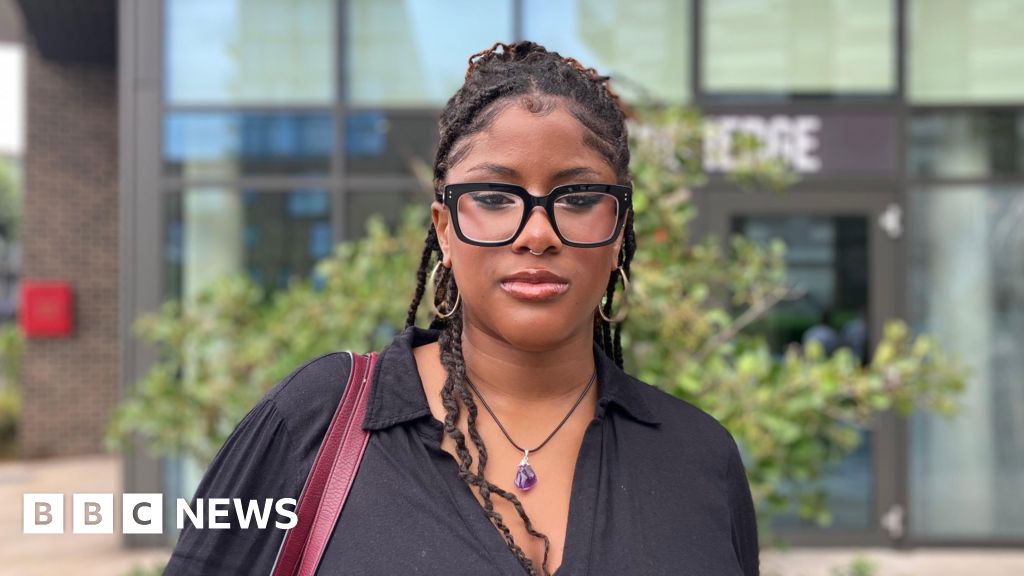
ShareSaveAdd as preferred on GoogleNicky FordLondon investigationsBBCMide Awosika and two flatmates paid a £12,000 deposit to rent a four-bedroom property in Poplar, east LondonLast summer, 20-year-old Mide Awosika thought she had secured her dream flat ahead of starting a new term at Queen Mary University in London.
She and two flatmates together paid a £12,000 deposit to rent a four-bedroom property in Poplar, east London. But when they arrived on moving day, there were no keys – and they found nine other people also trying to move into the same flat.
The property had been advertised on major rental websites Zoopla and OpenRent. After a viewing in July, Awosika said the letting agent, who identified himself as Derrick Fringe, told them there was stiff competition and they needed to pay immediately to secure it. She said they handed over three months' rent upfront, plus holding and security deposits.
She told us that just before the scheduled August move-in date, Fringe told them the existing tenants had refused to leave and bailiffs were needed. Then contact stopped.
When Awosika went to the building the following day, she realised the scale of the problem and described how group after group arrived, all expecting to collect keys for the same property.
She decided to set up a WhatsApp group to keep track of and share information amongst those affected.
Neither Fringe nor the landlord who owns the property responded to the BBC's questions.
Since then, Awosika said, 23 people have contacted her claiming to have been targeted in the same way, all linked to the same flat and the same agent.
Figures from Report Fraud indicated the cost of rental fraud was a growing issue with reported losses almost doubling in the past five years.
In 2021, there were 4,642 rental fraud cases reported leaving those affected £7.2m out of pocket.
In 2025, 4,178 cases were reported in England and Wales and Northern Ireland - costing victims £14.5m.
Among those who joined Awosika's WhatsApp group were Freazy Warr, 24, Nirrhit Pal, 23, and three other flatmates, who between them transferred £7,200 to secure the same property. They never received the keys either.
"As the moving van was pulling into the road, we were told by a friend to cancel immediately because two other groups were already waiting," Warr said.
"My lease was ending and I was terrified I'd have nowhere to live."
He said the pressure of London's rental market had left them feeling vulnerable.
"There are so few affordable properties," he said. "Students and people without a lot of money are pushed online, where it's harder to know who to trust."
Two young professionals working in nearby Canary Wharf paid a £9,460 deposit to rent the flat.
Satchit Warade and another tenant, who asked for her name to be withheld, said they were rushed into the viewing with the agent saying they had 45 minutes to get there.
On their moving-in day, the 23-year-olds told us they called Fringe between 20 and 30 times before he called them back to say the existing tenants would not move out and claimed he was going to evict them.
The next day they could not reach Fringe so reported the matter to the police.
Warade said the experience was "harrowing".
"Especially in cases like these where a false sense of urgency is created, it becomes all the more stressful.
"It has definitely made me super cautious and I think I will forever be on my toes now every time I'm renting in London.
"There's something about just the trauma of having to go through something that makes me lose the trust in the market and how it works."
Open Rent said it offered its "sympathies" to those "affected by fraudulent activities" but claimed it had "a comprehensive vetting system in place to verify the legitimacy of landlords and properties listed on our platform".
"Upon receiving this report we acted promptly, removing the listing and suspending the account pending the outcome of any investigation," a spokesperson said.
"When users choose to pay off-platform against our explicit guidance, which appears to be the case here, unfortunately we cannot guarantee the safety of funds.
"Our ability to help recover funds is more limited when direct bank transfers have been made to a private individual off-platform."
The flat was advertised as being managed by a letting agent calling itself Propertiesmatter.com.
Its website used to describe it as a "leading UK real estate agency" with "eight branches" and "170 staff". That website appears to have been taken down.
However, only two staff members were named online. The agent also claimed to be a member of the industry body Arla Propertymark. Arla said it had no record of the name.
An address listed for complaints links, on Companies House, went to an unrelated firm with a similar name.
A spokesperson for that company told the BBC it was unaware its details were being used without its knowledge or consent, had nothing to do with the flat, and said it was a "victim of corporate identity theft".
Using tenancy documents given to us by Satchit Warade, the BBC traced an email address linked to the person listed as the landlord, Edward Robinson, who appeared to have bought the property in March 2025. The email was connected to the same email account used by the letting agent.
Awosika said her group emailed Robinson when she could not access the flat but never received a reply.
Another prospective tenant claimed building managers flagged to him the issue on the day of the failed move-in. The BBC contacted both men. The person known as Fringe did not respond while Robinson declined to answer questions and ended the call.
Another student, Samyek, told how he was part of a group that transferred more than £26,000 to a different person named as landlord on their contract. Tenants were given different landlord names and bank details, but all linked to the same address, the BBC found.
After reporting the matter as a suspected fraud, Samyek managed to recover most of his money through his bank. The case was passed by Report Fraud to Kent Police, which is now investigating.
All the affected would-be tenants told the BBC they felt pressured to pay more than they could afford.
The National Residential Landlord Association said demands for large upfront payments were a major warning sign.
The organisation's chief policy advisor said prospective tenants should:
As for Awosika, she said the experience had left her far more cautious.
"It was such an elaborate scam," she said. "It felt real. Telling my mum was awful.
"It was a huge amount of money – and it was just gone."
Additional reporting by Thomas Spencer and Paul Myers.