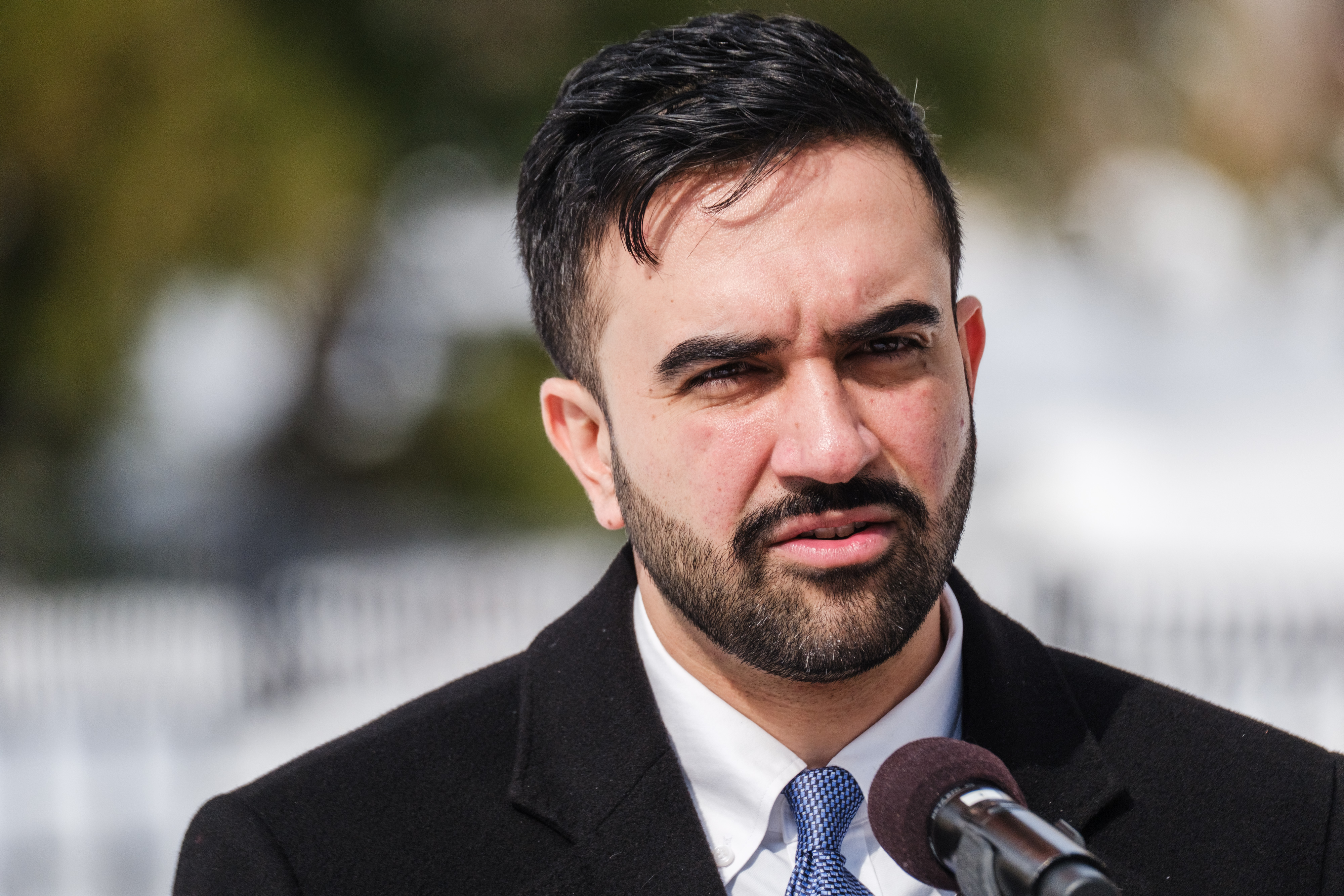
Mayor Zohran Mamdani has claimed the city is in the middle of a "fiscal crisis." Stephen Yang for NY Post When all the snow is gone, Mayor Zohran Mamdani’s luck will have run out.
Everyone has been focused on the weather this week, but the mayor’s destructive budget and tax proposals still lurk under all that ice and slush.
Before the blizzard, he announced that the city faced a “fiscal crisis.”
First he said we had a $12 billion gap; soon after it was down to $7 billion as a result of — surprise! — tax revenue from Wall Street year-end bonuses that his team didn’t take into account.
The gap shrank again, to $5.4 billion, by the time Mamdani announced his preliminary budget last week, thanks to $1.5 billion in state assistance from Gov. Kathy Hochul.
You’d think this would mean an end to the “crisis.”
In the past, the city has used an agency expenditure review called a Program to Eliminate the Gap to realize significant savings.
That, and some restraint on new spending, should be enough to close a $5 billion gap.
Oh, but did I mention that the mayor has proposed $11 billion in new spending?
This may explain why Mamdani is hell-bent on piling more taxes on successful corporations and individuals.
Given the shifting numbers, and the mayor’s refusal to squeeze any savings from city agencies, who can trust any of the budget figures coming out of City Hall?
Luckily we have a tool at our disposal, one that has worked in the past to bring clarity to the city’s plight: the state Financial Control Board.
Set up in 1975 by Gov. Hugh Carey, it was designed to monitor city spending and fiscal practices to help it survive that era’s crushing financial crisis.
The state Legislature gave the FCB emergency powers to review NYC’s spending, contracts and financial obligations.
For more than a decade, it functioned to certify the city’s practices and enforce fiscal discipline.
Then, in 1986, the FCB did a rare and notable thing: It voted to end the control period, and sunset its own approval powers.
Yet the FCB still exists, in a limited manner; to this day, it reviews the city’s four-year financial plan to ensure compliance with state-mandated budget standards.
The FCB must determine annually if a new control period should be reinstated by the Legislature, thereby restoring its powers over the city’s spending.
Several specific criteria could trigger that judgment — among them, an operating deficit of more than $100 million in a fiscal year.
Right now, the board is effectively moribund; it currently has no executive director, and one of the public-member board seats is vacant.
Hochul should move to fill these positions immediately — if only to show all stakeholders that she takes the city’s budget challenges seriously.
Mamdani may give her some pushback on that, but he shouldn’t: He himself has a seat on the board, and his first deputy mayor, Dean Fuleihan, was an FCB member until recently.
Both the state and the city comptrollers are members, too, ensuring that multiple viewpoints are represented.
Filling these empty positions will send an important signal that, come what may, the city’s finances will be well managed.
That’s critical information for those who help finance city projects through bond offerings, for city workers whose labor contracts could be affected in a real crisis and for the myriad vendors the city relies on for a multitude of services.
Hochul has been a good partner to the mayor, assisting him with his promised child-care programs and adding the recent $1.5 billion infusion.
All she got in return was to be thrown into a political pickle, as Mamdani threatened to raise property taxes if he doesn’t get his longed-for millionaire’s tax.
She now must understand the old adage that no good deed goes unpunished.
Being a good partner does not mean forsaking her duty to police the city’s finances.
The leaders of the state Legislature, too, should view the FCB as a protective tool.
It shields the interests not only of taxpayers and those doing business with NYC, but also of the state’s most vulnerable — people who need a solidly functioning city to provide necessary services.
Today’s state legislators should emulate the care and seriousness of their predecessors from the dark days of 1975.
Back then, members of the state Senate and Assembly from both parties worked to shape the FCB that exists today on paper.
Our current representatives should be just as willing to refresh the board so it can once again act as an impartial judge of city finances and operations.
Let’s take it out of mothballs — for the benefit of all New Yorkers.
Bill Cunningham served as communications director for Mayor Mike Bloomberg.