Make Decider a Preferred Source Photo: Everett Collection Where to Stream: Casino Royale (2006) Powered by Reelgood More On: James Bond Robert Pattinson reacts to being named the new James Bond for next 007 adventure Who Will Be The Next James Bond? Meet the Actors Rumored to Be Amazon’s 007 Former Bond Girl Jane Seymour Reveals She and Pierce Brosnan Have Been Painting Together, Says She’s ‘Really Good Friends With All the Bonds’ John Krasinski’s Version of Jack Ryan Is A Chilling Preview Of The Impending Enshittification Of James Bond Under Amazon’s Control During the first 20 years of the James Bond film series, three different actors played the British spy across 12 films; Sean Connery defined the role, George Lazenby took it for a single spin, and Roger Moore made it his own in the 1970s. During the second 20 years of the franchise, there were “only” eight films, but again they encompassed three actors: the end of Moore, a brief stint from Timothy Dalton, and the entire run of Pierce Brosnan, which ended in 2002 with Die Another Day.
Bond entered his fifth decade onscreen with the casting of Daniel Craig, who took over the role with 2006’s back-to-basics Casino Royale. That film opened in theaters 20 years ago this week. In fact, the next Bond, Robert Pattinson, was announced 20 years to the day after Casino Royale opened in its native United Kingdom. (The U.S. followed just a day later.) That the search for Craig’s successor ended on the Casino Royale anniversary underlines a startling point: In the past 20 years, and in contrast to the first 40-plus, only one actor has played Bond, for a single five-movie run that ended five years ago. Assuming that Pattinson films his first Bond outing in early 2027, the movie itself will likely debut no earlier than summer 2028, more likely the holiday season that year. That will be seven years since No Time to Die sent Craig off with a bang.
Some of this is just corporate franchise maneuvering. As IP-addicted as Hollywood is, actually managing those properties is no longer as simple as cranking out a new Bond picture every two years, as was the case for much of the 1960s, ’70s, and ’80s. (Even the Brosnan ’90s managed that pace for most of his run, once the elements were in place.) Plus, Bond in the 1960s was the blockbuster series; now there are plenty of them; it’s as if there are a dozen more unauthorized 007s running around, crowding out the original.
But the scarcity of Bond movies in the past 20 years may also be a sidelong tribute to the power of Casino Royale, the last Bond reboot and, by most standards, the best version of that maneuver so far. The original Connery outing, 1962’s Dr. No, wasn’t really a reboot; it was Bond’s film debut (and even if it somehow counts, plenty of fans would honestly rank Casino Royale higher). On Her Majesty’s Secret Service is well-liked now, but the sole Lazenby movie was enough of a problem at the time that producers coaxed Connery back for one more after its release. Live and Let Die, the film that introduced Roger Moore, was a financial success but isn’t considered a top-tier Moore Bond. The Living Daylights, like the Lazenby film, has become better-regarded with age, but rarely breaks, say, the top five or ten Bond movies. That leaves two real contenders for the best Bond reboot: Brosnan’s GoldenEye and Casino Royale – both directed by the same man, Martin Campbell.
It’s a notable achievement in the oft-thankless field of Bond directing. At the time, having Campbell helm the new post-Brosnan series felt like a throwback to the days of having a steady franchise steward; the entirety of the Connery, Moore, and Dalton runs were directed by just four different guys: Terence Young, Guy Hamiton, Lewis Gilbert, and John Glen made three to five entries apiece. But Campbell seemed to understand better than most that he wasn’t just telling a new actor where to stand in Casino Royale, but genuinely resetting the series’ tone, with less adherence than ever to what had come before. While GoldenEye represented a new fusion between the series’ retro charms with some cursory nods to ’90s tech and social mores, Casino Royale now seems like a movie aiming closer to timelessness. Its brief pre-credits sequence is shot in high-contrast black-and-white. There’s some neat spy tech, but it doesn’t feel like science fiction (or a gag tied to any particular tech or style trends). Bond falls in love, something he hadn’t done on screen in ages. With that sensitivity also comes a new brutishness, as Craig has a chilly “blunt instrument” quality in his action scenes, the least quippy Bond ever put to screen.
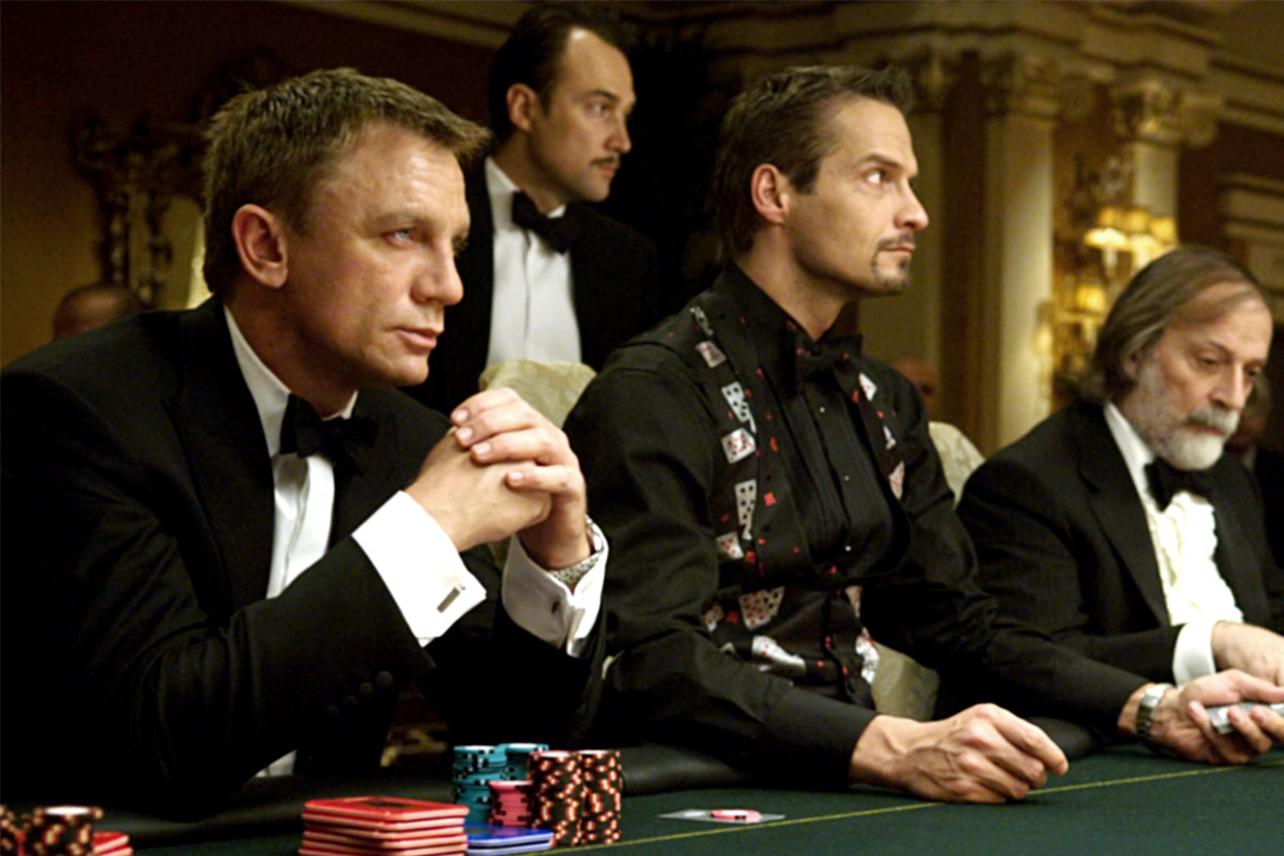
Which is not to say that Casino Royale completely avoids scanning as a 2000s-era artifact (or a classic Bond formula). The scrappier, more athletic style of Bourne-era action movies is echoed in a parkour-heavy foot chase. The then-ascendant poker craze gets an extended shout-out during the section of the movie actually set at Casino Royale in Montenegro; in the Ian Fleming book, Bond plays Baccarat. Beyond their initial trailblazing as big-budget spectacle, Bond movies have somewhat notoriously reflected the culture of their making, rather than running ahead of trends, and Casino Royale was no different in the broader outlines.
Where Campbell’s film had room to carve out its own space was within all of that ample Bond mythos. The series had experienced plenty of changeovers, but was never quite so explicit about starting from scratch; though Craig was nearing 40 at the time, Casino Royale is basically Bond Begins, starting with him attaining double-0 status in that opening kill. That’s derivative of the previous year’s Batman origin, sure, but adopting the tone of a slightly self-serious superhero entertainment also kept the movie from elbowing its audience in the ribs. The Brosnan era was a sly and very ’90s reintroduction to the character, establishing that he could remain a viable brand name. Craig and Campbell gave the brand a bit of soul.
As such, some of the rituals of Casino Royale take on surprising heft, at least temporarily. Most Bond movies are overlong, for example, their somewhat languid pacing further exacerbated – if sometimes pleasantly so – by cable airings that could stretch them well into the three-hour zone, becoming travelogues with crass levels of firepower. That’s also true of Casino Royale, but it’s one of the only Bond outings to make that one-country-too-many structure double as a canny bit of emotional storytelling, giving Bond a false happy ending away from a life of espionage and violence, with his financial handler Vesper Lynd (Eva Green) before her simultaneous betrayal and sacrifice send him back to MI6. As such, the movie also sets the tone for some new absurdities to creep back into the franchise, like that fact that almost every Daniel Craig Bond features him resisting and/or renouncing the 007 role before he ultimately embraces it and “becomes” Bond, or that the series becomes as fixated on secret backstories as any comic book.
As with Batman, it seems entirely possible that Casino Royale’s long-term influence on the series may be as outsized as the Christopher Nolan Dark Knight trilogy – something that, ironically enough, ensnared the new Bond himself, with Robert Pattinson playing a Batman that, good as the movie is, exists at least somewhat in those films’ shadows. Denis Villeneuve certainly feels of a piece with the Nolan school, but Pattinson is hopefully a playful and eccentric enough of an actor to make the role his own. (He was certainly dashing in Nolan’s sci-fi Bond riff Tenet.) Even if this new film turns out to be Royale Redux, though, it will be understandable. It’s debatable whether it equals the early Connery films, but Casino Royale is the rare Bond movie that feels like a fresher, more organic preparation of comfort food. It’s the kind of reboot that can sustain a franchise for decades just by giving it some high-class hope.
Jesse Hassenger (@rockmarooned) is a writer living in Brooklyn. He’s a regular contributor to The A.V. Club, Polygon, and The Week, among others. He podcasts at www.sportsalcohol.com, too.