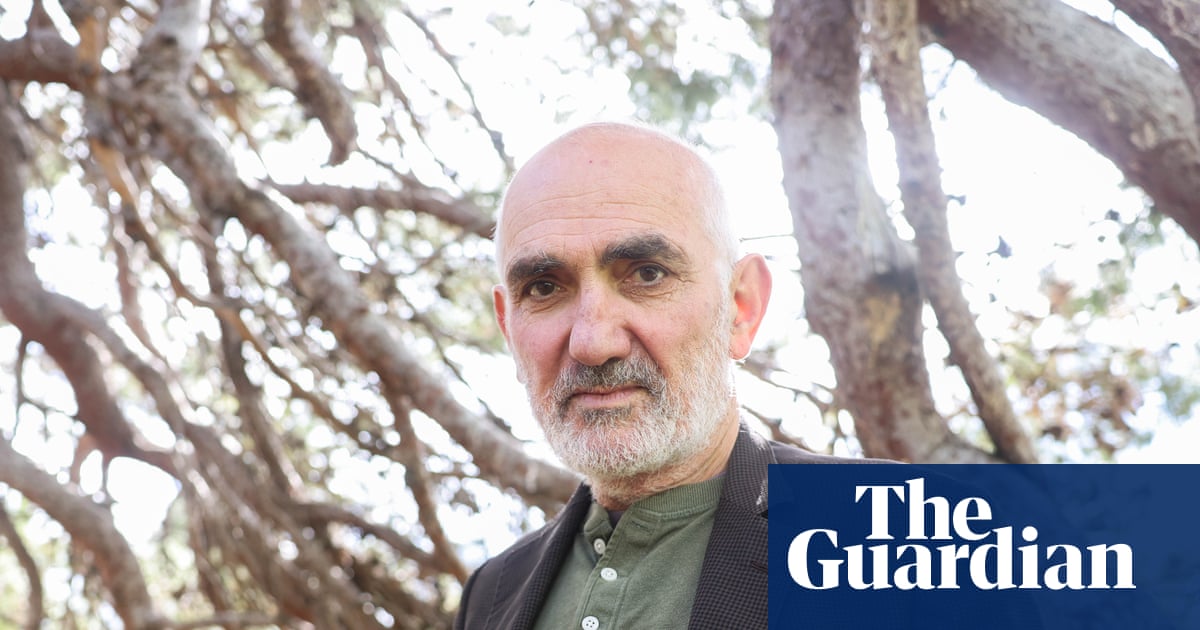
Paul Kelly says: ‘Australia has had some of the best copyright laws. Now is the time for our government to show some backbone.’ Photograph: Ellen Smith/The GuardianView image in fullscreenPaul Kelly says: ‘Australia has had some of the best copyright laws. Now is the time for our government to show some backbone.’ Photograph: Ellen Smith/The GuardianPaul Kelly pleads for Albanese to ‘show some backbone’ over AI as creatives campaign for copyright protections Music legend is joined by Jimmy Barnes and Peter Garrett in backing Not AI’s To Take campaign ahead of Aria awards
Get our breaking news email, free app or daily news podcast
Australia’s creative community has launched a major campaign pleading with the Albanese government not to water down copyright law amid furious lobbying from AI companies, ahead of Wednesday night’s Aria awards.
Music legends Jimmy Barnes, Paul Kelly and Peter Garrett are among those backing the Not AI’s To Take campaign, supported by dozens of creative groups representing the recording, writing, publishing, film, television and media industries.
While the government maintains it will not undermine copyright law, the industry minister, Tim Ayres, said on Tuesday “the status quo is no good” for the creative sector, ahead of a package of AI legislation expected by early 2027.
Read moreBut creatives have pushed back on such claims, arguing copyright law doesn’t need updating – just better enforcement, and that changes could put the $70bn creative industry and its 600,000 workers at risk.
“[AI platforms] haven’t made one phone call yet. They haven’t called us. They haven’t called anybody,” said Dean Ormston, CEO of music rights organisation Apra Amcos.
View image in fullscreenThe Not AI’s To Take campaign is backed by Aria, the Copyright Agency, the Australian Directors’ Guild, Screen Producers Australia, the Australian Society of Authors, the Australian Writers’ Guild, and media organisations including Foxtel, Free TV, Nine, Seven and Guardian Australia. Photograph: Instagram/aria_official“There’s nothing wrong with the copyright framework. The problem is getting somebody to sit at the table and have a discussion with us.”
Not AI’s To Take is backed by the likes of Aria, the Copyright Agency, the Australian Directors’ Guild, Screen Producers Australia, the Australian Society of Authors, the Australian Writers’ Guild, and media organisations including Foxtel, Free TV, Nine, Seven and Guardian Australia.
View image in fullscreenA campaign poster from ‘Not AI's to Take’. Photograph: Not Ai's to takeAustralian musicians including Montaigne and KLP have backed the campaign online, while Guardian Australia understands Barnes, Kelly and Garrett – some of Anthony Albanese’s favourite musicians – will also feature.
“Our government has been a huge supporter of Australian music and creativity, and now we’re asking them to continue that support by standing firm on copyright and making sure big tech doesn’t get to rewrite the rules at the expense of creators,” said KLP, real name Kristy Lee Peters.
In quotes shared on the campaign’s website, Barnes said: “I think that these companies should go and f..k themselves.”
Kelly is quoted as saying: “Australia has had some of the best copyright laws, something to be proud of. Now is the time for our government to show some backbone.”
Although Albanese has declared it would be “theft” if creatives weren’t paid for their work, some AI companies have argued it is too difficult to make individual licensing deals under existing copyright law. AI companies have said they need legal certainty on the copyright issue before investing and training models in Australia, with Anthropic putting forward an “opt-out” model to scrape creative works unless a rightsholder objected.
However Anthropic told a Senate committee it would “provide ongoing access to frontier models to eligible Australian entities, regardless of whether training is permitted.”
The government is expected to unveil a long-awaited legislative package on AI in late 2026 or early 2027, with proposals around datacentres, online safety, productivity and copyright. Albanese said last week that artists “need to be compensated if their work is used”. But the creative community is concerned that lobbying from big tech may sway government decisions.
Read more“This isn’t a smear campaign. We’re just making some noise out in the open, where tech companies are doing it in the shadows,” said Patrizia Di Biase-Dyson, CEO of the Australian Publishers Association.
“Everything is at stake. We have to do as much as possible to educate everyone.”
Ormston said creative industries welcomed the investment and opportunities of AI, and had applauded both Labor’s rebuffing of a text and data mining exemption and Albanese’s public support. But he said artists were worried about potential changes.
“Our very clear message to the government has been: hold firm. You are absolutely saying the right thing. You are absolutely right in the fact that while we want AI in this country, we want it on Australia’s terms,” Ormston said.
Asked about the campaign on Tuesday, Ayres said “nothing has changed in terms of the government’s approach” to copyright.
“I understand the anxiety, though. For those workers, the status quo is no good for them. Their work is currently being appropriated, today, offshore. We have set out a program for a scheme of legislation that would protect those rights, make sure that artificial intelligence investment in Australia is on Australia’s terms.
“We’re not about undermining copyright here. That commitment has been made so many times now.”
A spokesperson for the attorney general, Michelle Rowland, said the government was “committed to supporting” creatives, and pledged any copyright changes would “deliver meaningful control and fair compensation”.
But independent senator David Pocock urged caution around any moves, warning that copyright changes could create a legal “loophole” to make Australia a global “data laundering hotspot”.
“There are more than 100 court cases on foot involving copyright and AI training in the US and we should wait for these to play out before making any changes given the risks of getting it wrong are so high,” he said.