To play this video you need to enable JavaScript in your browser.This video can not be played
'It felt like I was dying’: Why some teenagers don’t go to school
The stories of Eva and Mali - which you can watch in the video above - and the many teenagers like them who don't go to school, either regularly or at all, strike to the heart of one of the many big challenges the Milburn Review is seeking to address.
The government commissioned work, led by the former Labour cabinet minister Alan Milburn, is looking into how to solve the problem of nearly one million young people not being in employment, education or training, or Neet.
A key challenge is addressing the issue of school absence.
The government believes around a third of young people who are persistently absent in Years 10 and 11 in England go on to be Neet, compared with 10% of those who are not persistently absent.
Persistent absence almost doubles between Years 7 and 9, reaching around one in four children by Year 9.
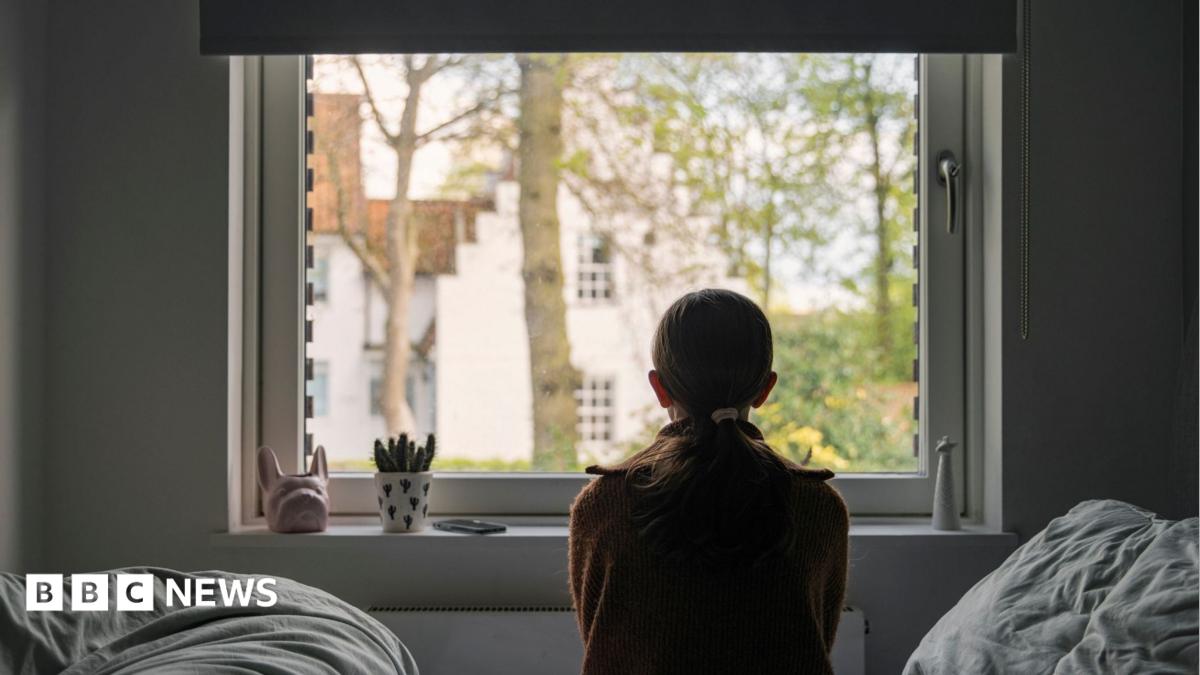
Image caption, Eva, 13, stopped going to school after struggling with the transition to secondary school
Thirteen-year-old Eva hadn't been to school for 15 months before September.
She described how she used to get up every morning, try to get ready for school and get stuck by the front door.
Mali, 18, stopped attending school three years ago when she was in year 10.
We shared their stories with the decision makers and those who want to be our decision makers – in other words, those in government and those who would like to be.
It offers an insight into the political arguments to come.
Labour reckons the Conservatives' education reforms of the last decade and a half served academic high achievers very well - but created what one source described as an "an endless treadmill of failure" for some - and so let them down.
A government spokesperson said: "When children feel they belong at school, they show up, and when they show up, they achieve. That is why the education secretary is driving ambitious reforms to boost attendance" and to "intervene earlier when children need support."
The Liberal Democrats also sought to pin the blame on the Tories.
Munira Wilson, who speaks for the party on education, said "the Conservatives failed to give them the support they needed after lockdown, and years of underinvestment in their recovery are now showing up in rising mental health figures," adding that "every young person should feel they belong."
These reactions prompt some of the big questions that arise from Eva and Mali's experiences.
Where should responsibility for their situations lie? The individual, the parents, the rules in the pandemic, schools, colleges, mental health provision?
Perhaps a combination of all of these things in some instances and other things besides.
The Conservatives have pushed back strongly against the criticism from Labour and the Liberal Democrats.
The shadow education secretary Laura Trott told the BBC: "We mustn't give up on any child, everyday a child misses school sets them back.
"Schools are doing great work to bring absence down. Those children who have special education needs or are struggling to leave home, need specialist support and in some cases specialist schools."
And, she added: "High academic standards lift everyone up. It is insulting to suggest that not all children are capable of good academic outcomes. Too much maths and English are not making young people Neet."
The former Conservative cabinet minister Suella Braverman, now Reform UK's education spokesperson, told us: "As someone who co-founded and chaired an outstanding state school with a high proportion of children on free school meals but a below average school absence rate, it is clear that the culture and teaching in a school can make a huge difference."
She added that "greater parental engagement" and "a culture of perseverance" was essential too.
The government is expected to accept the broad thrust of Alan Milburn's report, before responding in detail in the next month or so.
We are told there will be an announcement from the Education Secretary Lucy Powell directly relevant to Eva, Mali and the many like them, later this week.
To play this video you need to enable JavaScript in your browser.This video can not be played
Young people should have a legal guarantee to a job or training, Milburn says
'I'd throw up in the car park': How school anxiety is harming children's futures
Some under-25s should get fewer benefits, Milburn review to say