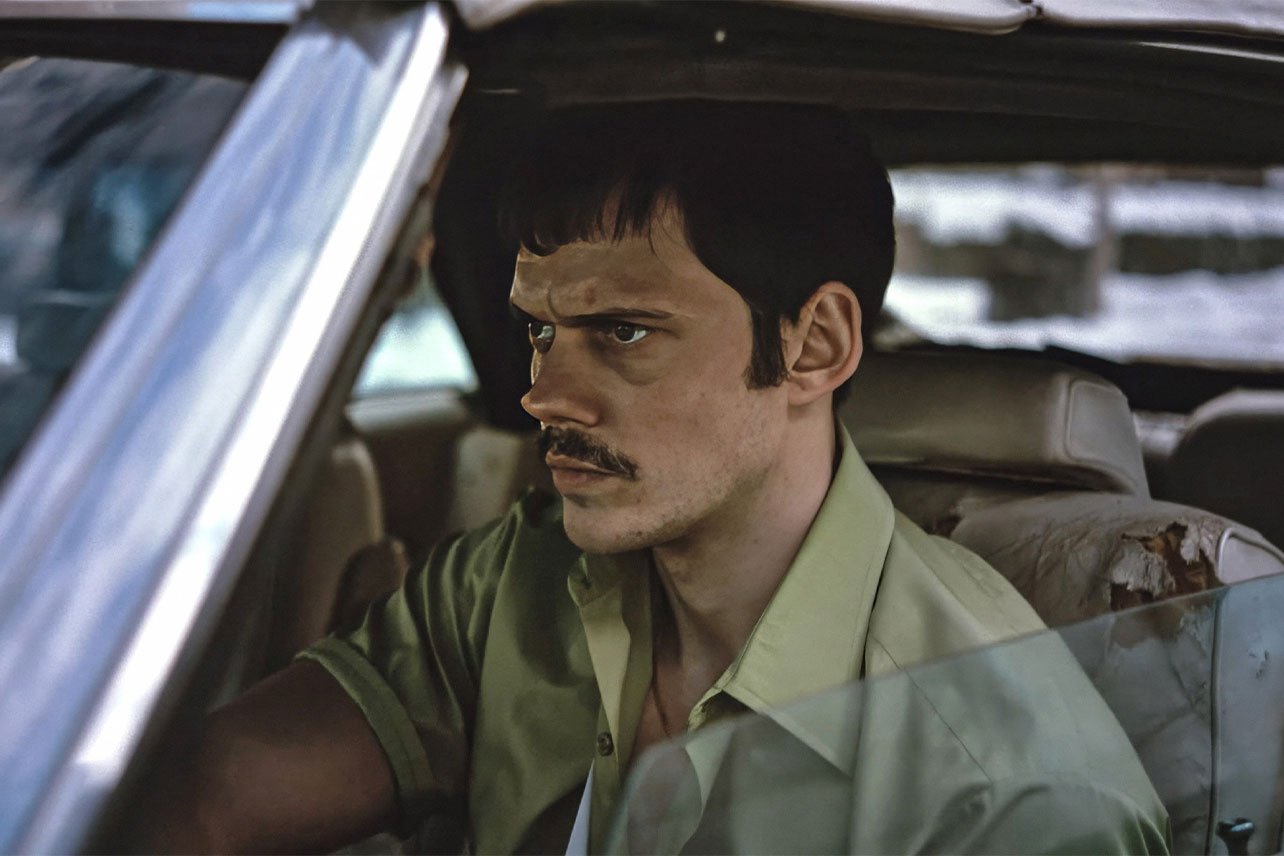
Add Decider on Google Where to Stream: Dead Man's Wire Powered by Reelgood More On: Bill Skarsgard The Five Best New Movies To Watch Right Now on Netflix New Movies on Streaming: ‘Dead Man’s Wire,’ ‘The Voice of Hind Rajab,’ + More ‘Dead Man’s Wire’ Shows Gus Van Sant Still Wrestling With Mainstream Mode Tim Robinson Can’t Stop Parenting Kids Who Fought Pennywise the Clown Dead Man’s Wire (now on Netflix) dramatizes a real-life hostage scenario that played out over three tense days in Indianapolis in 1977. Angry at his perceived victimization by a loan company, Tony Kiritsis kidnapped mortgage broker Richard Hall and held him hostage, wrapping a wire around Hall’s neck and rigging it to a shotgun that would kill Hall if anyone tried to take out Kiritsis, with some of the events rather famously playing out on live television. Director Werner Herzog and star Nicolas Cage were originally attached to the project – a Bad Lieutenant: Port of Call New Orleans reunion that absolutely HAS to happen someday – but were replaced by what turned out to be a pretty damn compelling combo of veteran auteur Gus Van Sant (Milk, My Own Private Idaho, etc.) and It and Nosferatu star Bill Skarsgård. And the result is, perhaps predictably, captivating.
The Gist: “This company’s done me wrong, and I’m gonna let the world know.” Tony Kiritsis (Skarsgård) is an average lower-middle-class fella who took out a loan to invest in a piece of property he wanted to turn into a shopping center. Easier said than done. The land sits undeveloped, and the mortgage company is poised to foreclose. Kiritsis believes in his heart of hearts that lender M.L. Hall (Al Pacino) and his son Richard Hall (Dacre Montgomery of Stranger Things), the hoity-toity richie-riches of this story, are trying to screw him so they can snatch the real estate and make a profit. Now, right off the bat Kiritsis shows signs that he’s not entirely mentally stable, but his assertion that corporations are out to exploit common folk isn’t far-fetched at all – off the top of my head, have any Americans out there asked why their medical insurance provider won’t cover a vital medication or procedure? There’s your encyclopedia snapshot example of late capitalism.
So what we’ve got in Kiritsis is a walking, talking moral conundrum where we’re tempted to sympathize with his notion that the little guy far too often gets the bottom of the boot. But what he does about it? Not quite so sympathetic. As locally famous DJ Fred Temple (Colman Domingo) delivers deep soul music and radio-man wisdom over the Indianapolis airwaves, Kiritsis shows up at Meridian Mortgage with a highly suspicious long cardboard box under his arm. He pulls a pistol and pushes past the secretary into the office of broker and son-of-the-owner Richard Hall. Kiritsis rigs the “dead man’s wire” around Hall’s neck and dials 911 so the cops will show up to hear his demands. Kiritsis wants justice in the form of a platform to expose Meridian’s alleged misdeeds, and a public apology.
A tense scene plays out as Kiritsis shotgun-to-head leads Hall out of the building, into a car – “I call shotgun,” Kiritsis laughs – and to Kiritsis’ apartment, where the doors and windows are connected to bombs. First thing Kiritsis does is offer Hall some food and a glass of milk, so maybe our kidnapper isn’t a complete monster? Kiritsis calls Temple, who acts as a go-between with the cops, including Det. Michael Grable (Cary Elwes). Cub TV reporter Linda Page (Myha’la) reports live from the scene. Kiritsis’ brother Jimmy (Daniel R. Hill) arrives to assist however he can. Meanwhile, M.L. sits poolside in Florida, barely setting down his cocktail to field a call from Kiritsis, demanding an apology. Will he get one? Or will he learn that poor Richard deserves some sympathy despite being a man of privilege?
What Movies Will It Remind You Of? Pacino’s presence, brief as it is, only further solidifies Dog Day Afternoon comparisons. Otherwise, I see Dead Man’s Wire as a blend of Inside Man hostage drama and everyman-criminal quasi-comedy The Mastermind.
Performance Worth Watching: Gotta mention Domingo’s cool gravitas in a supporting role, and how Pacino wields a heavy, heavy Southern accent and toes up to the brink of utter ridiculousness. But the film ultimately belongs to Skarsgård, who drums up some singular charisma as an unhinged and potentially violent man with a significant nice-guy streak.
Our Take: Van Sant was essentially a hired gun for this project, but he’s an old pro who can pick up a screenplay and make it his own with some visual savvy and shrewd modulation of tone. And what he delivers is a light formalist experiment, shooting on film and using freeze-frames and cropping the screen to resemble archival TV footage, thus accommodating the journalistic angles on this story – pieces of the real-life ordeal played out on live TV, including a harrowing press conference with Kiritsis holding a shotgun to Hall’s head that’s the film’s natural climax. It’s stomach-turning to realize that networks actually aired such a scene; the film’s only clunky thematic thread involves a cynical TV producer grinning at the prospect of skyrocketing ratings.
Otherwise, Dead Man’s Wire is essentially a well-considered, finely executed character study couched in social issues and playing out as a tense BOATS (Based On A True Story) thriller. Skarsgård is well-cast, ripe for a performance that’s equal parts terrifying and funny. Playing a troubled man who, to put it kindly, is defined by his eccentricities, he makes some capital-C Choices that feel overly showy and amplified at times, but never to the point of straining credulity. Skarsgård’s confidence in the performance bleeds into the Kiritsis character as he achieves near-folk-hero status among admirers who choose to ignore the bombs and shotguns and focus on how he represents the average American by letting rip with rants against The Man and The System.
So it’s a morally fraught narrative cut with rich veins of commentary on economic inequality, and touching on nepotism, the state of journalism and the mental health crisis. There’s little debating the film’s relevance in contemporary America, where billionaires and CEOs have become villains in the public eye. The crux of Dead Man’s Wire plays out in the apartment, when Kiritsis and Hall simply converse about themselves, their lives, their families. Hall shares that he has a wife and kids, and Kiritsis counters, “My businesses are my children,” five words carrying the weight of 5,000. He seems to hate the rich because he’s not one of them; he wants to be rich but those in power gatekeep their wealth. It’s enough to drive the average person mad. Kiritsis spent a decade in a mental institution.
Our Call: Dead Man’s Wire is gripping, funny, well-acted, skilfully constructed and thoroughly thought-provoking. STREAM IT.
John Serba is a freelance film critic from Grand Rapids, Michigan. Werner Herzog hugged him once.