Video Why the best defense against AI scams is old-fashioned skepticism From voice cloning to fake arrests, cyber expert Morgan Wright breaks down how scammers use high-tech tools to exploit basic human fears.
You open your email and see a warning from E-ZPass. Apparently, there's a problem with your toll account, and a payment didn't go through. Maybe you recently drove through a toll plaza. Maybe your credit card expired. Either way, it's the kind of message that makes you wonder whether you owe money. And that's exactly what scammers are counting on.
We recently received a convincing fake E-ZPass email claiming an overdue toll could trigger additional penalties and even affect your vehicle's registration renewal. The message includes familiar E-ZPass branding and an official-looking violation number. There's even a big purple "Pay Now" button. But take a closer look, and several warning signs point to a phishing scam.
And here's what I find especially interesting. The scammers behind this email even borrowed language from federal regulations to make their payment demands sound legitimate.
Missed CyberGuy LIVE? Watch the replay and discover 5 ways to travel smarter and save money.
Our free CyberGuy LIVE class, 5 Ways to Travel Smarter and Save Money, has ended, but you can still watch the full replay. Kurt "CyberGuy" Knutsson walks you through five practical ways to protect your phone and personal information, avoid common travel scams, find better deals, save money on bookings and use technology to make your travels easier and less stressful. No technical experience is needed.
Watch the free replay + downloadable checklist now at CyberGuyLive.com.
FAKE AAA EMAIL SCAM TARGETS DRIVERS
This fraudulent E-ZPass email claims an unpaid toll could trigger a $100 fine and vehicle registration problems, hoping recipients will click the "Pay Now" button. (Kurt "CyberGuy" Knutsson)
The email arrived with a subject line reading "Your E-ZPass Account Has an Overdue Balance." The sender identified itself as "E-ZPass Violations Dept #276797." The message displayed the E-ZPass logo and included a violation reference number. It even listed Nov. 6 as the issue date. The headline gets straight to the point: "Your toll payment could not be processed." According to the message, a recent toll crossing could not be charged because of insufficient funds, a declined credit card or an expired payment method. That explanation sounds believable because payment problems can happen with legitimate toll accounts.
Then comes the pressure. The email warns that unpaid balances could be referred to collections. It also threatens a civil penalty of up to $100 per violation and a possible hold on vehicle registration renewal. To make those claims sound official, the message cites a federal regulation. Below the warning, the recipient sees a large "Pay Now" button. There are also options to update a payment method or dispute the alleged violation. The apparent goal is to scare someone into following a link that could lead to a fraudulent payment website. From there, scammers may try to steal credit card information or other sensitive details.
At first, this email looks like a legitimate toll notice. But once you start looking at the details more closely, several red flags suggest something is wrong. Here's what caught our attention.
One of the biggest clues appears in the email details. Although the message claims to come from E-ZPass, the actual sender address ends in @cashcoma.cooljz.com. The reply-to address also uses that unrelated domain. That's a major warning sign. Scammers can make the sender's display name say almost anything. They can also copy official logos to make their messages look convincing. However, the underlying email address can reveal something very different.
In this example, the recipient field also displays noreply@ezpassviolations.com. That might look official, but an address appearing in the "To" field says nothing about who actually sent the email. Even when an address looks familiar, it's worth checking. Criminals can spoof sender information to impersonate legitimate organizations.
At the top of the message, a notice says that if the email lands in your junk or spam folder, you should move it to your inbox. It also asks you to add the sender to your safe sender list. So, an email demanding payment is also asking you to override your email provider's spam warning.
Legitimate senders sometimes ask people to check their spam folders. However, in this case, the request appears alongside suspicious sender information and a threatening payment notice. The email had already landed in the junk folder. That alone doesn't prove fraud, but it gives you another reason to investigate before clicking anything.
This may be the most revealing detail in the entire email. The message references 23 CFR Part 940, suggesting federal regulations require drivers to settle outstanding toll balances under the conditions described in the notice. There's a big problem with that claim.
23 CFR Part 940 covers intelligent transportation system architecture and standards. It addresses how certain transportation technology systems are developed and implemented. It does not establish the blanket toll payment obligation suggested by this email. The reference to federal law gives the warning an appearance of authority, even though the cited regulation doesn't support the payment demand. And let's be realistic: how many of us would stop to look up a federal regulation while worrying about an overdue bill? That's what makes this tactic so concerning.
FAKE SOCIAL SECURITY STATEMENT EMAIL HIDES A SCAM
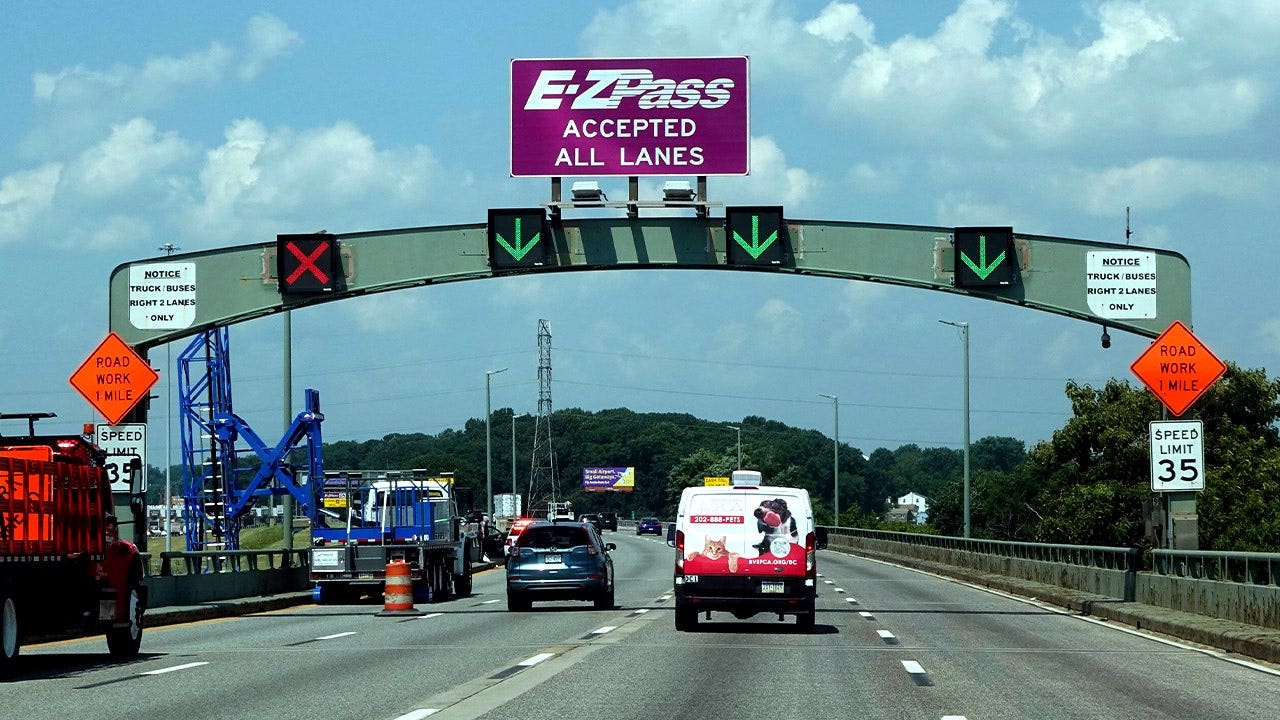
E-ZPass transponders allow drivers to pay tolls electronically, but scammers are exploiting the system's familiar name to send fake payment notices. (Gary Hershorn/Getty Images)
The email warns that you could face a $100 civil penalty, additional fees and even trouble renewing your vehicle's registration. That's enough to make anyone nervous, especially when the email doesn't even tell you how much you supposedly owe in tolls. And here's something else that caught my attention. There's no toll crossing location, no license plate number and no date showing when the alleged violation happened.
The email does include a violation reference number, but don't let that fool you. Scammers can easily make up a string of letters and numbers to make a message look official. Now, real toll violations can come with penalties, depending on the toll agency and its rules. But if an unexpected email suddenly threatens you with fines or registration problems, you should verify the claim directly with your toll agency before taking any action.
For years, many toll phishing scams arrived as text messages. Drivers would receive a warning about an unpaid balance, followed by a link demanding immediate payment. We previously reported on fake toll road texts targeting drivers across America. Those schemes directed victims to fraudulent payment websites designed to collect financial information. The email we reviewed uses a similar approach, but its polished appearance gives scammers another way to reach potential victims. The E-ZPass Group has warned about fraudulent emails and text messages impersonating toll agencies. It also explains that the E-ZPass Group itself does not hold customer accounts or collect toll payments. Individual member agencies handle those services.
The problem has become significant enough to show up in federal fraud data. In May, the Federal Trade Commission reported that government imposter scam reports rose 40% in 2025. The agency said bogus overdue toll notices contributed to that increase. Those messages often threaten additional fees or registration problems if drivers fail to pay quickly. It's a familiar tactic, but scammers continue to find ways to make their warnings more convincing. We reached out to the E-ZPass Group for comment on this particular email and to ask whether it has seen similar messages targeting drivers, but did not receive a response before our deadline.
A suspicious toll notice can catch you off guard, especially when it threatens fines or registration problems. Before you click anything or make a payment, here are a few simple steps I recommend taking to protect yourself.
Open the official website or app for your toll provider. Avoid using the payment button inside a suspicious email. Instead, sign in through the website you normally use. Look for outstanding balances or payment problems there. If you have questions, contact your toll agency using its published customer service number. For example, New York E-ZPass customers can visit E-ZPass New York at e-zpassny.com/. Other states and toll agencies operate their own official websites. If the email claims you have a violation, ask the agency to verify it using your account information.
Avoid clicking "Pay Now" or "Update Payment Method" in an email you cannot verify. A fraudulent payment page may look almost identical to the real website. Once you enter your credit card information, scammers could use it to make unauthorized charges. For more ways to recognize suspicious links, see our CyberGuy article on how to spot and prevent phishing attacks in your inbox.
Check the complete sender and reply-to addresses. Don't rely on the displayed name or logo. If you see unfamiliar domains or addresses that don't match the organization, treat the message as suspicious. Keep in mind that even a familiar-looking sender address can be spoofed. That's why independently verifying an unexpected payment request remains so important.
Take time to verify any warning about fines or registration problems. Scammers often use threats because fear can make people act without thinking. An alarming message deserves additional scrutiny, especially when it references legal consequences without providing enough information to verify the alleged violation.
IS THAT TRAFFIC TICKET TEXT A SCAM OR REAL?
Keep strong antivirus software installed and updated on your devices. Security software can help detect malicious websites and potentially harmful downloads. Some products also offer phishing protection that warns you when a link leads to a suspicious website. However, antivirus protection cannot guarantee that every fake payment page will be blocked. You still need to verify unexpected requests before sharing information. Get my picks for the best 2026 antivirus protection winners for your Windows, Mac, Android and iOS devices at CyberGuy.com.
Report the message as phishing through your email provider. You can also file a complaint with the FTC at ReportFraud.ftc.gov or the FBI's Internet Crime Complaint Center at ic3.gov/. Include the suspicious sender address and details about the message. If possible, preserve the email until you've submitted your report. After reporting it, delete the message.
Reduce the personal information scammers can find about you online. Data brokers collect and sell information such as your name, address and phone number. Criminals can potentially use those details to make phishing messages more convincing. A data removal service can help remove your information from participating data broker websites, making it harder for scammers to find. While it won't stop every fake E-ZPass email, it can help reduce your exposure to targeted scams. Check out my top picks for data removal services and get a free scan to find out if your personal information is already out on the web by visiting CyberGuy.com.
Accidentally clicked a link in a suspicious E-ZPass email? Don't panic. The next steps depend on what happened after you opened it. Here's how to protect yourself and limit any potential damage.
What really caught my attention about this scam was the reference to federal regulations. That's pretty clever on the scammers' part because most of us aren't going to look up a law when we're worried about an overdue bill. And the email looks polished enough that someone could easily overlook the strange sender address. I can see how someone might fall for it, especially if they've recently driven through a toll. My advice is to never pay an unexpected bill through a link in an email. Go directly to the toll agency and check your account. That extra step could save you a lot of trouble.
Have you ever received a toll violation notice that looked so convincing you almost paid it? Or have scammers actually managed to get your money? Let us know by writing to us at CyberGuy.com.
Sign up for my FREE CyberGuy Newsletter
CLICK HERE TO DOWNLOAD THE FOX NEWS APP
Kurt "CyberGuy" Knutsson is an award-winning tech journalist who has a deep love of technology, gear and gadgets that make life better with his contributions for Fox News & FOX Business beginning mornings on "FOX & Friends." Got a tech question? Get Kurt’s free CyberGuy Newsletter, share your voice, a story idea or comment at CyberGuy.com.