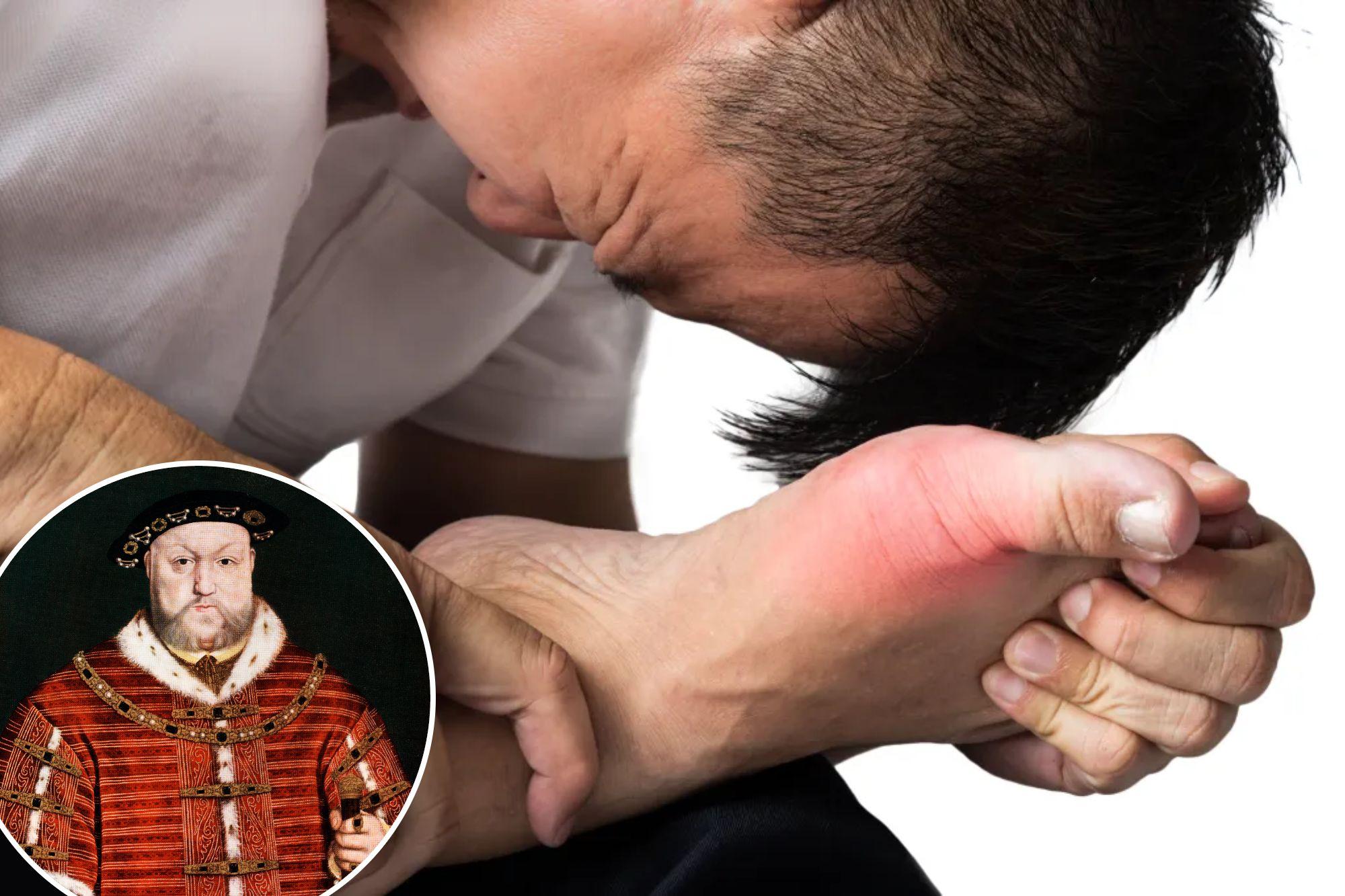
An excruciating condition once dubbed the “disease of kings” because of its long history of afflicting the wealthy, powerful and excessively indulgent is making a modern-day comeback.
Cases have surged more than 20% worldwide since 1990, with scores of people joining the likes of Henry VIII, Isaac Newton and Benjamin Franklin in suffering agonizing attacks of what was once ominously known as the “joint-evil.”
Gout is an inflammatory form of arthritis that develops when excess uric acid, a waste product created as the body breaks down chemical compounds called purines, builds up in the blood.
Normally, the kidneys filter it out and flush it from the body through urine.
But when uric acid levels get too high, the excess can crystallize into sharp, needle-like shards in the joints, triggering sudden and often excruciating pain.
Purines are produced naturally by the body, but they’re also found in nearly everything we eat and drink. Some products contain particularly high amounts, including red meat, certain seafood, alcohol and sugary drinks.
Centuries ago, only the rich could regularly afford these lavish foods — hence the nicknames “disease of kings” and “rich man’s disease.”
But these days, you don’t need a royal chef to indulge in a gout-triggering diet.
Modern eating habits, along with rising rates of obesity and other chronic health conditions, have helped turn the once-exclusive ailment into a much more widespread problem.
Today, more than 12 million Americans are living with gout. It most commonly affects the big toe, but it can also strike the knees, ankles, hands, wrists and elbows, according to the Cleveland Clinic.
Symptoms typically come and go, but attacks can cause such intense pain and tenderness that even the weight of a bedsheet becomes unbearable.
“Often it comes on overnight, so somebody goes to bed pain-free, then they wake up and can’t put their foot to the floor,” Edward Roddy, a rheumatologist and professor at Keele University, told The Guardian. “Sometimes people think they’ve broken a bone.”
Other symptoms include skin discoloration, stiffness, swelling and intense warmth around the affected joint, which can feel as if it’s on fire.
The misery typically lasts a week or two before subsiding, with many sufferers experiencing no symptoms at all between attacks.
Gout has also been linked to an increased risk of other health problems, including kidney stones and heart disease.
While gout can strike anyone, it’s about three times more common in men than women, who typically don’t develop it until after menopause.
Genes and family history also appear to play a role.
Gout has historically been associated with older adults, but it’s increasingly being diagnosed in younger people.
“High blood pressure, obesity, chronic kidney disease, other metabolic conditions, they’re starting to be diagnosed younger and younger,” Malinda Whitlow, a family nurse practitioner, told UVA Today.
Untreated, the condition can cause permanent joint damage, severe arthritis and changes to the shape of affected joints. Some people also develop tophi — hard lumps of uric acid crystals that form under the skin and around the joints.
Treatment often includes medications to ease pain and inflammation, including over-the-counter drugs such as ibuprofen and naproxen. Doctors may also prescribe long-term medications to lower uric acid levels and prevent future flare-ups.
Lifestyle changes can help, too, including a low-purine diet, drinking more water and getting regular exercise.
“Exercise encourages weight loss, which lowers risk for gout and gout attacks,” Dr. Jose Pablo Garcia, a rheumatologist, told the UHealth Collective. “If you correct those risk factors, gout can be short-lived. It may never come back.”